
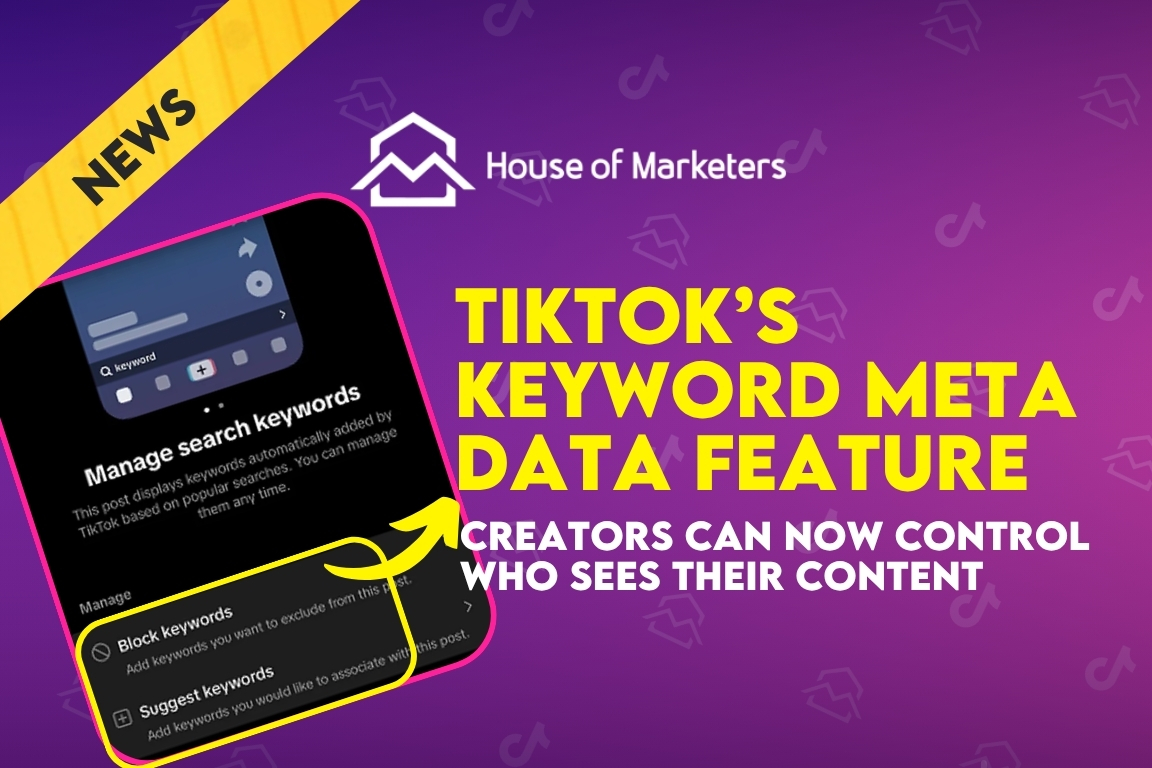
TikTok has just shipped an update. Creators can now view, block, and suggest the keywords that TikTok automatically assigns to their videos.
But underneath that simplicity is something we as marketers can leverage for long-term success. Because for the first time, creators have a direct line into the metadata layer that tells TikTok’s algorithm who to show their content to.
Let’s get into what it actually does and what you should do with it.
Overview
- TikTok now lets creators view, block, and suggest the keywords automatically assigned to their videos.
- This gives marketers direct input into how the algorithm categorises and distributes their content.
- Building keyword research, auditing, and many moreHouse of Marketers‘ insights.
What TikTok Shipped
When you upload a clip, TikTok’s system does invisible work behind the scenes i.e., scans your content, pulls signals from audio, visuals, captions, and engagement patterns, and then assigns keywords that it uses to match your video with relevant search queries and audiences.
You never see those keywords, and as a result, have no say in which ones are assigned to your content. If the algorithm tagged your cooking video as “food challenges” instead of “weeknight dinners,” you had no recourse.
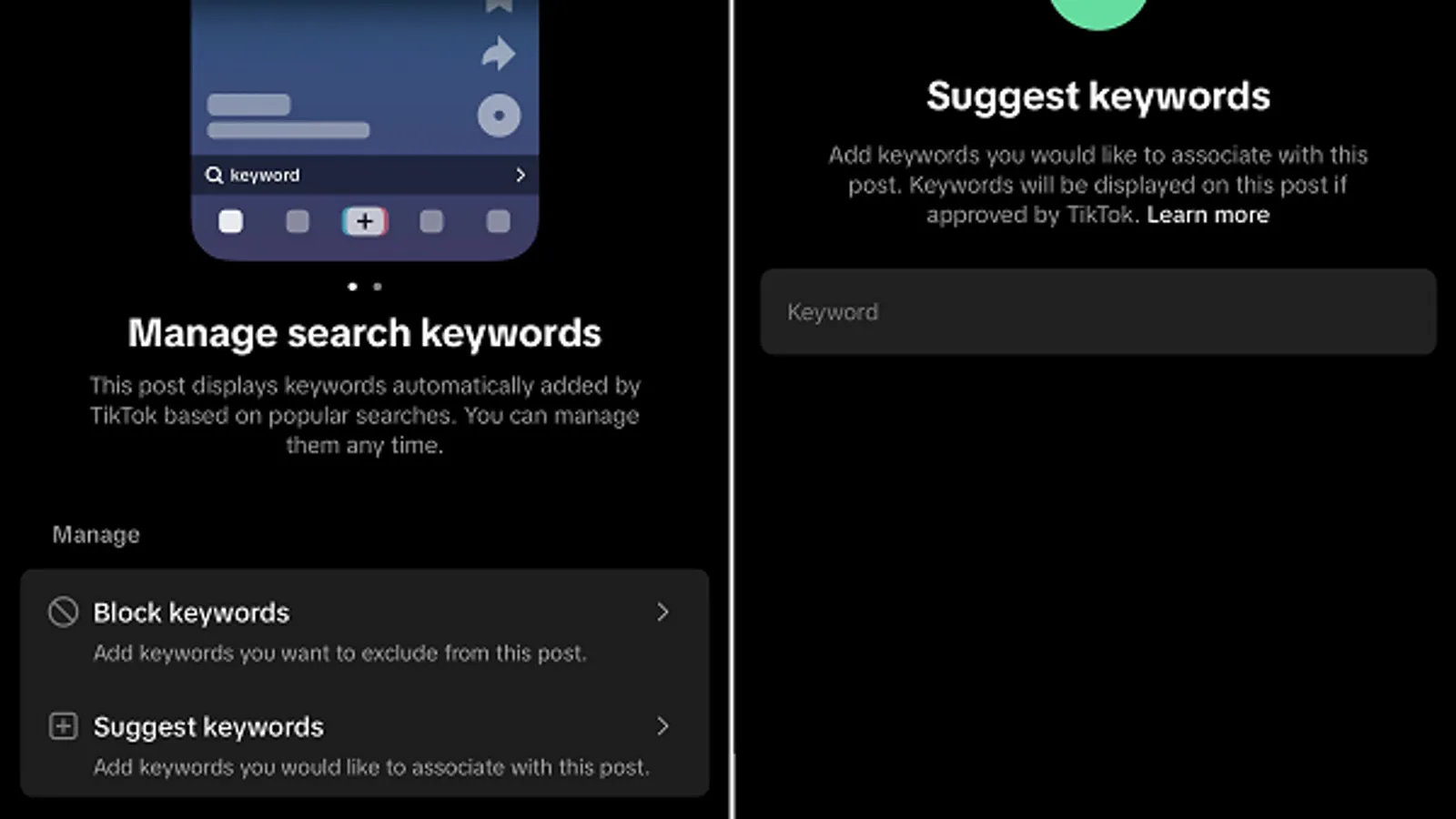
That’s all changed now. TikTok now surfaces those automatically assigned keywords directly to creators, with a message that reads: “This post displays keywords automatically added by TikTok based on popular searches. You can manage them at any time.”
Two options sit beneath it. You can block keywords you don’t want associated with your content, i.e., terms that feel off-brand, irrelevant, or are pulling the wrong audience. And you can suggest alternative keywords that better describe what the clip is actually about.
TikTok retains oversight over suggestions, so you can’t game the system by stuffing unrelated high-volume terms into your metadata. But within those guardrails, you now have meaningful influence over how your content gets categorised and distributed.
Why This Matters More Than It Looks
A video about sustainable fashion might get tagged with fast fashion keywords. A tutorial aimed at professional makeup artists might be served to teenagers.
These misalignments, when compounded, send the wrong signals and attract the wrong audience, which means lower engagement signals, which means the algorithm doubles down on that misdirection.
The block function addresses exactly this. If TikTok has assigned a term that’s pulling an audience that does not align with your ICP, then you can steer the algorithm in the right direction.
The suggest function is also important here. Combined with TikTok’s own Trends tool (which shows you which search terms are currently spiking in your category), you can map your content to high-volume queries that TikTok’s system might not have connected on its own.
What Influencer and UGC Campaign Managers Should Do With This
Build keyword research into your pre-production process.
Before a creator taps on the record button, spend five minutes in TikTok Trends identifying the terms your target audience is actually searching. Then brief the creators on those terms, not just as caption language, but as creative direction. Content that organically references the right vocabulary will get better automatic tagging to begin with.
Make keyword auditing part of your post-publish checklist. After a video goes live, check what TikTok has assigned. If a term looks wrong or misaligned with campaign intent, block it early, before it skews the audience data and muddies your reporting.
Use the suggest function deliberately, not randomly. Adding keywords that align with current search trends in your niche gives TikTok a signal it can act on. Think of it less like SEO keyword stuffing and more like pointing a very smart system in the right direction when it’s looked the wrong way slightly.
Watch this closely for brand safety. If you’re running influencer campaigns for clients in regulated categories, such as health, finance, food and beverage, you want to know exactly which keywords are being attached to creator content about your brand. The block function gives you a tool to manage that. Use it.
Conclusion
This new update will help you optimise your campaign reach at the micro level.
The marketers who treat this as a passive feature will get marginal benefit. The ones who build it into a deliberate workflow, i.e., research, brief, audit, suggest, will find that their content starts landing with the right people more consistently, with less wasted reach.
At House of Marketers, we help brands design and execute influencer marketing strategies built for this shift. From creator selection to content structuring and paid media boosting, our focus is on long-term performance. So partner with House of Marketers today!
Contact for Free Campaign Proposal