
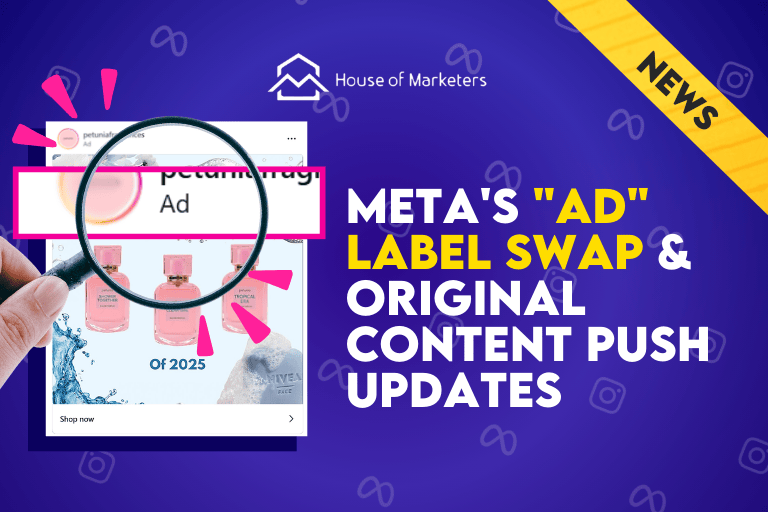
 Meta has recently come out with two new updates in its ecosystem.
Firstly, Meta is taking crediting original creators very seriously. Secondly, it’s making a switch from “Sponsored” to “Ad” labels on Instagram. Both of these updates will directly affect how you plan your next social media campaign. Don’t see the connection yet? Let’s break down what these updates mean for marketers.
Overview
- Meta is swapping “Sponsored” for “Ad” labels on Instagram, which seems more than just a UI shift.
- Meta has updated its originality guidelines, meaning low-effort reposts will be deprioritised on Meta’s algorithm
- Meta is building its algorithm around trust, and original creator content is at the centre of that strategy
- House of Marketers’ insights on how this shift highlights the importance of UGC-driven campaign
Meta is renaming advertising label from “sponspored” to “Ad” instead
Meta has started replacing the “Sponsored” label on Instagram posts with a shorter “Ad” tag. Meta confirmed the update, saying they’re “maintaining commitment to users for ad transparency while delivering a cleaner, simpler experience.” Testing is also underway on Facebook, though at a smaller scale for now.
“Ad” is smaller to read. It’s less visually prominent. And for marketers who’ve spent years optimizing for a feed where users scroll fast, that’s not a trivial detail.
As marketers, we are constantly trying to vie for our audience’s organic attention, and Meta seems to be getting on board with that. As an influencer marketing agency, we see this “label swap” as an opportunity to close the gap between the distrust associated with paid content and organic social media content
Because right now, audiences are trained to distrust the “Sponsored” label. So this label swap makes the disclosure less front-and-centre. This will most benefit ads that are built to feel native, e.g., influencer content & UGC-led formats.
On the other hand, the ads that look and feel like… well, ads? They’ll get more exposed by the contrast.
Influencer-style video, authentic UGC, and creator partnerships where the content genuinely fits the platform are the only strategy forward in social media marketing. As at the end of the day, that what performs when the paid label fades into the background.
The rollout timeline hasn’t been confirmed yet, but the “Ad” tag is already making its appearance on Instagram feeds.
Meta’s Original Content Push & Protecting Originality in Creators
Meta has updated its content guidelines to formally define what counts as “original content”. Meta’s Original Content Push policy was debuted in November of 2025, and now Meta is building on it with clearer guardrails to protect original creators and creativity.
Creators who are not adding any creative value in Meta’s algorithm will see their content fade out. Meta clarifies that Reels incorporating third-party content, i.e., remixes, overlays, stitches, are only considered original when the creator is adding something genuinely new. So, adding fresh new information or perspective, a real point of view, a meaningful analysis is okay.
But simply reacting or narrating what’s already on screen by stitching clips together is not going to work on Meta’s algorithm.
For marketers who work with influencers, this is your sign to audit your creative briefs.
Low-effort activation like “here’s our product, film yourself reacting to it” is functionally over on Meta. If your influencer brief doesn’t push creators to add something original to the content, you’re setting them up to underperform algorithmically. Worse, if a creator’s account gets flagged as non-recommendable because of too many unoriginal posts, your campaign content goes down with it.
A strong brief now should give the creator a real angle, but also permission and direction to make the content theirs.
Check out House of Marketers’ creator brief template PDF here
Creator Brief Template
Meta is also testing upgraded content protection tools that make it significantly easier for creators to detect reposts and identify impersonator accounts.
In 2025, Meta removed more than 20 million accounts impersonating large content creators, and impersonation reports related to large creators dropped by 33%. Meta is investing seriously in creator protection infrastructure, and that changes the dynamic for brands, too.
So if you’re a marketer who is repurposing UGC or creator content in paid ads, make sure your usage rights are airtight and clearly documented. With these new tools and policies, creators have more visibility into where their content is appearing and more power to flag it.
A sloppy usage agreement is no longer just a legal risk; it’s a practical one that can make or break your influencer marketing campaign or even impact its ROI in the long run.
House of Marketers’ insights: What this means for marketers
Meta’s stringent crackdown on unoriginal content may be motivated by a rise in AI video content and deepfake imagery. Because if the user can no longer trust what the algorithm is showing them, it will be bad for Meta’s overall brand trust.
Meta’s solution is to rebuild the feed around creators who produce content worth trusting. We see this as a clear green signal for using UGC content and influencer marketing strategies in social media marketing.
If original trustworthy content is what Meta seeks, marketers need to focus on vetting their creator choices carefully and making sure they are opting to work with creators that Meta’s algorithm stands by.
What to Do This Week
Meta is building a platform that rewards original creators and punishes shortcuts. Marketers who adapt their campaigns to that reality are the ones who’ll be getting the most out of both organic and paid social campaigns in 2026.
Ready to Build a Social Media Campaign That Actually Works?
As an influencer marketing agency, we’ve been building influencer strategy and UGC campaigns rooted in original, creator-led content that earns attention rather than interrupts it.
If you want to audit your current influencer strategy in light of these changes — or build something new from the ground up, reach out to House of Marketers. We specialise in connecting brands with the kind of creators Meta’s algorithm wants to amplify.
Contact for Free Campaign Proposal