 Not long ago, a K-beauty product going viral on TikTok followed a predictable arc. A creator would hold up a serum, tap the glass, describe the texture, and within hours, the comments would fill with the same question: Where do I buy this?
The excitement was real. But it was also temporary. Within a few weeks, the algorithm had moved on, the creator had posted something new, and the brand was left with a spike in their analytics and very little underneath it. No sustained search volume. No repeat purchase behaviour. No brand recognition that carried into the next month.
That was the structural problem with trend-led influencer activity. It converted attention into curiosity, but rarely into demand. And demand — the kind that compounds, that drives reorders, that puts a product on a retailer’s recommended list — requires something different.
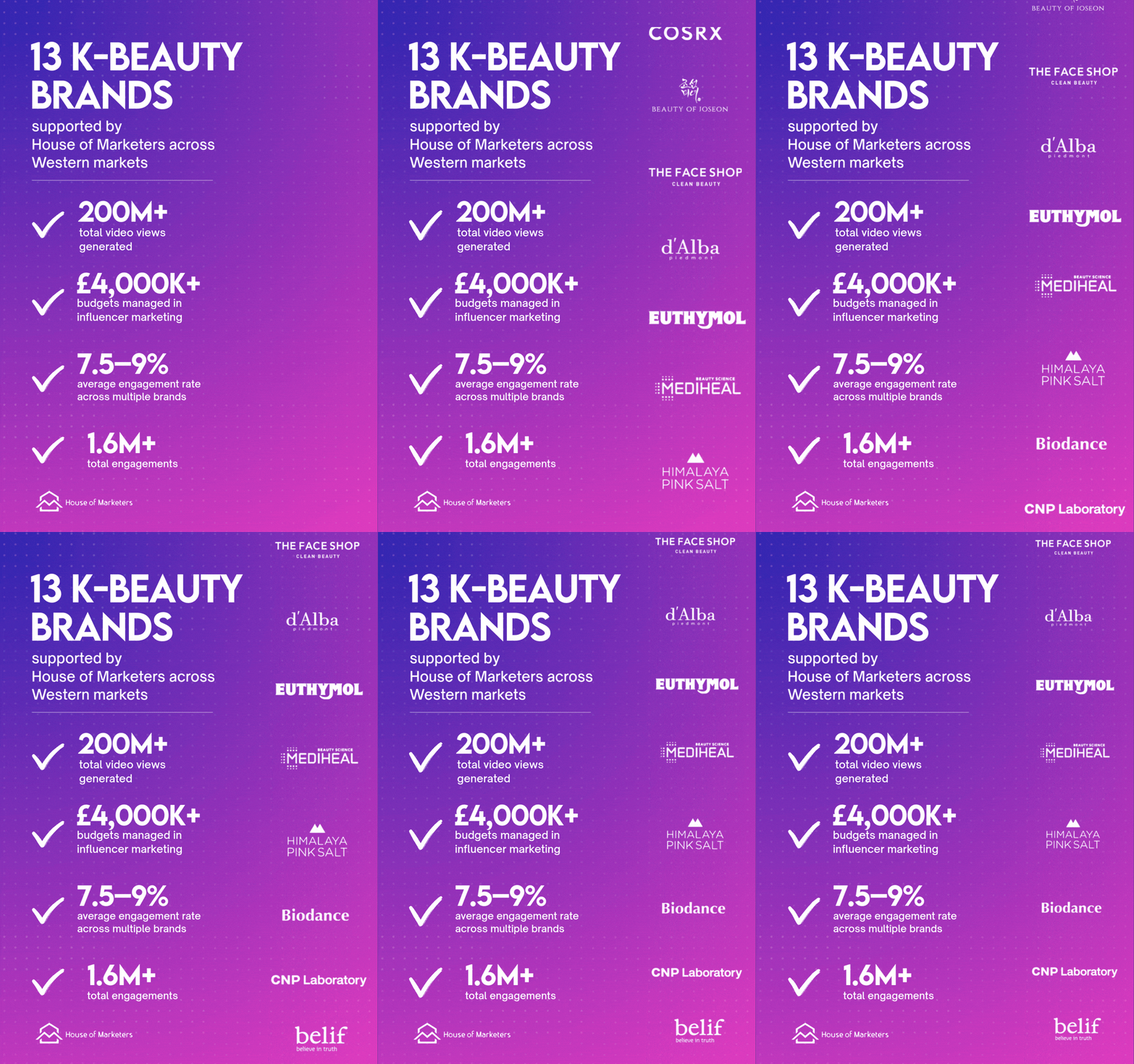
Over the last 12 months, House of Marketers has worked with 13 K-beauty brands across Western markets, managing £4,000,000+ in influencer spend and driving an estimated 200M+ video views and 1.6M engagements.
What changed that equation was not a new platform feature or a media budget increase. It was a shift in how creator content was briefed, structured, and deployed — from promotional to educational, from one-off to always-on, from reach-first to trust-first.
K-beauty is now a permanent fixture in Western retail. Products that were TikTok discoveries two years ago now sit at eye level on Sephora shelves. Korean skincare brands are not competing for trend cycles anymore — they are competing for shelf space, repeat customers, and category authority against brands that have been in the market for decades.
To win that ground, they needed more than virality. They needed influencer marketing that actually built something.
Across 13 campaigns over 12 months, we found out what that looks like in practice. What follows is an honest account of how those campaigns were structured, what the data showed, and which patterns repeated often enough to become a playbook.
K- Beauty Marketing: The Brands Behind the Results
Over the last 12 months, House of Marketers worked with 13 K-beauty brands across the US and Europe, operating at a level of scale that went far beyond one-off influencer campaigns.
We executed product launches, always-on activity, and multi-market rollouts. Campaigns ran across TikTok and Instagram, supported by creator-led content, UGC, and paid amplification (with TikTok Shop used where it made sense to turn attention into direct demand).
While TikTok was the main platform, the common thread was not platform or format. It was the approach. Creators were trusted to explain products properly. Educational content was the priority over promotional content. And UGC was treated as a performance asset, not just a quantitative marker. Over time, this created a playbook that delivered predictable outcomes of phenomenal results.
Several campaigns translated directly into commercial outcomes. Multiple brands experienced repeated retail sell-outs, in some cases up to four times, following creator-led campaigns. In one confirmed instance, a single influencer activation drove a 5× sales uplift, without reliance on heavy promotional messaging.
We worked with premium skincare brands, mass-marketed personal care, and promoted heritage Korean beauty houses expanding into Western markets. You may recognise some of these brands as well!
These brands include:
- d’Alba
- Biodance
- Mediheal
- COSRX
- Beauty of Joseon
- CNP Laboratory
- The Face Shop
- belif
- Sooryehan
- Himalaya Pink Salt (body wash)
- Euthymol (toothpaste)
- Dr Jart
- TFIT
Each brand entered with different goals. Some were launching hero products. Others were building routine awareness. Several were focused on retail velocity and sustained demand rather than short-term spikes.
Across all campaigns, the same principles applied: creator-led education, respect for the audience, and formats that prioritised education over persuasion. This allowed performance to remain consistent even as products, markets, and creators changed.
For readers who want to go deeper, every published HOM case study offers more details about execution and results. Each one shows a different angle of the same system in action.
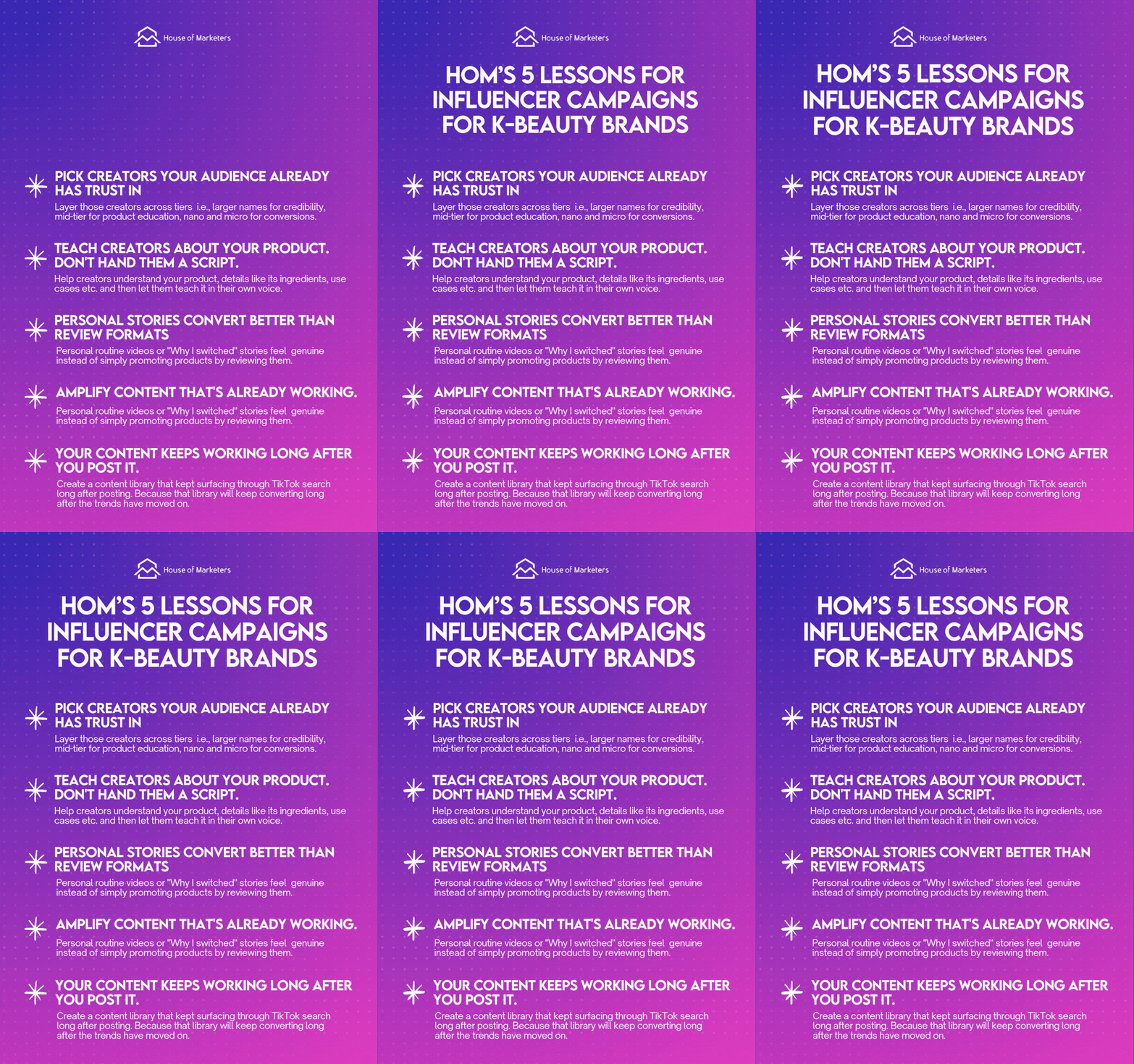
5 Lessons from K-Beauty Marketing Campaigns
When you work on this many campaigns, you learn pretty quickly as to what is going to work and what is a thing of the past. Soon enough, we were not guessing why something worked. We were seeing the result of campaign structures that were deliberately built to create demand over time, not just attention in the moment.
1. Creator Selection: Building an Ecosystem, Not a Roster
For every brand we worked with, creator selection started with the same question: who does this audience already trust to talk about skincare?
We did not lead with follower count. We led with content quality, comment sentiment, and whether a creator had already built credibility in the specific category — SPF, glass skin, slugging, layering actives — that the brand sat within.
In practice, this meant working across a deliberate mix of creator tiers. Larger creators — typically 500K to 2M followers — were used to establish legitimacy and create cultural visibility for a brand entering a new market. Mid-tier creators in the 50K to 500K range were often responsible for the highest engagement rates and the most detailed product explanations. Nano and micro creators, particularly those with niche skincare audiences, consistently delivered the strongest comment-to-view ratios and the most purchase-intent signals.
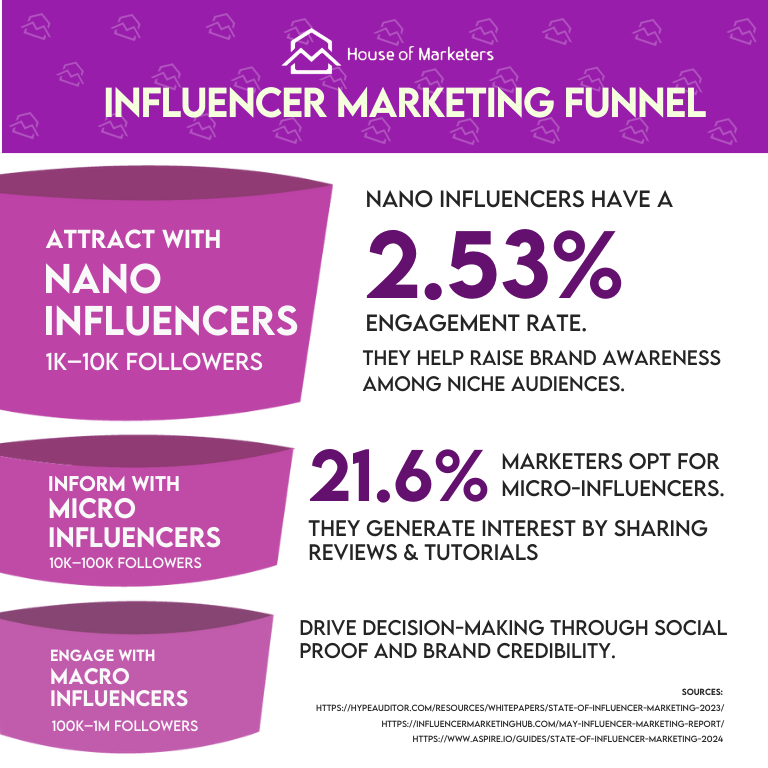
Source: Influencer Marketing Stats
The best campaigns did not pick one creator type. They built an ecosystem — layering reach, depth, and trust across tiers so that no single activation carried the full weight.
@thelipstickgirly This is how to fix cakey undereye makeup 🩷 #eyegel #eyecream #lifting #koreanskincare #belifpartner ♬ UwUKrush! – Bemax & ovg!
When selecting a creator for a brand, we asked which creators the audience already trusted and whether that creator could speak to the product’s specific world with genuine fluency. That match between creator and audience is what separates content that feels like a recommendation from content that feels like an ad.
2. Briefing: Giving Creators a Lens, Not a Script
The influencer briefing process was one of the most important levers in these campaigns, and the one most often underestimated.
For K-beauty products in particular, the ingredient story matters. Snail mucin, propolis, centella asiatica, niacinamide — these are not household names in Western markets, and they are not self-explanatory. If a creator cannot explain what the ingredient does and why that matters to their specific skin type or concern, the product becomes a curiosity rather than a solution.
Our briefs focused on giving creators the product context they needed to teach, not a list of claims they were expected to repeat. We shared the science in plain language. We explained the texture, the layering order, and the skin types it suited. We gave them before-and-after frameworks and suggested they show real application, hands, face, and skin reaction, rather than just holding the product up.
Our content strategy with creators was simple. Our brief set the direction, and the creator decided how to get there.
Influencer Marketing Brief Template
@aylennpark One year later, my mom and I are still using this glowy white truffle spray serum mist from @d’Alba Official everyday✨I mean it’s just too good not to have it in every single corner of our house🤭 Shop on Amazon today for a Prime Day discount! #DalbaPartner #dalba #dalbasprayserum #truffleglow #dalbahood #summerskin #summerglow #glowyskin #koreanskincare #kbeauty ♬ original sound – Aylen Park
3. Content Formats: What Actually Performed
Across platforms and products, a small number of formats consistently drove the strongest results.
Routine integration videos, where a creator shows a product as part of their actual skincare routine rather than as a standalone review, outperformed single-product feature content in almost every campaign. The product felt earned rather than inserted, which changed how audiences responded to it.
Ingredient explainers were consistently strong for first-time product awareness. A creator walking through what a specific compound does for the skin, in their own language, with their own experience as the reference point, drove higher saves and shares than any other content type. Saved content on TikTok is particularly valuable because it signals intent — someone saving a video is more likely to search for the product later.
‘Why I switched,’ and transformation formats worked especially well for brands where the product promised a visible outcome. Biodance’s bio-cellulose mask, d’Alba’s White Truffle Serum, and Beauty of Joseon’s sunscreen all benefited from creators framing the switch from their previous product as a genuine discovery rather than a sponsored recommendation.
@minaamouse016 I loveee white truffle, you can find this spray on Amazon, it currently stands as the number 1 facial spray serum! Yearly best prices available in Amazon for BFCM (11/21-12/2) @d’Alba Official AD #dalba #dalbahood #dalbasprayserum #truffleglow ♬ original sound – Mina
4. Paid Amplification: Turning Good Content Into Scalable Reach
Organic creator performance determined what we amplified. Posts that demonstrated high engagement rates, strong comment sentiment, or above-average watch time were whitelisted and put behind paid spend — usually within 48 to 72 hours of posting.
This approach, often called spark ads on TikTok, meant that paid media was not running alongside creator content. It was extending the best-performing creator content to audiences who would not have seen it organically. The result was that the social proof — the comments, the shares, the engagement — was already visible when new audiences encountered the ad. This consistently outperformed traditional paid creative in both cost-per-click and conversion rate.
For TikTok Shop integrations, the same principle applied. We linked directly from high-performing organic posts where the product explanation was strongest, rather than from purpose-built promotional content. Conversion was higher when the purchase point felt like a natural extension of content someone had already chosen to watch.
@mimiermakeup calling all my fellow clumsy queens! I’m usually picky about lip products, but this? smartest applicator, shiniest jelly lips ever + (Korea really is living in 2075) Plus great deals are coming on TikTok Shop & Amazon! @CNP Laboratory US #cnppartner #jellylipcerin #lipcerin #lipbalm #lipgloss #lipshine #kbeauty #cnplaboratory #dealsforyoudays ♬ original sound – Mirta Miler
@hebakamal_ I attended the @Cetaphil Canada SkinLabs event in Toronto & learned so much!! Black Friday is coming up, so you get up to 30% off select Cetaphil products from Nov 21 to Dec 2! Sensitive skin doesn’t have to be difficult to treat – @Cetaphil is for everyone 🤍 I’ve always had a tough time finding products that treat my skin but that are also gentle enough. I am so excited for this new era of Cetaphil! A simple routine is truly the best routine #CetaphilScience #CetaphilSkinLabs #CetaphilSkincare #Skinscience #skincare #SensitiveSkin ♬ original sound – heba
Learn more about the Cetaphil marketing campaign here
5. Social Search Made Trust Compounding Over Time Possible
These campaigns held their value over time because platforms like TikTok are no longer just distribution channels. They are search engines. The most significant outcome across these campaigns was not any single viral post. It was the accumulation of creator content that continued to surface through TikTok search weeks and months after the initial publish date.
When someone searches ‘best SPF for oily skin UK’ or ‘how to use snail mucin’ on TikTok today, they are not just seeing today’s content. They are seeing a library of creator videos that were published across months of activity. Brands that sustained creator programmes across quarters built discoverability that brands running one-off campaigns could not replicate, regardless of the budget.
This is where always-on activity paid its biggest dividend. Every piece of creator content added to the library increased the probability of being found at the moment of intent, which is the moment that converts.
The sell-outs, the sales uplifts, and the retail expansion were the visible outcomes. The compounding content library was the infrastructure that made them possible.
Brands that built a library of creator content, rather than relying on isolated posts, benefited from compounding visibility. Every new video increased the chances of being discovered through search. Every routine breakdown reinforced familiarity. Over time, this reduced friction at the point of purchase because the product already felt known.
In practice, this meant influencer marketing did not stop working when a post stopped trending. It continued to drive value through discoverability, recall, and repeated exposure, which is exactly how long-term demand is built.
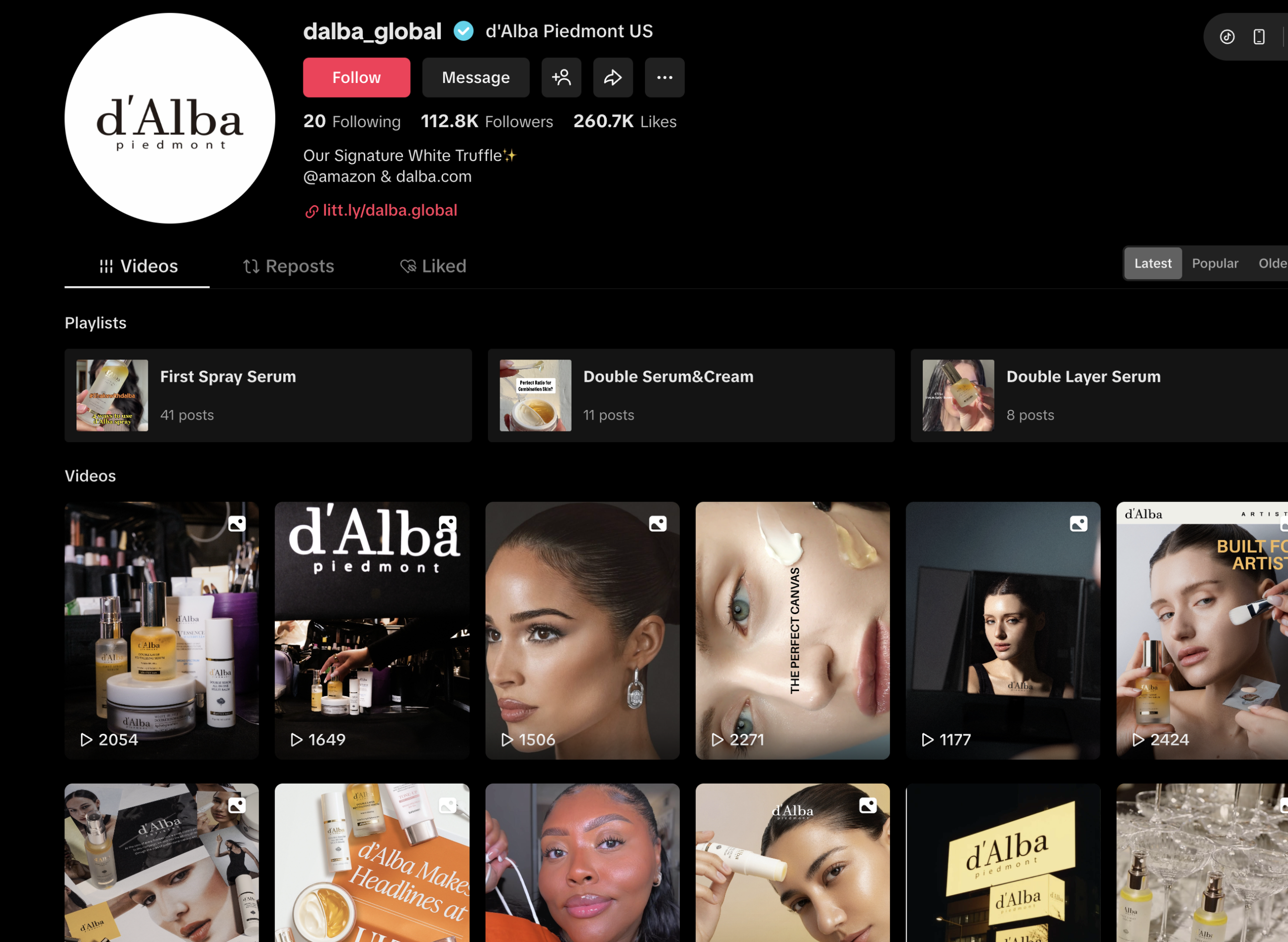
Source: @dalba_global
House of Marketers x K-Beauty Influencer Campaigns Breakdown
Several brands saw clear retail impact following campaigns, including repeated sell-outs after creator content went live. In multiple cases, products sold out up to four times across retail channels after sustained influencer activity. This was not driven by discounting or aggressive promotion. It came from demand that had already been built through explanation and routine visibility.
In one confirmed instance, a single creator activation drove a 5× increase in sales on its own. The reason was not follower count alone. It was trust. The creator had already built credibility around skincare education, and their audience listened when they explained why a product fit into a routine.
Across campaigns, the same pattern repeated:
- Education created understanding
- Repetition created familiarity
- Familiarity reduced friction at the point of purchase
This is why influencer marketing performed best when it was sustained rather than compressed. Brands that committed to ongoing creator activity saw more predictable outcomes than brands chasing short bursts of attention.
At scale, that predictability is what turns influencer marketing from a branding expense into a commercial growth channel.
| Total Views | 100M+ | across markets over the campaign period |
| Monthly Views | 25M+ | sustained through always-on creator activity |
| Engagement Rate | ~9% | well above beauty category benchmarks |
| Sales Growth | +150% | directly attributable to creator-led activity |
| Comment Sentiment | 73% positive | signalling trust, not passive awareness |
What we did:
d’Alba’s White Truffle Spray Serum required education before it could drive purchase. The ingredient — white truffle extract — is unfamiliar to most Western consumers, and the spray format is unconventional in a category dominated by dropper serums. We built the campaign around creator-led ingredient education first, with application tutorials and texture reviews as the primary content formats.
Creators were briefed to anchor the product within their existing skincare routine — not as a replacement, but as an addition — and to explain the white truffle benefit in plain terms: antioxidant protection, brightening, and skin barrier support. This reduced the ‘what even is this?’ friction that typically slows adoption of novel K-beauty products in Western markets.
Always-on activity meant the content library grew throughout the campaign, and TikTok search began surfacing creator videos for ingredient and routine queries weeks after the original publish dates. The 73% positive comment sentiment reflected genuine audience trust, not manufactured enthusiasm.
@glamzilla TRUFFLES IN MY SKIN CARE??? The @DALBA white truffle first spray serum is worth the hype & I have been saying this for so long! Here’s why! BIG Amazon sale happening now! 🎉 On top of the discounted prices, you can save even more with my code GLAMZILLA5 on all d’Alba products. ✨ #dalba #dalbafirstspray #trufflemist #truffleglow ♬ original sound – GLAMZILLA
Read more about the d’Abla Marketing Campaign here.
| Creator Videos Live | 50 | deployed within a short Black Friday window |
| Total Views | 12M+ | generated during peak promotional period |
| Engagement Rate | 7.4% | above category norms during high-competition window |
| Feed Reach | Dominant | across US female TikTok demographics during campaign period |
What we did:
Mediheal presented a specific challenge: driving performance during Black Friday, when TikTok feeds are saturated with promotional content and audiences are increasingly resistant to anything that feels like an ad.
Our approach was to treat the campaign like an editorial burst rather than a promotional push. Fifty creator videos went live in a compressed window, each briefed to lead with the product’s skin benefit, specifically the sheet mask format and its hydration delivery, rather than the discount or offer. Creators referenced the Black Friday deal as context, not as the reason to buy.
The volume of simultaneous creator activity meant Mediheal dominated relevant TikTok search and feed placements during the period without relying on a single viral moment. Consistent, education-led content from multiple creators proved more resilient than a single high-spend activation would have been.
@jasminnlily_ Collagen face masks >> love how this @MEDIHEAL ad Hyper collagen mask takes less time turn clear ✨ the plumpness after these masks is insane! 🤍 #bouncyglow #pinkmask #pinkessentials #firmingskincare #nongreasy #viralbeauty #hydrogelmask #collagenfacemask ♬ original sound – Hillel Barak
Read more about Mediheal Marketing Campaign here.
| Creators | 75 | spanning micro, mid-tier, and macro |
| Total Reach | 5M+ people | across TikTok and Instagram |
| Engagement Rate | 8% | maintained at scale across creator tiers |
| Brand Recognition Uplift | +35% | on TikTok among target audience |
| Follower Growth | 10,000+ | new followers acquired during campaign |
What we did:
Biodance’s bio-cellulose mask is a product with an immediately demonstrable result — the translucent film, the skin-hugging fit, the visible hydration effect. We structured the campaign to make that visual demonstration the centrepiece of every creator brief.
With 75 creators across tiers, the challenge was maintaining content quality and consistent messaging at scale without over-scripting. We solved this by giving creators a clear product frame — ‘show the experience, not just the product’ — and letting format vary by creator style. Some produced close-up application content. Others built it into their full routine. Several focused on before-and-after skin texture comparisons.
The 8% engagement rate holding across 75 creators — rather than averaging out toward the mean — indicated that the brief was landing consistently regardless of audience size. Scale did not dilute quality because the product gave creators genuine material to work with.
Read more about Biodance TikTok Influencer Marketing Case Study here
| Total Views | 23M+ | across four brand campaigns |
| Total Engagements | 2.1M+ | combined across platforms |
| Peak Engagement Rate | 19.9% | significantly above beauty benchmarks |
| Brands Covered | 4 | with distinct audiences, tones, and use cases |
What we did:
The LG H&H programme was structurally different from single-brand campaigns. We were managing influencer and UGC activity across four distinct brands simultaneously — belif (premium skincare), CNP Laboratory (derma-led skincare), Euthymol (heritage toothpaste with a distinctive aesthetic), and Himalaya Pink Salt (body wash).
Each brand had a different target audience, a different content tone, and a different purchase journey. Rather than running four separate campaigns, we built a shared creator infrastructure — an outreach system, a briefing framework, and a UGC pipeline — that could flex across brand requirements.
For belif and CNP Lab, creators were selected for skincare credibility and ingredient literacy. For Euthymol, we leaned into the brand’s retro visual identity and cast creators with a lifestyle and aesthetics audience rather than a beauty-specific one. Himalaya Pink Salt required creators who could make a body wash feel aspirational — shower content, texture focus, sensory description.
The 19.9% peak engagement rate across the programme reflected how precisely creator selection was matched to audience expectations. When the creator fits the product’s world, audiences respond.
@ari.k.lifestyle Cosrx Pop Up 📆 3rd-5th October 📍Moida, 64-66 Charing Cross Rd 🕘 11am – 8pm 🤍 Cosrx have finally arrived in London at Moida K beauty store with their Glow Market, filled with plenty of suprises 🤍 Join the Glow by following them on socials 🤍 Spin the roulette and win a fun little prize 🤍 Experience head to toe Glow with Cosrx 🤍 Spend £30+ for a branded bag and a full sized Cosrx product 🤍 Spend £50+ for a branded bag and a silver hand mirror 🤍 Buy one of their new products for a branded bag and a mini wooden hair brush 🤍 And so much more. So make sure to visit the pop up!!! Thank you @COSRX Official and @moida_uk for having us, and Sophie for having me with you #londonpopup #londonpopups #popup #popups #popupsinlondon ♬ Make It Look Sexy – Stunna Sandy
COSRX
| Markets | US, UK, Europe | simultaneous multi-market rollout |
| Sales Increase | 2× | directly linked to always-on creator activity |
| TikTok Shop Uplift | +15% | driven by creator-linked product pages |
| Strategy | Always-on | sustained creator and UGC programme across quarters |
What we did:
COSRX is one of K-beauty’s most recognised brands in Western markets, which meant the campaign challenge was not awareness — it was conversion and category loyalty. The goal was to turn existing brand recognition into active purchase behaviour across multiple markets simultaneously.
We built an always-on creator programme that ran continuously rather than in campaign bursts. Creators were selected for existing COSRX affinity where possible — people who already used the products, which meant their content carried the credibility of genuine preference rather than paid introduction.
UGC was treated as a performance asset from the start. High-quality organic content from creators was whitelisted and amplified through TikTok’s Spark adsformat, extending reach while preserving the authenticity of the original post. TikTok Shop links were attached to the best-performing educational content, creating a direct path from ‘I understand this product’ to ‘I can buy it now.’
The 2× sales increase and 15% TikTok Shop uplift were the combined result of sustained visibility, education-first content, and frictionless purchase integration.
| Sales Growth | 500% YoY | year-over-year during campaign period |
| Amazon Ranking | #1 Bestselling Sunscreen | sustained following campaign activity |
| Sephora & Cult Beauty | Retail Expansion | supported and accelerated by creator-led demand |
| Strategy | Authority-led education | converting viral spikes into sustained dominance |
What we did:
Beauty of Joseon had an unusual problem: the brand had already gone viral, more than once, but had not yet translated that attention into the kind of sustained authority that protects a brand when the algorithm moves on.
Our approach was to shift the content strategy from reaction to architecture. Rather than chasing the next viral moment, we built a creator programme designed to dominate the category search terms that drive sustained SPF sales — ‘best sunscreen for oily skin,’ ‘Korean SPF review,’ ‘sunscreen layering order,’ ‘SPF for dark skin tones.’
Creators were selected for their existing authority in skin science and sun protection specifically. The briefs prioritised comparison content — Beauty of Joseon against comparable Western and Asian SPF products — and detailed texture and finish reviews that addressed the specific objections Western consumers typically have about Korean sunscreens (white cast, thickness, reapplication feel).
Beauty of Joseon Marketing Campaign
The result was a content library that held its value long after individual posts stopped trending. The 500% year-over-year sales growth and the Amazon #1 ranking were not driven by a single viral video. They were built on sustained discoverability, consistent positive review content, and creator endorsements that accumulated trust over time.
@lailapaul7 I tried the @Beauty of Joseon under eye serum for over an month😱 #Ad #beautyofjoseon #koreanskincare #reviveeyeserum #retinol #retinal #retinoleyeseurm #retinaleyeserum ♬ original sound – Laila Paul
Want to Work with House of Marketers?
Over the past 12 months, we have built influencer programmes for 13 K-beauty brands across the US and Europe — not as one-off campaigns, but as long-term demand infrastructure.
If you are planning your next phase of growth in Western markets, we would love to show you how we can build the same for you.
Get in touch with House of Marketers
House of Marketers (HOM) is a leading TikTok Marketing Agency. Our global agency was built by early TikTok Employees & TikTok Partners, which gives us the insider knowledge to help leading brands, like Redbull, Playtika, Badoo, and HelloFresh win on TikTok. Want us to convert more of Gen Z and Millennials with TikTok? Get in touch with our friendly team, here.