





Summary: How to Drive TikTok Views with Social SEO
- TikTok SEO is intent-driven, not trend-driven. To rank on TikTok, you should use relevant keywords in captions, on-screen text, spoken audio, and engagement signals.
- Niche clarity beats volume. Consistently publishing around a small set of related topics helps TikTok understand what your account represents and surface it more often based on specific search terms and phrases.
- Creators boost discoverability. Influencer content naturally uses search-friendly language, earns early engagement, and helps your brand rank faster than brand-only posts.
- Scale what already works. Use TikTok ads to amplify high-performing organic or influencer videos. Paid media should reinforce positive SEO signals, not replace them.
- Visibility compounds beyond TikTok. Clear, indexable content can appear in Google search, embedded pages, LLMs (large language models) and other platforms, extending discovery far beyond TikTok.
When people need a recommendation nowadays, Google is slowly losing its prominence. Over time, social searching, especially on TikTok, has become the default for many users.
TikTok has moved past its role as an entertainment app and taken on a new role as a search platform. It is now where opinions form, comparisons happen, and buying decisions begin.
In this discovery journey, TikTok only surfaces content it believes is relevant in that moment. If your content does not align with what users are searching for, it simply does not appear.
To place your brand at the front of this journey, you need to understand how TikTok SEO works.
As a Global TikTok Marketing Agency, we understand how TikTok reads content and decides what to surface. When your videos align with what people are searching for, they show up at the exact moment intent exists.
In this guide, we break down how TikTok SEO works, why it matters now, and how to use it to build visibility that lasts.
What is TikTok SEO?
TikTok SEO is how you make sure your videos appear when someone searches for a topic you cover. It is an intentional route to being visible on TikTok rather than relying on luck or trends.
TikTok SEO is what helps the platform understand:
- What your video is about
- Who it is for
- In what context should it be shown in
This is done through signals TikTok can read, including:
- The words you use in captions and hashtags
- On-screen text and spoken audio
- How viewers interact with the video
Knowing how to work these signals is essential to appear on TikTok’s algorithm.
Because for many users, TikTok now functions as a social-first alternative to Google.
Why TikTok SEO Matters for Social Search
Instead of links and articles, people seek short-form videos from real creators explaining things in context.
62% of Gen Z already use TikTok for searching. Adobe’s findings also echo this trend: nearly 1 in 10 Gen Z users are more likely to rely on TikTok than Google for everyday answers.
As House of Marketers Founder Inigo Rivero defines it:
“Social search has changed how discovery works. People no longer find answers through neutral results pages. They find them through creators demonstrating solutions in public. On platforms like TikTok, search results are personalised by behaviour. What a user sees is shaped by their past engagement, the content they interact with, and the signals they send over time.

Below, we break down the practical steps you can take to align your content with TikTok’s search behaviour and boost long-term visibility.
How to Boost Visibility with TikTok SEO?
Acing TikTok SEO is not a one-time fix. It requires you to optimise and be on top of multiple avenues your brand appears in. Let’s discuss each one by one.
Conduct Keyword Research for TikTok
Keyword research should be the first step you take, so you are setting yourself up for success. Researching keywords is not about finding as many keywords as possible. It is about deciding what you want to be known for and narrowing down relevant keywords accordingly.
Start with your brand, not the algorithm.
Identify the core product/service you offer and the main problem you solve. These are the topics you want TikTok to consistently associate with your content so that if someone searches around these areas, your videos should feel like an obvious choice.
Once that is clear, move to how people actually search. Use TikTok’s search bar and autocomplete suggestions to see the phrases users type in. Then look at the top videos ranking for those searches. The language they use, both in captions and on-screen, tells you how the platform understands that topic. Also, TikTok Creative Center & Keyword Insights can help with keyword research.
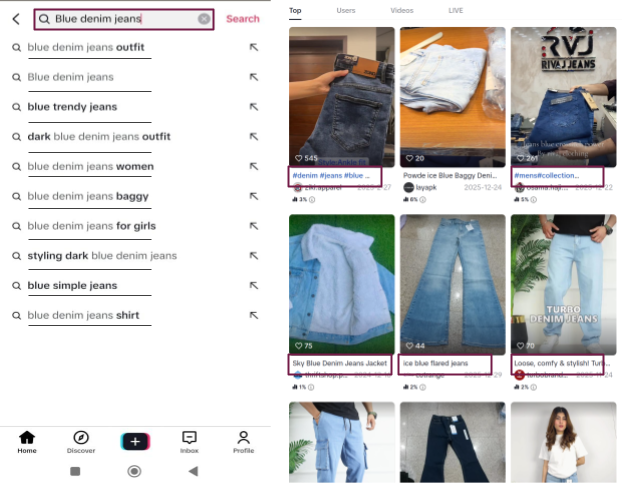
Source: TikTok Search
Validate search intent before choosing keywords
By this point, you will learn that not every keyword is worth targeting. What matters is intent.
On TikTok, search intent usually falls into a few patterns:
- Educational or explanatory content
- How-to demonstrations
- Reviews and user-generated opinions
- Entertainment-led discovery tied to a topic
When reviewing search results, ask yourself:
- Do these videos match what my brand offers?
- Does the content style fit my existing or planned format?
- Is this a type of content I can create consistently?
If the answers are no, it is the wrong keyword, even if it looks popular.
Narrow down your core keywords and hashtags
From your research, choose a small set of core keywords and hashtags. These are the terms your content and branding should support repeatedly.
Once you have your list, prioritise long-tail keywords. These are more specific and often less competitive. For example, instead of targeting “skincare,” focus on phrases like “skincare for mature skin”, which better match search intent and are easier to rank for.
Explore TikTok’s Trend Discovery tool to find relevant hashtags. You can filter by industry, region, and performance metrics to see what’s gaining momentum.
Tips for Keyword Placement on TikTok
TikTok reads keywords from:
- Captions and video descriptions
- On-screen text
- Spoken audio
- Hashtags
Do not force keywords just for the sake of using them. Instead, use them as organically as possible. Include them as part of a clear sentence that explains what the video is about. This improves clarity for TikTok and makes the content easier to engage with.
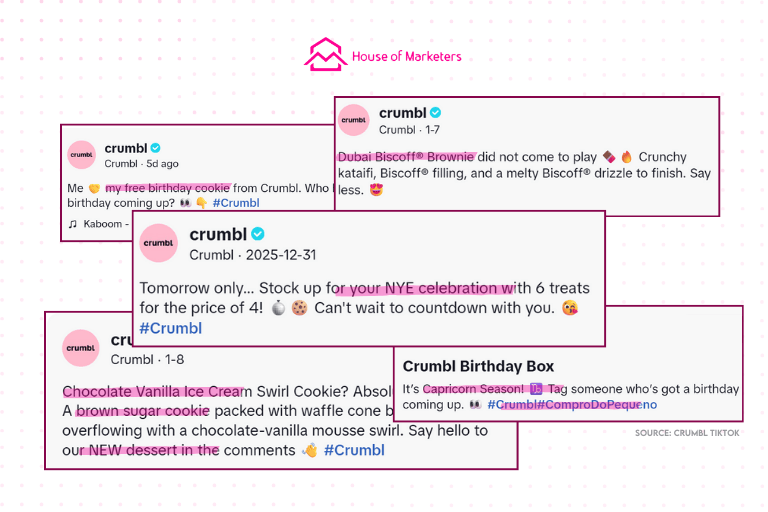
Take a look at how Crumbl Cookies sprinkles in keywords and hashtags on TikTok.
Keywords can double as hashtags. So for hashtags, focus on quality over quantity. Three to five hashtags are enough. Include at least one hashtag that matches your core keyword exactly word for word, supported by a small number of relevant, niche tags.
Optimise Your TikTok Profile for Search
Getting your keywords and hashtags in order is a good first step, but your TikTok profile can make or break that. Your TikTok profile is one of the first places TikTok looks to understand what your account is about and whether your content deserves to surface for certain searches.
A well-optimised profile reinforces everything your videos are trying to say.
Keep your username and handle clear and consistent
Your username and handle should clearly reflect your brand name. Avoid unnecessary symbols, extra words, or variations that make your account harder to recognise.
Consistency matters here. Using the same name across platforms helps users find you more easily and helps search engines understand that your TikTok account is connected to your brand elsewhere online.
Your profile image should also be instantly recognisable. A clear logo or consistent brand visual builds trust and makes your account easier to identify in search results.
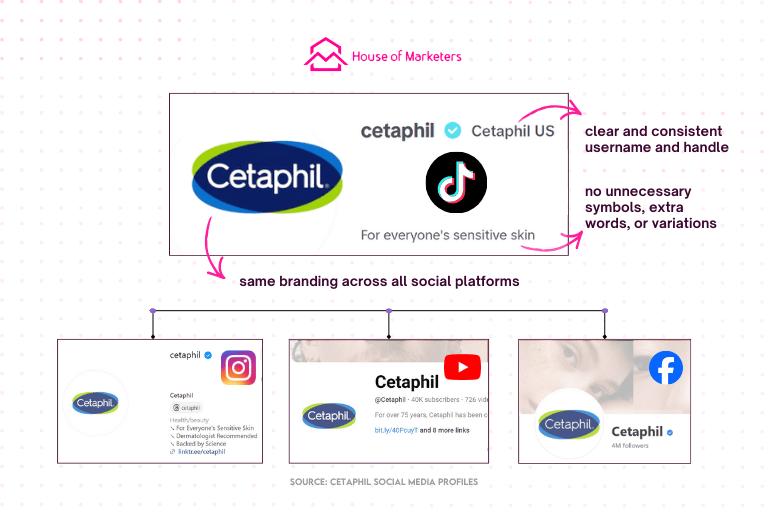
Write a bio that supports TikTok search
Your TikTok bio is a searchable summary of what you do.
If someone reads your bio, they should immediately understand who you are and why your content is relevant to them. Include your primary keyword naturally, without forcing it. Combine your brand statement and keyword search to craft a bio that clearly explains your value in a short, simple sentence.
Use specific language as it performs better, both for users and for search.
Instead of saying “best triangle chip makers in the world,” you can say “Florida-based nacho chip suppliers for restaurants and retailers.”
A good rule of thumb for a TikTok bio is to follow the following template.
[What you do] for [who you help] in [location or niche].
If your bio mentions a specific service or theme, your TikTok content should consistently validate that. Repetition across your bio, captions, and on-screen text helps TikTok categorise your account correctly and surface it more often for related searches.
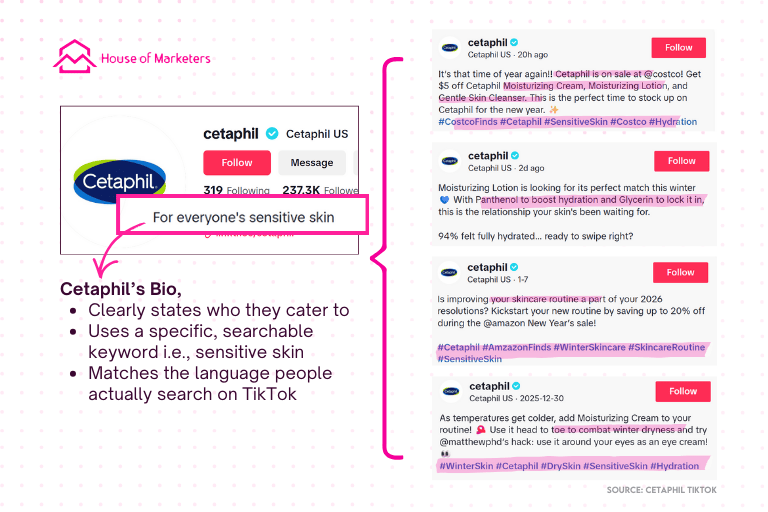
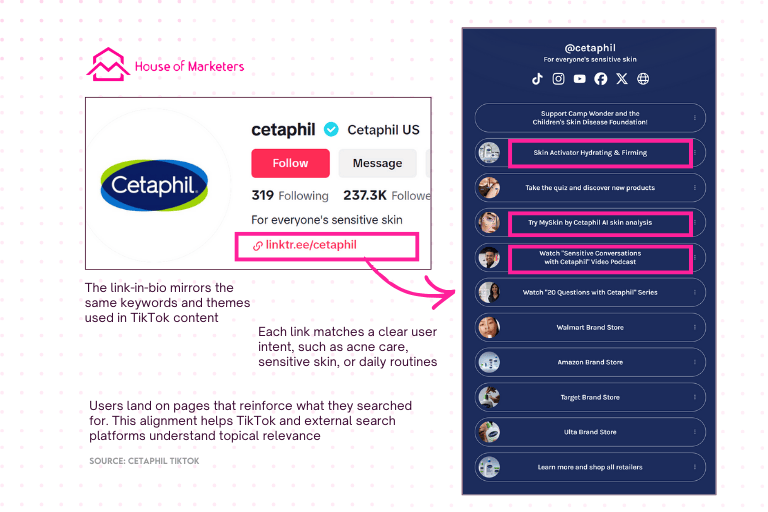
Cetaphil’s content, keywords, and hashtags further reinforce this, hence increasing their chances of appearing in search results tied to their niche.
Use your link-in-bio to support discovery beyond TikTok
Your link-in-bio is part of the discovery engine. Do not consider it as an afterthought.
Send users to a page that matches the topics and keywords you chose for your TikTok profile. If your videos focus on a specific service or product, your landing page should reflect the same keywords and intent.
This creates a seamless experience from search to action and strengthens your visibility both on TikTok and beyond it.
See how House of Marketers helped Cetaphil apply TikTok SEO principles to influencer content and turn short-term buzz into sustained visibility.
Cetaphil Influencer Campaign Case Study
Utilise Influencer Marketing to Strengthen TikTok SEO
TikTok rewards accounts that stay focused on a clear niche. But in practice, that is harder than it sounds.
If you publish consistently around the same topics, you risk feeling repetitive. The message stays the same, the structure stays the same, and eventually, engagement can flatten even if the content is still relevant.
This is where creators add real value.
Creators allow you to keep your SEO focus while changing the delivery. You stay visible for the same keywords and search intent, but through different faces, voices, and formats.
From an SEO perspective, creators do three useful things:
- They already speak to your target audience
- They naturally use the language people search with
- They generate early engagement signals TikTok trusts
That combination helps content surface faster in search and recommendations than isolated brand posts. Creators help with TikTok SEO to grow your TikTok audience
@fentybeauty In our Rose Amber era 🥀 Gloss Bomb Universal Lip Luminizer in ‘Rose Amber’ is a sparkling cool taupe brown & the ultimate gotta-have-it lip gloss for every Fenty function this fall 🤎 Dip in for explosive shine that feels as good as it looks while Peptides, Shea Butter and Vitamin E strengthen your lips’ moisture barrier 💋 @Wendy’s World ™ and @May wear Trace’d Out Lip Liner in ‘Whiskey’ + Gloss Bomb in ‘Rose Amber’ 🫶🏽🫶🏿 Shop the Fenty lip combo at @sephora, @sephoracanada, @Kohl’s #sephoraxkohls, @Ulta Beauty ♬ original sound – Fenty Beauty
Use TikTok Ads to Scale Influencer Content That Already Works
Running ads on TikTok is a great way to boost your visibility on the platform. But don’t create standalone ad creatives solely for the sake of running ads. Instead, take a look at what creative and videos have been performing well. Shortlist the videos that have already earned watch time, comments, saves, and shares. These signals tell TikTok the content is relevant.
Now use TikTok ads to boost this content that the platform already deems important. Boosting content that already performs does three things,
- Reinforces positive behavioural signals
- Places proven content in front of new, relevant audiences
- Increases the likelihood that videos continue surfacing in search and related feeds
Look for patterns in UGC content and videos that perform well. Mix and match those hooks, pacing, framing, or angles. Create variations on your key topics while sticking to your niche.
Running campaigns through verified TikTok ad accounts also matters. TikTok now requires verification to run ads. This is because a verified account adds legitimacy to your brand, further improving your TikTok SEO.
If you need support scaling your influencer activity through a solid TikTok marketing strategy, House of Marketers can help.
Contact for Free Campaign Proposal
Where TikTok Content Now Appears (Due to TikTok SEO and Discovery)
TikTok videos increasingly appear directly in Google search results, which means your videos can be discovered even when users are not on TikTok.
To improve off-platform visibility, all the above tips apply. TikTok and Google both rely on the same inputs to understand your video:
- Captions and descriptions
- On-screen text
- Spoken audio
- Hashtags tied to specific topics
Clear, specific language makes it easier for your videos to be indexed and surfaced outside the app. Avoid vague hooks or trend-only captions if your goal is long-term discovery.
Also, embedding TikTok videos into relevant blog posts or guides gives them context and extends their lifespan.
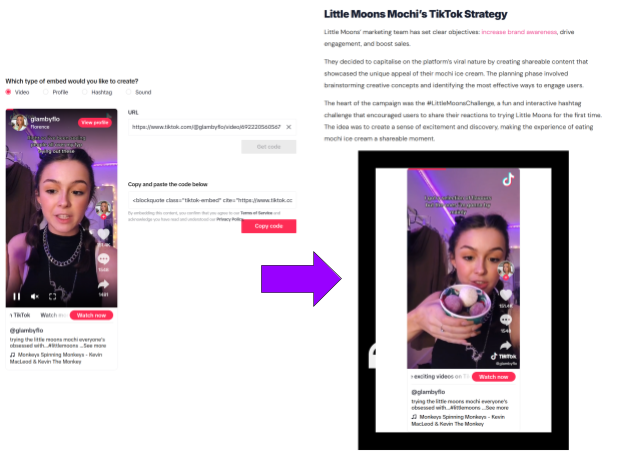
Source: Little Mochi Moon Case Study
Cross-promoting TikTok content through newsletters, blogs, or other social platforms also helps reinforce relevance and drive repeat discovery.
Conclusion
By now, TikTok SEO should feel less like a concept and more like a system.
It starts with understanding how people search on TikTok. Then it moves into choosing the right keywords, aligning content with intent, and publishing consistently around a clear set of themes. From there, you scale what already works, using creators and paid media to amplify proven formats rather than forcing new ones.
TikTok SEO works when each part supports the next.
Keywords inform content ➡ Content informs profile credibility ➡ Profile credibility informs engagement ➡ Engagement strengthens visibility
Over time, this creates a cycle of success.
If you need support connecting these pieces into a working system, House of Marketers helps brands build TikTok strategies designed for sustained discovery, not one-off wins.
Frequently Asked Questions
Q: What are some common TikTok SEO mistakes to avoid?
- Chasing trending sounds with no search intent
Trend-led content should reinforce your niche, not replace it. - Changing niches too frequently
Jumping between topics confuses TikTok’s understanding of your account. - Overloading captions with hashtags
More hashtags ≠ better SEO. A small set of relevant, intentional hashtags performs better than a long list added for reach alone. - Forcing keywords into captions or audio
If a keyword does not fit naturally, better to not use it. - Running ads before validating content organically
Promoting unproven videos leads to weak signals and wasted ad spend.
Q: How do you rank higher on TikTok search?
More TikTok followers, brand size, or how long an account has existed do not give an advantage. TikTok looks at three core signal types:
- How people interact with your content
- What your video clearly communicates
- How consistently does your account publish around the same topics
Q: Which user interactions matter most for TikTok SEO?
TikTok pays close attention to:
- Watch time and completion rate
- Rewatches
- Likes, comments, shares, and saves
- Profile visits after watching
- Videos marked as “Not Interested.”
Participating in relevant trends or challenges increases the likelihood of early interaction, which helps TikTok understand how to categorise your content.
Q: How does TikTok understand what a video is about?
TikTok scans multiple content and metadata signals to categorise videos like,
- Captions and video description
- On-screen text
- Spoken audio
- Hashtags
- The video file name before upload
Q: Does consistency affect TikTok SEO?
Yes. TikTok does not judge videos in isolation.
Accounts that consistently publish around the same themes send stronger signals than accounts that jump between unrelated topics. Over time, this builds topical confidence and improves discoverability across related searches.
Q: How do you find keywords on TikTok?
Use TikTok Creative Center & Keyword Insights to see what users are actively searching for by region, category, and trend. This shows you the demand that already exists on the platform.
You can then layer in external tools like Google Trends, Ahrefs, and Semrush to uncover longer-tail or rising queries, but TikTok search behaviour should always lead the decision.
Q: How often should you post on TikTok?
Consistency matters more than volume.
TikTok recommends posting 1–4 times per day when testing new content formats, especially early on. This helps you learn what your audience engages with and gives TikTok more signals to work with. Peter out to 2 to 5 posts per week once you have figured out your niche.
Q: What are the best times to post on TikTok?
There is no single best time that works for everyone.
Posting times vary by industry, audience, and region. Use TikTok analytics to spot patterns over time and adjust, but focus first on showing up regularly with content aligned to what people are searching for.