In early 2026, a $19.99 stuffed toy sold out globally. There was no product launch or any paid campaign for it. Just a baby monkey at a zoo in Japan who wouldn’t let go of a particular orange IKEA plushie. IKEA may not have manufactured that moment, but they recognised it and moved fast to cement their brand positioning in the eyes of the consumers by donating toys to the zoo and doing real conservation work.
The result was one of the most talked-about reactive marketing plays of the year. And the underlying mechanics were animal/ pet influencer content that generates genuine emotional attachment, bypasses ad-recognition responses, and converts.
This is exactly why pet influencer marketing is NOT a marketing segment marketers should sleep on.
Audiences are now more sceptical of polished and scripted content, and because of this, the authenticity signal that pet influencer posts carry is becoming more and more valuable.
This guide breaks down how to build campaigns that leverage pet influencer marketing with the right creator types, the right brief structure, and a paid amplification strategy to get the maximum ROI from your influencer marketing campaigns.
Let’s start with the basics.
What Is Pet Influencer Marketing?
Pet influencer marketing is when brands partner with social media accounts built around animals or pet owners.
In 2026, pet influencer marketing is no longer a niche tactic. The global pet care market is projected to exceed $500 billion by 2030, and social media has accelerated the cultural status of animals from companions to content creators in their own right.
Whether you’re a pet brand or not, working with pet influencers follows the same core mechanics as traditional influencer marketing,
- You identify a creator whose audience matches your target customer
- You and the creator agree on a deliverable
- The creator produces content that features the product.
The only difference is the communicator. Instead of a person recommending something, it’s a pet (even then its a person by proxy, haha). But this single perceived shift in narrative changes how audiences receive and process the message entirely.
Add a link to our Landing page once published.
How to leverage influencer marketing for pet products
Pet content works because it’s charming and cute, but that is not the reason why it converts.
There is a specific trust mechanism at work when you are using pet influencer marketing, and understanding it will change how you build your campaigns.
Pet Influencers’ Content is Entertaining First, and an Ad Second.
Users know that animals can’t be paid to perform enthusiasm. So when a pet interacts positively with a product, audiences perceive it as a real reaction instead of a sponsored obligation.
That type of sincerity is what moves people from passive viewers to real purchase intent in the marketing funnel.
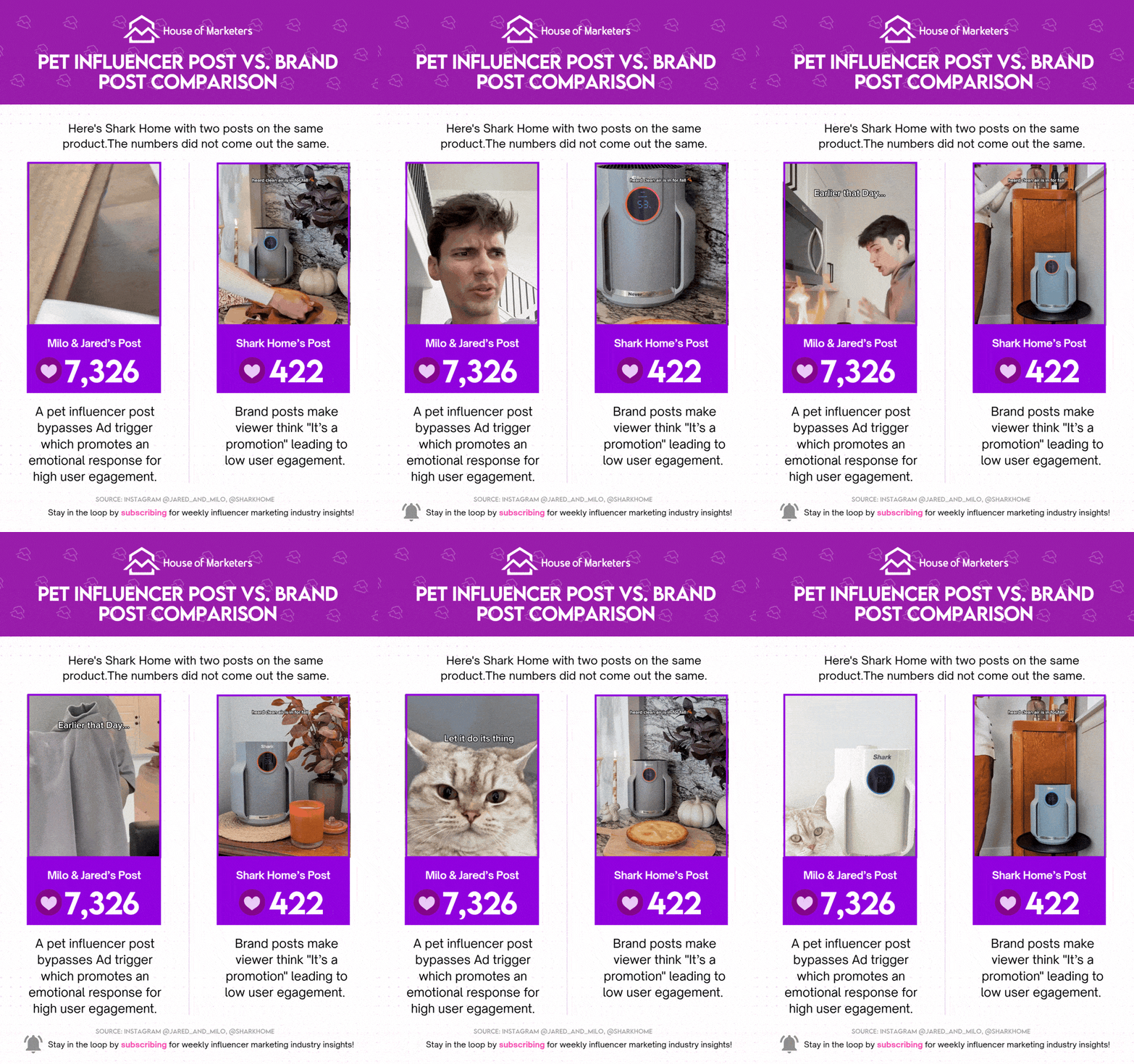
Audiences don’t always engage with a pet account post because they’re interested in the brand. They follow it because they’re attached to the animal. The brand just gets pulled along for the ride.
Moo Deng, the pygmy hippopotamus in Thailand, is a good example of this. Moo Deng took the world by storm in 2024, quickly gaining millions of followers. She was the subject of international press coverage, fan art, and merchandise all over the internet.
Because of Moodeng, people who had never thought about Thailand or even had zero prior interest in pygmy hippos before were sharing and interacting with her content daily. Because of this influence, Moo Deng’s zoo saw a visible growth in its social following, along with increased zoo visits from all over the world.
View this post on Instagram
None of that happened because people suddenly cared about this random zoo in Thailand. It happened because they cared about Moo Deng, and the zoo came with her.
These factors compound. Any pet influencer campaign that understands this about pet influencer marketing will outperform one that doesn’t. We have compiled 6 steps below, which are designed to help you build a successful pet influencer marketing campaign of your own.
Pet Influencer Marketing Trends 2025-2026
- Pet influencer accounts average 5% engagement rates across major social platforms — more than double the 1–3% human influencer average
- The average sponsored post from a pet influencer costs between $178 and $190 — a figure that held flat across the entire March 2024 to March 2025 period
- The global pet care market is projected to exceed $300 billion by 2030
- A save rate above 3% on a pet influencer post is a reliable indicator of purchase intent
How to build a pet influencer marketing strategy: 6 Steps
If you’re running an influencer marketing campaign for a pet brand, here are some pet influencer marketing strategies that actually drive results.
Step 1: Get specific about your objective
Pet influencer campaigns can serve very different goals. The goals of the campaign can range from brand awareness, direct conversions, product trial, or even UGC acquisition.
Deciding this first is crucial because every downstream decision changes depending on which one you’re optimising for.
Get specific before you brief anyone. “We want engagement” is not a campaign objective.
Read more: How to Choose the Right Metrics for Social Media Campaign Success
Step 2: Match the pet content creator type to your campaign goal
There are three distinct types of pet influencer accounts. Picking the right one based on what your campaign goals are will determine campaign success.
Pet social media accounts
These are accounts where the pet is the main creator. These accounts and pet influencers are ideal for brands that have a pet product that can sit naturally inside the pet’s daily world, e.g., food, toys, grooming, and home products.
Day-in-the-life videos and humour-driven posts are where these creators shine. Ringodanyan is a pet account with over 1.4M followers on Instagram, and their content features the cats and their daily antics
View this post on Instagram

Pet owner accounts
Pet owner accounts feature mainly the pet owners’ lifestyle content, coupled with regular pet content cameos.
The animal is a recurring character rather than the sole focus, which gives these accounts broader demographic appeal.
Non-pet brands tend to find more natural integration here. Here are some prime examples of how Hayday and Duolingo use pet influencer marketing.
View this post on Instagram
Jared and Milo on Instagram is a collab account that got a paid partnership from Duolingo! Yes, the language learning app. Even games like HayDay collaborate with them.
View this post on Instagram
Duolingo and HayDay are proof that non-pet brands can integrate into pet influencer content without it feeling forced. The key is finding a creator whose lifestyle content already has natural overlap with your brand category, i.e., tech, food, fashion, wellness, and gaming brands have all found footholds here.
Pet professional accounts like vets and behaviourists
Vets, trainers & behaviourists carry credibility that the other two types of pet content creators don’t. Their creators have audiences that tune in for expert guidance, which makes them the right fit for health-adjacent products like pet supplements, specialist nutrition, and wellness tools. If trust is the main barrier to purchase for your product, this is where you start.
View this post on Instagram
Step 3: How to Find the Right Pet Influencer for Your Brand?
The average sponsored post from a pet influencer costs between $178 and $190. For brands entering this space for the first time, micro pet influencers are where we recommend you build proof of concept before allotting all your marketing budget to one big creator.
When you’re evaluating creators, move past follower count quickly, as that is a lofty metric given the current engagement requirements of the social media algorithms. Here’s what actually predicts performance instead,
- Engagement quality: Look for comments that spark engagement instead of generic emoji-only responses. Real conversation in the comments is a true marker of meaningful engagement.
- Audience demographics & Brand fit: Does the creator’s follower base and content tone match your target customer? The target audience’s age, location, and buying behaviour are all stats that are crucial to know before selecting your pet influencer creator.
- Content consistency: Make sure that the creator has a regular posting cadence and quality that holds across posts. That will directly contribute to how the algorithm will push their content.
- Partnership history: Have they worked with in this niche before? See the performance on those posts and look at how they actually performed. This will help you evaluate audience overlap and how a similar campaign will perform with that creator.
Use social search and social listening to find creators who already mention your product or category organically. In fact, Meta’s AI tools help advertisers in creator search using the “brand-mentioned-before” metric specifically. It’s doing this by using the creator’s content history and gauging if they ever expressed any affiliation towards partnering with any specific brands. By using these clues, it in turn trains its AI models and has a better idea of which brands are the best fit for these creators.
Step 4: Brief creators for ideal outcomes, do not script their execution
The content creator brief is where most marketers micro-optimise and axe their campaign’s potential. When you over-specify, the creator’s voice gets muted out, and the result is content that looks polished but performs like a standard ad. Because it is made like one.
So give the creator the destination, but let them figure out the route.
A brief that works includes:
- Specific campaign objective and campaign metrics you’re optimising for.
- Your product’s clear USP.
- Non-negotiables like disclosure language, required hashtags, and any product visibility minimum requirements.
- Brand guardrails, i.e., what would impact the content’s usability, maybe there are laws or content formats that you need to be mindful of.
- Reference examples for tone and format, framed as inspiration, not instruction
What doesn’t belong in the brief: shot lists, scripted voiceovers, or anything that tells the creator exactly how the product should appear on camera. They know their animal and their audience.
That knowledge is what you’re paying them for.
Step 5: Track the metrics that actually tell you something
The metrics worth tracking depend on your objective, but these are the ones to watch across every campaign:
- Engagement rate
- Save rate
- Comment Quality
- UTM parameters and discount code uses for clear attribution
Read more: How to Measure Influencer Marketing ROI
Tracking the correct metric helps you see if your campaign strategy is working. Once you have realised which creators and content pieces are succeeding, your next step should be using paid social ads.
Step 6: Use Paid Media Boosting to Amplify what’s working
Organic reach has a ceiling. Put paid spend behind content that has proven its value inside the algorithm.
Creator content consistently outperforms brand-produced ad creative when boosted. Because even when the post is promoted. Audiences still process it as authentic content. A few things to get right before you boost:
- Secure usage rights in the creator contract: Make sure that you ask the creator for rights to use the created content for paid amplification as well.
- Boost from the creator’s handle, where possible: This is called whitelisting. Whitelisting allows you to run ads through a creator’s handle instead of the brand account. TikTok reports that creator-led ads can drive 70% higher click-through rates and 159% higher engagement than non-creator ads at the same CPM.
- Do not put all your marketing spend behind one creator: Run small tests across multiple pieces of content before committing to one creator entirely.
- Make sure to retarget engaged audiences: People who already interacted with the pet influencer’s posts are in your engaged audience basket now. These users are significantly cheaper to convert than cold audiences. So do not forget to spark their interest again.
The brands leaving the most performance on the table in this channel are the ones that treat paid amplification as an optional extra. Build it into the campaign plan from the start, and it becomes a reliable multiplier, not a last-minute decision. This will boost your influencer marketing ROI in the long run.
Final Thoughts
Pet influencer marketing is one of the few channels where the trust mechanics are still genuinely intact, and that applies no matter if you’re selling dog food or a language learning app.
Audiences haven’t tuned this form of influencer out the way they’ve tuned out traditional influencer content, and the engagement data holds up consistently to prove it.
Is Your Influencer Strategy Set Up to Scale?
Most brands get the first half of this right: find a creator, brief a post, watch the engagement come in. The plateau hits at the transition from organic performance to scalable, paid-amplified growth. That gap is almost always a strategy problem, not a budget one.
If you want a clear view of where your current influencer strategy or UGC campaigns are leaving results behind, that’s exactly what we, as a TikTok influencer agency, help brands work through at House of Marketers.
Contact for Free Campaign Proposal