



Overview
- Google published its first When to Buy Guide, showing when holiday deals usually peak across major categories.
- Google’s Universal Cart is now rolling out in the U.S. across Search and the Gemini app.
- Both updates could shape when and where shoppers buy this holiday season.
- House of Marketers‘ insights break down what each means for brands planning holiday promotions.
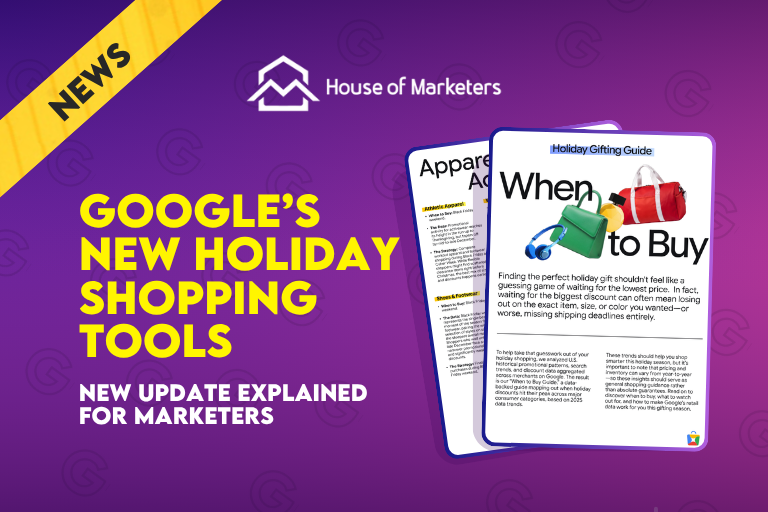
Google launched two new shopping tools last week that could change how marketers plan holiday promotions heading into peak buying season.
First, Google published its first When to Buy Guide, which outlines when the best deals are likely to land across major product categories, based on last year’s shopping data.
For marketers, that also points to when competition for shoppers is likely to be highest in each category.
Google also rolled out its Universal Cart to users in the U.S., letting shoppers save products from multiple retailers across Google and come back to them later.
Below, we break down both releases and what we think brands should do about them.
Key Takeaways From Google’s When to Buy Guide?
Google’s When to Buy Guide is a six-page report showing when holiday discounts peaked across major U.S. product categories last year. It’s built on historical promotional patterns, Search trends and discount data from merchants on Google.
The guide gives shoppers category-by-category timing. A few standouts:
- Fragrance: Buy early. Deals don’t deepen closer to Christmas, and the best window is the two weeks after Black Friday weekend.
- Handbags: Skip Black Friday. Mid-December balances price and selection.
- Travel: Accessories peak in November, but large suitcases hit their lowest prices in late-December clearance.
- Motorized tech toys: Some of the steepest markdowns arrive in the final weeks of December.
The guide also includes notes on last-minute gifting habits. Google is clear that these are general guidance, not guarantees.
What is Google’s Universal Cart?
Google’s Universal Cart is a shopping cart that saves products from multiple retailers in one place across Google Search and the Gemini app. Google first previewed it at I/O in May.
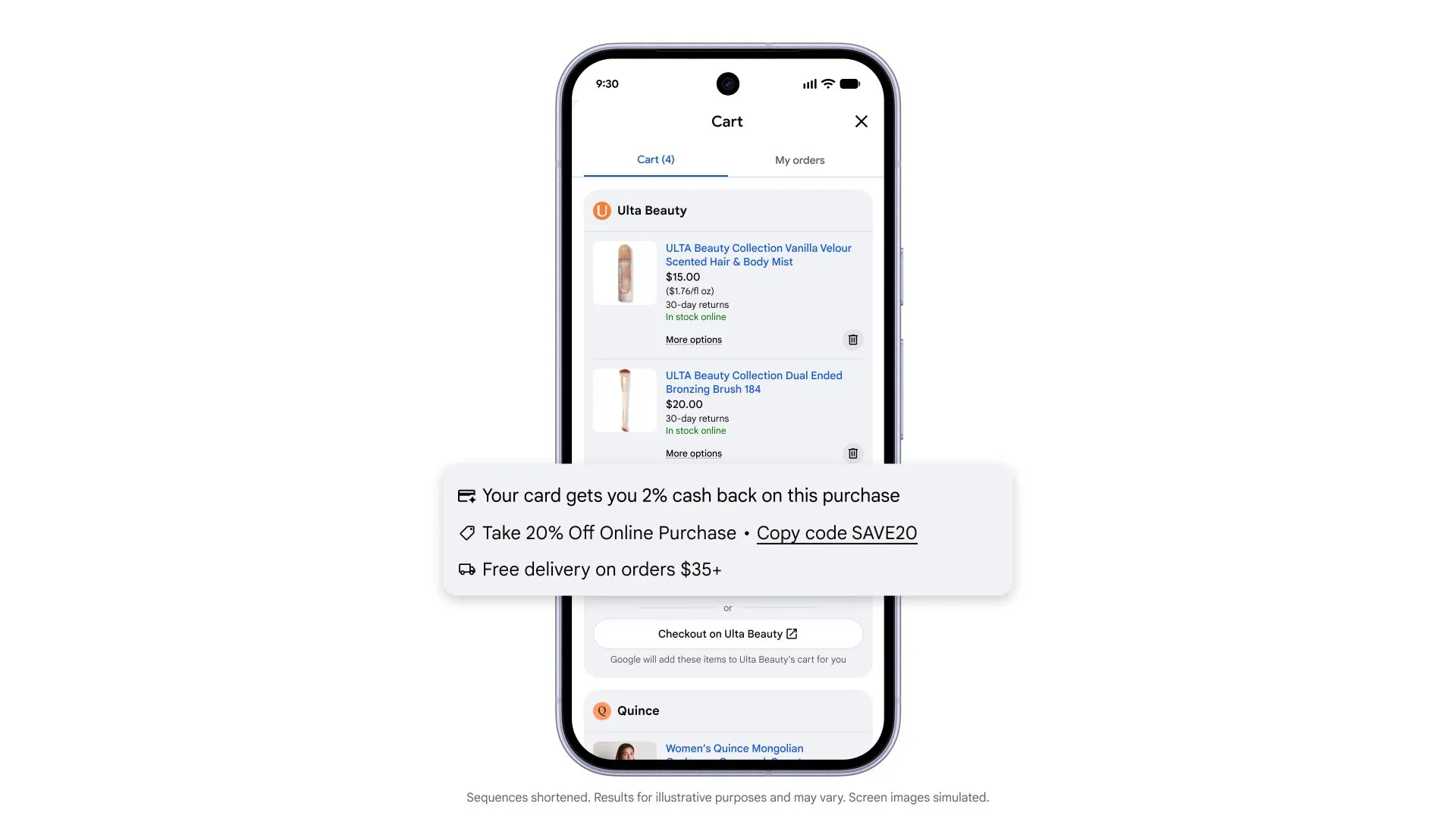
In Google’s example, a shopper saves a Steve Madden handbag in AI Mode, then adds a Quince sweater and an Ulta Beauty lip gloss in the Gemini app. All three are waiting in the cart when they return.
Universal Cart Helps Shoppers Save Money & Time
Universal Cart monitors saved products and notifies shoppers when prices drop or out-of-stock items return. It runs on Google’s Shopping Graph, which Google says contains more than 60 billion continually refreshed product listings.
Because the cart is built on Google Wallet, it can also recognise a shopper’s card benefits and suggest which payment method makes the most sense for each purchase. Relevant promo codes appear directly in the cart.
Shoppers can check out inside the cart with Google Pay or move their items to the merchant’s own cart to finish on the retailer’s site.
Either way, the merchant stays the seller of record and handles order confirmations and customer support. The checkout layer is powered by Google’s Universal Commerce Protocol (UCP).
Source: Google
House of Marketers Insight: What This Update Means For Marketers
The When to Buy Guide is written for shoppers, but it works just as well as a demand map for marketers. Because if Google is telling consumers to wait on handbags, luggage, and tech toys, a share of buyers in those categories will hold off past Black Friday.
A creator campaign that spends its whole budget in late November could peak before those customers are ready to buy. Fragrance is the opposite: the window closes early, so content needs to be live and driving consideration by Black Friday weekend.
That’s why we’d plan holiday creator content in two phases this year. The first phase puts products in front of people and gets them saved. The second lands conversion pushes, creator codes, and paid amplification inside your category’s actual deal window.
Universal Cart makes that first phase of this strategy even more valuable. Saving a product now creates a tracked list, and Google will ping the shopper when the price drops.
The gap between discovery and purchase gets shorter, and the purchase itself increasingly happens inside Google. Product discovery, though, still happens on TikTok, Instagram, and YouTube, where creators show products in use and give people a reason to want them. So the job of creator content this season is to get your product into the customers’ “Holiday shopping list” early, so the price-drop alert can do the closing later.
A few practical points follow from this:
- Keep offers consistent. If Google surfaces promo codes in the cart, your creator discount codes and product feed offers should tell the same story. Conflicting prices create friction at the exact moment a shopper is ready to buy.
- Check your product data. Universal Cart runs on the Shopping Graph, so accurate pricing and inventory in your feed directly affect whether your restock and price-drop alerts fire.
- Plan for longer consideration cycles. Measure creator content on saves, searches, and assisted conversions, not only last-click sales in the week it goes live.
This is the latest step in a wider race to own the e-commerce economy. Meta made a similar move in September with Muse, its personal AI shopping agent, and Google is now putting a cross-retailer cart at the centre of Search and Gemini. As more checkouts move into AI-powered tools, the brands that win will be the ones customers already know and want before they ever open the cart.
Conclusion:
As a TikTok marketing agency, our background shapes how we read announcements like this one.
If you are planning your holiday creator calendar, House of Marketers runs influencer campaigns for 100+ brands a year across the UK, US, and Europe, backed by a network of 250,000+ creators. Get in touch to time your creator content to when your customers are actually ready to buy.