




A useful Reels strategy starts with a clear job for each video. An organic Reel might need to earn a save or start a conversation. A paid Reel might need to explain a product and turn interest into an enquiry. Both need a strong opening, a clear story and creative that works on a phone.
This playbook brings together our coverage of Meta’s Reels creative guidance and Instagram’s organic publishing tips. Use the shared production checklist first, then choose the organic, brand-building or direct-response workflow that matches your goal.
- Production and storytelling checklist
- Instagram Reels tips for views and engagement
- Brand-building Reels creative
- Direct-response Reels ads
- A practical testing and measurement plan
Choose what this Reel needs to achieve
| Goal | Creative task | Useful measures |
|---|---|---|
| Organic discovery and engagement | Give a specific audience a reason to watch, share, save or respond. | Watch time, audience retention, shares, saves and relevant profile visits. |
| Brand building | Make the brand and its message easy to recognise and remember. | Relevant reach and frequency, alongside brand-lift research where available. |
| Direct response | Show the product, explain its benefit and make the next action clear. | Qualified enquiries or purchases, conversion rate and cost per qualified outcome. |
Pick the primary outcome before writing the brief. A video with strong viewing figures still needs a separate assessment of whether it produces the business result you want.
Production and storytelling checklist
The useful thread running through Meta’s playbook is to make a Reel entertaining, easy to follow and relatable. Turn that into a concrete production brief:
- Lead with a reason to keep watching. Open on the problem, result, product demonstration or question. Make the opening visual and the first spoken line work together.
- Build for the vertical screen. Create a 9:16 version and check the placement preview. Keep essential text, faces, products and calls to action clear of interface overlays. Our safe-zone guide for Reels and other short-form video covers the production checks.
- Plan audio and readable text together. Use speech to explain the idea and music to support its mood. Add legible captions so the message remains understandable without sound.
- Edit for comprehension. Remove pauses that add nothing. Use a close-up, transition, zoom or text overlay when it helps explain the story. Effects should support the message.
- Give the story a shape. A problem, demonstration and result is a useful starting point. Other options include a list, before-and-after comparison, tutorial or conversation between two people.
- Use people and situations the audience recognises. A creator answering a real question or demonstrating a familiar task can make the product easier to understand. Keep the language natural to that person.

Instagram Reels tips for views and engagement
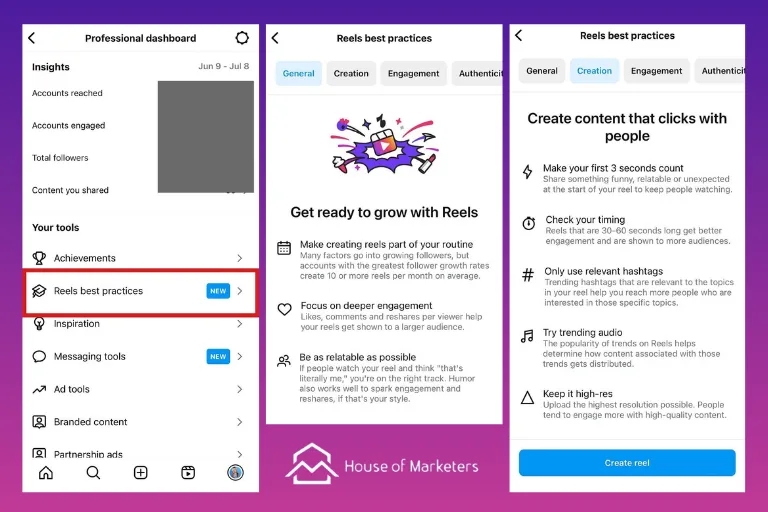
Our July 2024 coverage documented publishing advice shared through Instagram’s Professional Dashboard. These points remain useful creative prompts to test with your audience. The original dashboard screenshots and attribution are preserved below.
- Make the hook specific. Show viewers what they will learn, recognise or see resolved. Deliver what the opening promises.
- Start with audience relevance. Use a situation, frustration or aspiration your intended viewers understand. A relatable observation gives people a reason to share.
- Offer a recognisable perspective. Bring a creator’s experience, opinion or way of explaining the subject. A familiar format can still carry an original point of view.
- Join conversations selectively. Use a trend when the brand has a relevant contribution. Explain the idea clearly enough for someone who has not seen the trend.
- Build in a useful surprise. A reveal, contrasting example or unexpected demonstration can move the story forward. Keep the payoff connected to the subject.
- Publish a clean original asset. Avoid carrying another app’s watermark into the finished Reel. Adapt the framing, captions and cover for the placement.
- Check the vertical composition. Preview the video and text on a phone. Make sure the central idea survives crops and interface overlays.
- Tell a complete short story. Give the viewer enough context to understand the setup and the result. A short video still needs a coherent progression.
- Make delivery feel direct. When a person is speaking to camera, an approachable delivery and eye contact can help the explanation feel personal.
- Design the cover deliberately. Choose a clear image and short title that explain the subject in the profile grid. Check that important words remain readable.
- Plan distribution. Share to relevant Stories or Facebook placements where appropriate, adapting the asset and context. Review performance by placement before deciding what to repeat.
Use the results to choose your next test. If viewers leave before the explanation begins, change the opening. If a tutorial earns saves but few profile visits, review how it connects to the audience’s next question. Judge each format against its intended task.
Brand-building Reels creative
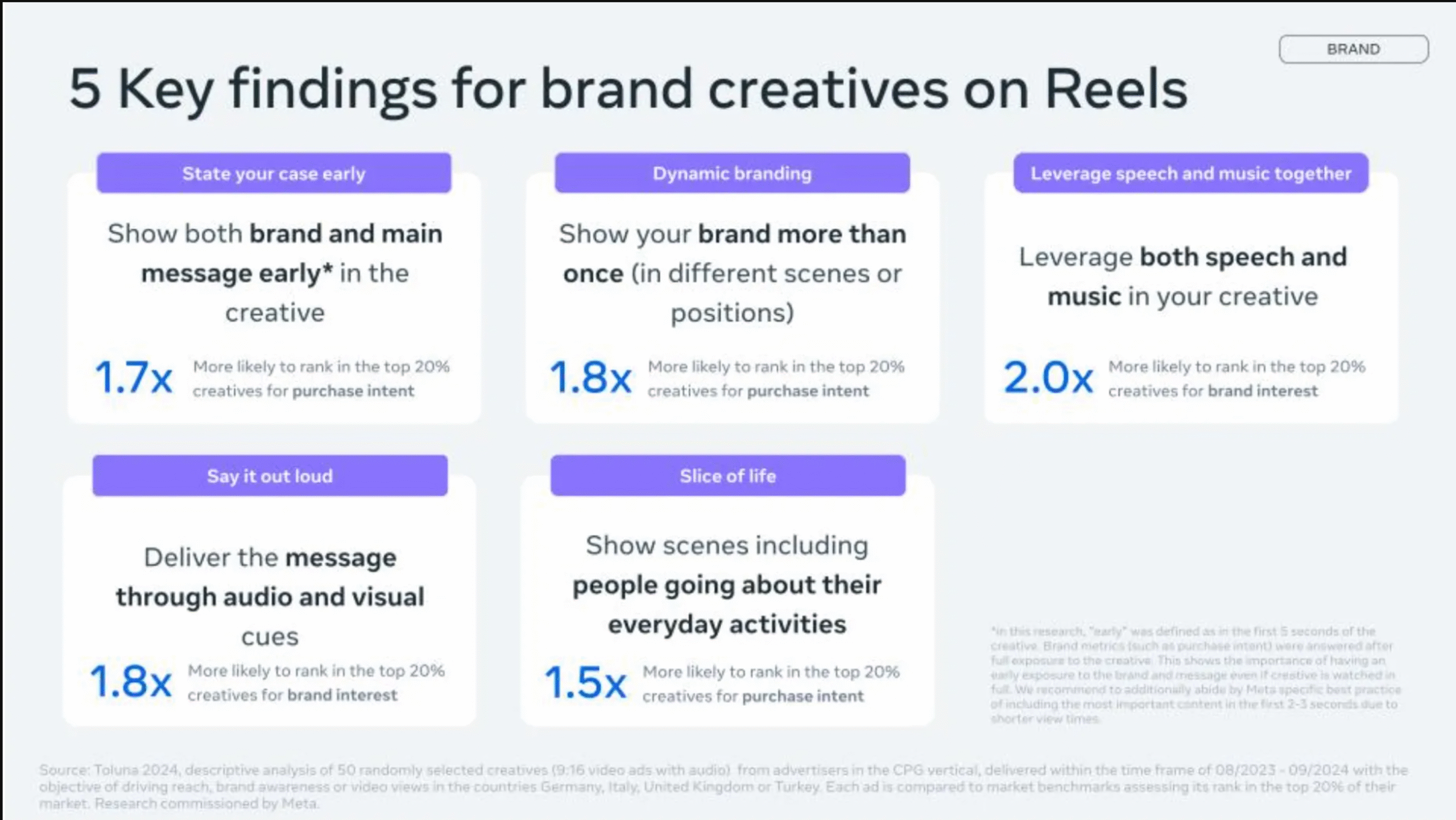
Our December 2025 coverage of Meta’s creative research with Toluna distinguished brand-building from direct-response creative. The useful brand-building principles are:
- Introduce the message early. Make it clear who the video is for and what the brand wants that audience to remember.
- Integrate branding through the story. Use a product in action, recognisable packaging or a relevant brand cue in more than one scene.
- Give speech and music distinct roles. Keep the voice understandable and use music to support the tone.
- Reinforce the message visually. Let demonstrations, captions and on-screen text support the spoken explanation.
- Show familiar human situations. Make the product’s role in an everyday routine or problem easy to recognise.
Direct-response Reels ads
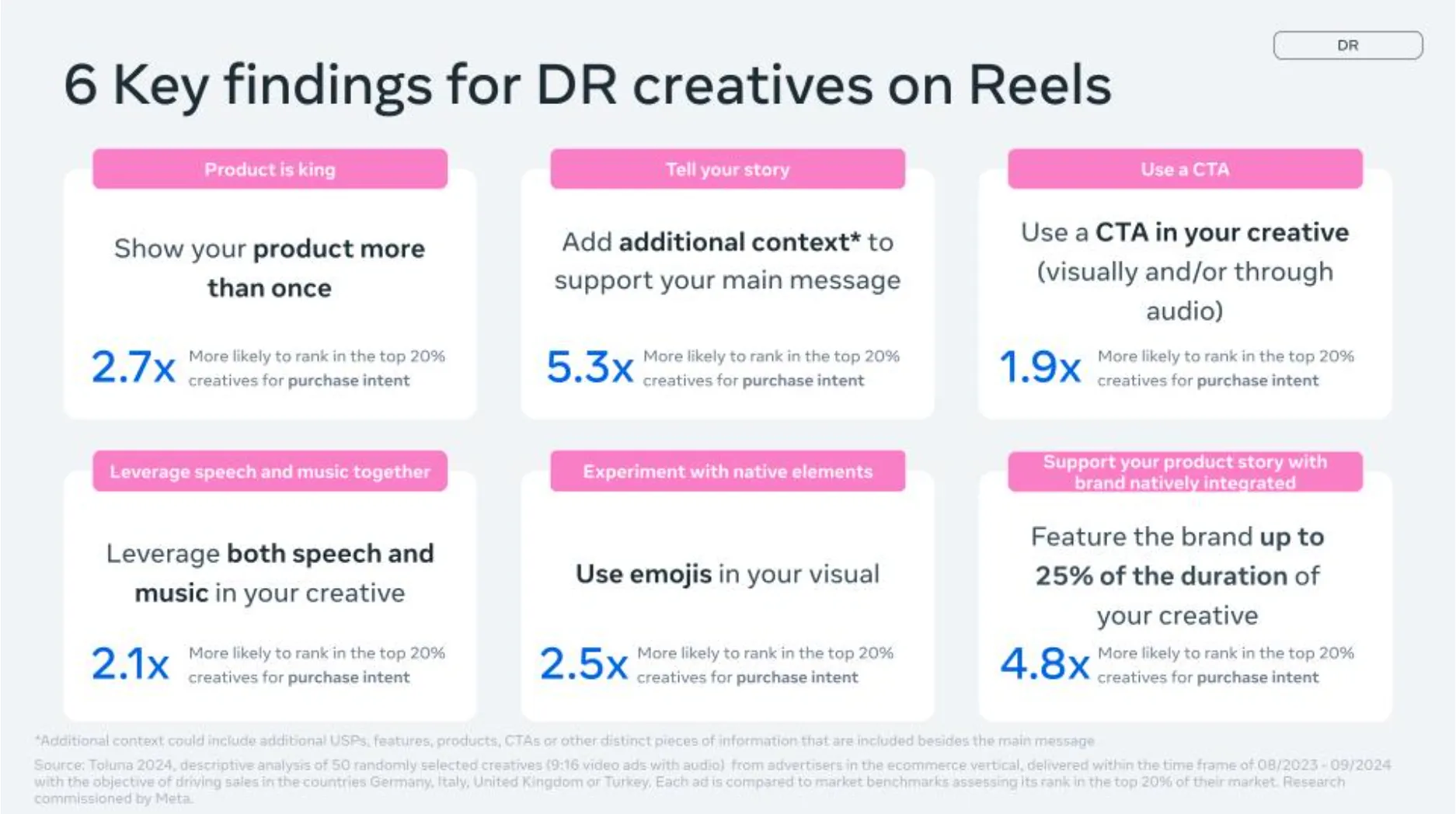
For a Reel intended to generate a purchase or enquiry, work backwards from the action and the landing page. Give the viewer enough information to decide whether the offer is relevant.
- Show the product clearly and repeatedly. Use it in context, then show the feature or result that makes the demonstration useful.
- Keep brand cues proportionate. Make the advertiser recognisable while allowing the demonstration and explanation to carry the story.
- Explain a specific benefit or difference. Show how a feature helps with the audience’s task. Give viewers a reason to choose the product.
- State the next action. Match the spoken or on-screen call to action to the destination: view the product, request a proposal or complete the relevant signup.
- Make audio support the explanation. Keep speech clear and test suitable music underneath it. Retain readable captions.
- Use native graphics selectively. An emoji, label or platform-style visual should make the idea easier to follow and leave the product visible.
Carry the hook through sight and sound, then deliver the same promise on the landing page. Before adding spend, check that the destination loads, the form works and the conversion reaches the reporting system.
A practical testing and measurement plan
Use these recommendations as hypotheses for your own creative tests. The following workflow is an editorial planning approach, rather than a promise of uplift from applying a platform checklist.
- Write one audience problem and one intended outcome. Agree what the viewer should understand or do after watching.
- Choose a story format. Start with a tutorial, product demonstration, comparison, list or conversation that fits the brief.
- Create a small set of opening variations. Keep the main offer and destination consistent while testing different hooks. Record what changed.
- Complete the production checks. Preview framing, safe zones, captions, audio, cover and call to action. Confirm that the assets are suitable for the planned use.
- Read attention and business outcomes separately. For organic content, inspect retention, sharing and saves. For ads, examine qualified conversions and cost alongside delivery and creative engagement.
- Compare under similar conditions. Account for changes in audience, budget, offer, placement and conversion lag. Give a low-volume test enough evidence before declaring a winner.
- Keep a learning log. Record the hook, format, audience, placement, dates, spend where applicable, outcome and the next decision.
For examples of creator-led storytelling in context, explore our Shelby’s Shawarma case study and our analysis of Zohran Mamdani’s creator-led campaign. Use the relevant creative lessons while accounting for differences in audience and objective.
Frequently asked questions
Do organic Reels and Reels ads need the same creative?
They can share footage and storytelling ideas, but the brief and measures should reflect their purpose. An organic Reel may prioritise discovery or sharing. An ad needs to communicate its offer and connect the viewer to a relevant next action.
Should Reels be understandable without sound?
Yes. Plan a useful audio experience and keep the central message understandable through the visuals and readable captions. Check both versions before publishing.
Will following Meta’s creative tips guarantee more conversions?
No. Study findings and creative recommendations help you choose tests. Your audience, offer, distribution and landing-page experience still affect the outcome.
Build a Reels plan around your campaign goal
House of Marketers helps brands connect creator-led social campaigns with paid Meta advertising. We can help shape the brief, develop creative variations and measure the results against the outcome your business needs.
Request a free campaign proposal to discuss your audience, offer and Reels campaign.