




A thousand creators boarded a Virgin Voyages ship. A group of tradespeople spent three days handling DeWalt tools. A retailer persuaded a YouTube superstar to make back-to-school shopping a spectacle. By autumn, each had become a case study in a different kind of economic power: the ability to persuade someone else to carry a brand’s story.
Some brands are buying extraordinary attention. Others are building modest, repeatable machines for expert recommendations. Both can work. The more expensive the channel becomes, however, the less room there is for casual explanations of its value. Chief marketing officers need to know who created the demand, how the idea reached the consumer, and whether that demand survives after the promotion.
IAB expects U.S. creator advertising to reach $44 billion in 2026. The IPA’s cross-industry work identifies substantial long-term influencer effects. Gartner forecasts a dramatic reallocation toward creator authenticity initiatives by 2027. Meanwhile, the same research records falling trust in AI-saturated recommendations. These measurements come from different countries and definitions. Taken together, they reveal the strategic problem facing brands: content supply is becoming abundant while credible attention remains difficult to earn.
House of Marketers has seen the commercial variety first-hand. Its public client cases range from a demonstration-led launch that reports $300,000 in 90-day revenue to a four-market pet-care effort reporting 8.8 million views. The outcomes belong to different funnels and cannot be added into a single performance figure. Their value is to show how a broader shift can appear in a real campaign.
What follows is a listicle in the strictest sense: fifty distinct calls for 2027, each grounded in a named statistic or documented example. A forecast in these pages is an editorial interpretation unless its source explicitly forecasts the future. The report marks those exceptions and identifies the geographic and methodological limits of the data.
The working thesis
In 2027, credibility will command a measurable premium. Brands that know how to access real practitioners, build memorable products into creator stories, and connect their creative output to retail and measurement infrastructure will be better placed to grow. The next stage of influencer marketing is institutional: finance, legal, commerce, product and brand teams share responsibility for the same creator asset.
Which brands are likely to benefit? DeWalt has practitioner depth. LEGO has a durable, recognizable creative language. Argos has put creators through an effectiveness framework. Fenty Beauty brings product demonstration into live selling. Among House of Marketers clients, Stickerbox, Livisto and Mamonde offer different examples of demonstration, localization and search demand. The closing chapter separates these editorial judgments from established financial performance.
Reading the forecasts
The 50 forecasts are House of Marketers’ editorial judgments, informed by published surveys, industry estimates and campaign results available on 5 November 2026. Publisher forecasts and observed statistics are identified in the prose. Linked institution and brand names open the original public materials.
Figures from different countries, populations and measurement methods have different denominators. Brand-reported views and returns are attributed to their publishers; they are not independently verified here.
Creator economics, budgets and business ownership
The budget debate is giving way to a question familiar to every finance director: what returns can an organization repeat? The most consequential shift is the movement from isolated creator fees to an accountable investment system.
Show data
| U.S. creator advertising spending | |
|---|---|
| 2021 | $13.9B |
| 2024 | $29.5B |
| 2025 | $37B |
| 2026 | $44B |
IAB
Show data
| Team size | |
|---|---|
| Break-even brands: team size | 31 people |
| 5× ROI brands: team size | 48 people |
CreatorIQ 2026; team-size comparison uses counts, third bar is a budget-share percent.
Creator advertising becomes a standing budget line
IAB projects U.S. creator advertising at $44 billion in 2026, following $37 billion in 2025. That is a 19% increase on the same industry definition. 2027 budgets will increasingly sit inside annual plans alongside search, social and television. Brands with defined owners and quarterly performance reviews will buy creator capacity more deliberately. The commercial advantage comes from buying access to audiences and reusable creative, with results evaluated against the cost of securing both.
Global advertising growth makes productivity matter more
WARC projects worldwide advertising of $1.46 trillion in 2027, up 8.4%; its 2026 forecast is $1.34 trillion. Creators will compete for incremental dollars in a large but moderating growth environment. Winning teams will explain whether a creator asset raises response to existing media, increases brand demand or brings profitable customers into a commerce funnel. Marketers should track the marginal benefit of additional creator spend instead of treating every new video as equally valuable.
Average programme scale crosses an operational threshold
CreatorIQ reports an average organization-level annual creator investment of $4.8 million, up 33% year on year, and $8.8 million among enterprises. At that scale, influencer selection, approvals, rights, tax and reporting become material operating costs. 2027 procurement reviews will place more weight on cost per useful asset, reuse permissions and creator lifetime value. Brands with structured production and reporting infrastructure can achieve lower friction per campaign even when their individual creator fees are higher.
The market divides into systems and experiments
BCG finds that 15% of surveyed marketers meet its criteria for creator-marketing high performance; nearly 70% of companies lack a dedicated creator team. The performance gap will become more visible as measurement improves. The strongest organizations will assign decision rights, maintain a live creator portfolio and connect their creator calendar to product launches and commercial objectives. An organizational chart is insufficient; the useful test is whether somebody owns conversion, brand outcomes and the reuse of every asset.
Continuous programming replaces episodic bursts
Northwestern Medill finds 91% of surveyed brands run a creator programme with an always-on element: 62% hybrid and 29% fully continuous. 2027 content will be scheduled in sustained editorial franchises, with seasonal launches serving as peaks rather than standalone projects. Relationships that persist across months allow creators to learn the product and audiences to recognize the association. Renewal decisions should include cumulative branded search, repeat engagements and creative improvement over time.
Why fit, expertise and brand memory will outrank follower size
Influence used to look like an addressable audience bought through an individual. Recommendation feeds, synthetic content and skeptical shoppers have made that model less dependable. Trust now needs a visible reason.
Show data
| Share of respondents | |
|---|---|
| Creator use in plans | 91% |
| Guide, not control | 62% |
| Creative co-authors | 47% |
| Community influence | 45% |
| First discovery source | 20% |
First four: global marketers. Final: consumers. Different survey questions. | Kantar 2026.
Creator partnerships become a universal planning input
Kantar finds that 91% of senior marketers globally use creators, while 20% of consumers say creators are often their first source of product discovery. The scarce advantage in 2027 will be differentiation within the creator channel. Brands will ask which creator provides a distinct interpretation, use case or community connection. Teams that supply standardized briefs to interchangeable faces will find it harder to justify a premium.
Micro and nano creators capture a larger share of briefs
EMARKETER projects micro and nano creators to receive 45.5% of U.S. influencer spending in 2026; Kantar says investment intentions favour smaller creator tiers. Brands will increasingly spread budgets across portfolios of subject-matter voices, then amplify the content that proves both credibility and demand. Smaller creators are especially attractive where purchase decisions require specialized knowledge or a clear demonstration. Portfolio management, however, raises verification and coordination costs.
Follower counts lose their place as the first screening filter
Only 17% of consumers say they check a creator’s follower count before deciding to engage, according to Sprout Social’s 2026 consumer study. Selection will begin with audience relevance, viewing behavior, demonstrated expertise and content fit. Brands should examine how a creator explains a product and how the audience responds to substantive claims. A candidate with fewer followers but a stronger record of qualified interest may offer better commercial leverage.
Brand encoding becomes a core creative KPI
Kantar reports only 27% of creator content has a strong connection to the brand, and its effectiveness database finds coherent cross-channel ideas 2.5 times more important than a decade ago. 2027 briefs will specify recognizable product assets, situations and language that survive reposting and editing. Successful creator work will be easy to associate with the sponsor without making the creator sound scripted. Brand recall testing belongs alongside view-through rate.
Authenticity turns into a measurable competitive advantage
BCG says high-performing creator brands are 10 percentage points more likely than other marketers to prioritize audience trust. Marketing leaders will treat expertise, consistency and disclosure as economic assets. The best creator-brand partnerships will offer audiences recurring demonstrations and honest explanations of limitations. Brands should evaluate negative feedback quality, repeat recommendation behavior and brand lift alongside reach.
Employees, experts and the new corporate creators
In 2027 some of the most persuasive people in an advertising plan will already be on the payroll. The shift creates a new responsibility for employers: participation must be supported, compensated and credible.
Show data
| Share of consumers | |
|---|---|
| Monthly employee discovery | 40% |
| Support extra compensation | 61% |
| Check follower count | 17% |
| Discomfort with AI creators | 44% |
Distinct questions in Sprout Social 2026 consumer research. Do not add these percentages.
Employee content becomes a product-discovery channel
Sprout Social finds 40% of consumers discover new products or services through employee-generated content at least monthly. Brands with visible engineers, store workers, medical experts, designers and service teams can explain product truths competitors cannot easily copy. This is particularly promising in complex B2B, technical, healthcare and service categories. Programmes should begin with real expertise, on-camera training and transparent company affiliation.
Employee advocacy requires an explicit economic arrangement
In the same survey, 61% of consumers believe employees should be paid extra for promoting their employers on social media. Internal creator programmes will develop compensation, consent and time-allocation policies. Volunteer content will remain useful, but scaled performance work deserves recognition and professional safeguards. Employees should retain the right to decline, and claims must be reviewed like any external advertising.
Practitioner access becomes an earned-distribution asset
DeWalt’s 2026 Built Black & Yellow event brought working tradespeople into product trials; its team reported more than 1,000 creator posts and 56 million organic views. Manufacturers and service businesses will invest in demonstration labs, training and creator communities. The transferable feature is access to something worth understanding. Brands should measure voluntary output, earned distribution and the subsequent demand for the demonstrated products, while including event and relationship costs in ROI.
Trusted human experts earn more screen time
Gartner found 43% of U.S. consumers rely more on real people for shopping information because of the prevalence of AI-generated material. The strongest employee creators will be able to show a process, solve a recurring problem and answer hard questions. Expert credibility will matter in categories with product complexity, health sensitivity or material purchase risk. Brands should verify qualifications and capture the conditions under which advice applies.
Creator teams enter the core operating model
BCG reports almost 70% of companies have no dedicated creator-marketing team, even as creator marketing grows faster than general marketing budgets. More companies will formalize responsibilities for creator casting, rights, content quality, data and legal review. A single accountable owner can coordinate employees and outside partners without requiring every activity to be internalized. The organizations that win will reduce delays between a useful idea, a credible person and a published asset.
A workshop became a media network
A manufacturer opened its headquarters to tradespeople who had questions worth asking. The creators were able to handle unfinished innovations, discuss how tools behave on a job site and compare the new equipment with routines they knew from daily work. DeWalt says the event produced more than 1,000 creator posts and 56 million organic views. The number is striking; the structure is more useful. Product engineers and skilled users generated the substance. Creators translated it for their own communities. For 2027, the implication is straightforward: access to the people who make and use a product can become a scarce distribution advantage. The event had production costs, and the public figures do not establish attributable sales.
Automation grows; human authorship becomes more valuable
AI has given creators an industrial workshop of editing and production tools. It has also made audiences suspicious of what they see. The 2027 advantage belongs to teams that speed production while preserving human decisions and traceable proof.
Show data
| Share of U.S. consumers | |
|---|---|
| Too much AI brand content | 65% |
| Less trust in brand messages | 57% |
| Rely less on influencers | 35% |
| Rely more on real people | 43% |
U.S. consumers, n=1,006, Gartner 2026. Survey responses; different questions.
Show data
| Share of consumers | |
|---|---|
| Gartner: artificial content labeling important | 78% |
| Gartner: brands producing too much AI content | 65% |
| Sprout: uncomfortable with AI influencers | 44% |
Different study dates, countries and question wording; plotted as independent signals.
Authenticity spending becomes a formal budget category
Gartner explicitly forecasts that by 2027 brands will direct 50% of influencer-marketing budgets to content and creator-authenticity initiatives, including identity checks and provenance. This is a consultancy forecast, not an observed 2027 allocation. If even part of it materializes, procurement will ask vendors for verification, disclosure records and creator-identification controls. A publisher with provenance data and defensible creator selection should gain negotiating power.
Creators use AI heavily while retaining final control
Among Adobe’s surveyed creators who use or have tried creative AI, 75% say it is essential or integrated; 85% believe final creative decisions should remain human. 2027 creator contracts will increasingly describe acceptable AI assistance, disclosure expectations, voice ownership and approval rights. Producers who combine fast ideation with distinctive human editing will have an advantage over accounts producing large volumes of interchangeable outputs.
AI efficiencies are redirected into human creators
CreatorIQ says 41% of brands with increasing creator investment used AI-related efficiencies as one source of that investment. Brands can turn cheaper editing, research and reporting into additional creator testing and longer engagements. Finance teams should track the redeployment explicitly: hours saved, new production funded, assets reused and business outcomes improved. A lower software bill alone says little about marketing effectiveness.
Governance becomes the bottleneck in AI-enabled operations
CreatorIQ reports that AI increased day-to-day creator programme complexity for 47% of organizations, versus 37% reporting reduced complexity. Accuracy checking, rights, creator consent and synthetic-asset review will become formal workflow stages. Brands will need clear records for what was generated, what was altered and who approved publication. Agencies with reliable processes will gain speed without leaving creative and reputational decisions to automation.
Synthetic influencer work faces a higher evidentiary bar
Sprout finds 44% of consumers uncomfortable with brands using AI influencers; Gartner separately reports 50% prefer businesses that avoid consumer-facing GenAI content. Virtual personalities will serve selective use cases such as fantasy entertainment and product visualization, where their artificial nature is obvious. For personal advice, product claims and reviews, audiences will increasingly reward identifiable humans, clear disclosure and demonstrable experience.
The creator becomes a storefront, a demonstrator and a sales channel
Social commerce is turning performance data into an immediate verdict on content. A convincing demonstration can travel directly into a basket; the failure points are shipping, product availability and the credibility of the recommendation.
Show data
| Share of brands | |
|---|---|
| Core strategy | 48% |
| Selective use | 32% |
| No stated use | 20% |
CreatorIQ
Show data
| TikTok Shop share of U.S. social commerce | |
|---|---|
| 2025 estimated | 18.2% |
| 2027 forecast | 24.1% |
EMARKETER
TikTok Shop increases its share of U.S. social commerce
EMARKETER projects TikTok Shop’s U.S. social-commerce share from 18.2% in 2025 to 24.1% in 2027. Beauty, low-friction consumer products and live demonstration categories will compete more fiercely for creator commerce talent. Brands that connect product inventory, commission terms and short-form video planning should capture a larger share of high-intent discovery. The 24.1% is an explicit industry forecast, not a measured result.
Creators become an operating input in commerce programmes
CreatorIQ finds 48% of brands put creator-driven commerce at the core of marketing or revenue strategy; 80% use it at least selectively. 2027 will bring more combined management of creators, affiliate rates, merchandising and conversion landing pages. Teams need a shared product catalog, accurate inventory feeds and contracts covering live selling and product links. The best programme can show how a piece of content moves a consumer from consideration to checkout.
Creator commerce correlates with stronger reported ROI
Among CreatorIQ survey brands for which creator commerce is core, 68% report at least 3× creator marketing ROI. The correlation will encourage investment in commerce skills, though the study does not establish that adding checkout causes the return. Finance teams should use holdouts or matched cohorts to test incrementality and should count discounts, commissions, returns and fulfilment costs.
Live shopping matures into an event-driven format
TikTok reports more than one million viewers and 53 million impressions for Fenty Beauty’s 12-hour October 2026 Shop LIVE with Rihanna. The repeatable value lies in fit demonstrations, live questions and timed offers, supported by specialist hosts. Retailers will adopt regular live programming around launches and replenishment. Celebrity moments can attract first-time visitors, but return rates and contribution margin will decide whether the format deserves a permanent slot.
AI recommendations begin incorporating creator testimony
A global IAB study says 56% of consumers prefer AI shopping recommendations that incorporate trusted creator perspectives; 72% report using general AI assistants in shopping decisions. Brands will prepare machine-readable product facts alongside verifiable creator reviews, demos and expert content. The likely winners will have a large inventory of specific, high-quality third-party findings that can answer comparison questions. Publication authority and creator rights will matter as much as the content itself.
The football argument was built into the product

LEGO gathered Messi, Ronaldo, Mbappé and Vinícius Jr. around a brick-built trophy. The ambiguity over the final brick gave fans a reason to take sides, remix and redistribute the film. Wieden+Kennedy reports 990 million social views, 520 million views of fan-created reaction material and preorders 50% above target. Those figures come from the campaign agency and are not deduplicated. Their strategic value lies in a recognizable object. Even when viewers cut the film into rival-team memes, the LEGO trophy remained visible. A 2027 creator brief needs that brand connection in the first draft.
One ship, thousands of individual storylines
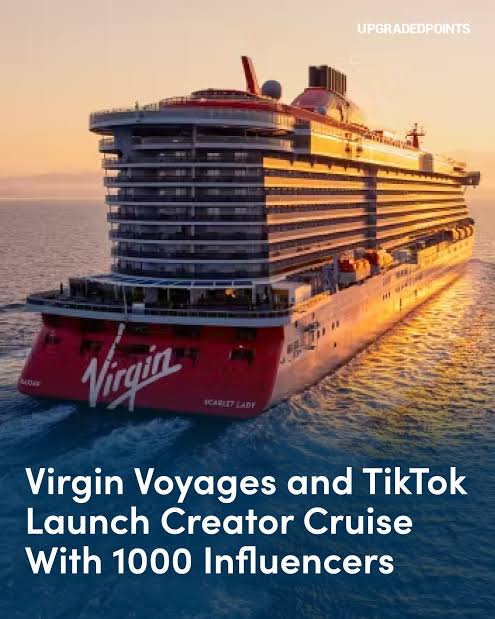
Virgin Voyages invited 1,103 creators onto a three-night sailing and reported more than 20,000 pieces of content and 236 million cross-platform views. Each participant could capture something different: dining, nightlife, design, fitness, travel logistics and human encounters. The brand turned a product experience into a supply of differentiated creative. The tradeoff is substantial event cost and a need to connect discovery with bookings. For 2027, the practical form is scalable: create places, access and moments that let a group of well-chosen creators discover genuine stories. A larger roster without diverse experiences produces repetitive content.
A single creator asset will be expected to work across several channels
Influencer marketing is being absorbed into how advertisements are made. The creator video now enters paid social, websites, retail displays and sales presentations, multiplying the value of correct rights and durable ideas.
Show data
| Share | |
|---|---|
| Brands repurpose creator content | 99% |
| Paid media teams use creator creative | 92% |
| Brands reuse primarily beyond social | 56% |
| Agencies’ digital ads with creator content | 54% |
Separate CreatorIQ 2026 brand, paid-team and agency questions.
Creator content becomes a routine input to paid media
CreatorIQ reports 92% of surveyed paid-media leaders use creator content in paid creative; agencies say it features in an average 54% of clients’ digital ads. Brands will scope creators as production partners with clear usage rights, format requirements and refresh cycles. Performance teams should share the first results quickly with creators, allowing a useful hook to be refined for paid distribution rather than merely boosted unchanged.
Reuse becomes an expectation in every contract
CreatorIQ finds 99% of surveyed brands repurpose creator content somewhere, while 56% name a primary destination outside social media. The commercial negotiation in 2027 will include product pages, email, retailer placements and internal enablement. Standard rights registers and expiration alerts can protect brands from accidental overuse while allowing creators to price extended rights fairly.
Brands spend more on recognizability than on volume
WARC’s 2026 creator-effectiveness playbook says roughly two-thirds of creator campaigns fail to build strong brand memory. Distinctive products, sonic identities, recurring characters and recognizable visual worlds will be written into briefs earlier. Marketers should test brand attribution among viewers who cannot see the account name. A viral video with weak attribution may create cultural relevance without creating a durable brand asset.
Paid amplification follows findings instead of intuition
CreatorIQ respondents identify boosting creator posts as the top reported creator-marketing ROI driver, cited by 38% of brands. Winning organizations will reserve part of the budget until they can observe early creative quality and audience response. Tests should compare multiple hooks or creators with consistent objectives and conversion windows. The appeal of boosting is its ability to expand a credible message; its risk is making a weak idea expensive.
Creator and brand teams share one measurement language
Nielsen says 49% of marketers use hybrid or full-funnel metrics, and 29% are prioritizing brand lift measurement for the year ahead. Creative teams will need to understand lift, incremental orders, retained demand and attributable search. Paid media specialists will need to preserve the creator’s authentic format. Shared definitions can prevent a production success being reported as a financial success without the necessary findings.
Brand investment returns to the centre of the creator debate
The industry finally has findings that creator-led activity can contribute to long-term sales. The methodological differences between channels still matter; a persuasive chart must identify its sample before it makes a strategic claim.
Show data
| Short-term ROI index | Long-term ROI index | |
|---|---|---|
| Influencers | 99 | 151 |
| Paid social | 86 | 77 |
| Linear TV | 97 |
IPA UK samples differ: 59 short-term campaigns vs 18 long-term campaigns. Indices are directional benchmarks.
Show data
| Share of brands | |
|---|---|
| Sales attribution | 19% |
| Marketing-mix models | 18% |
| Platform dashboards | 18% |
| Brand lift/incrementality | 16% |
| Affiliate / social commerce | 15% |
| Paid media performance | 14% |
CreatorIQ
Long-term effects earn their own budget justification
The IPA/WPP database finds a U.K. long-term influencer ROI index of 151 versus 77 for paid social in its available long-term sample of 18 campaigns. Marketers will defend creator investment using longer measurement windows, supported by shorter-term activity data. Because the IPA long-term sample is much smaller than its short-term sample, a responsible plan will validate the pattern within each business rather than assume a universal multiplier.
Creator strategy extends beyond one transaction
The IPA reports the highest measured long-term media multiplier for influencers in its UK analysis at 3.35, compared with 3.27 for linear TV. 2027 briefs will more often include retention, brand predisposition, category entry points and repeat-purchase questions. Creative consistency across quarters becomes commercially important when an effect is expected to accrue over time.
Econometric case studies change finance conversations
Argos’s 2026 IPA-recognized case estimates £4.98 in return per pound for campaigns containing influencers over its 2023–25 programme. More retailers will ask agencies to demonstrate where creator activity enters marketing-mix models and whether the results persist after promotions end. The Argos figure is a modeled portfolio return, not the incremental effect of each individual creator or a promise that another retailer can reproduce it.
Attribution tools become a portfolio rather than a single answer
CreatorIQ finds 77% of brands confident in measuring impact, but preferences for the most effective method split six ways: revenue attribution 19%, MMM 18%, dashboards 18%, brand lift 16%, commerce tracking 15%, paid performance 14%. Brand leaders will select measurement according to the claim: an affiliate code for a transaction, a holdout for lift, MMM for portfolio allocation and brand research for future demand. A single dashboard cannot adjudicate all of these questions.
The operational measurement gap becomes a buying criterion
IAB’s January 2026 measurement assessment identifies fragmented creator metrics and a lack of common currencies as barriers to enterprise spend. More RFPs will ask vendors for deduplicated exposure, source-level data access, verified creator identity and reconciliation with finance systems. The agencies that explain their assumptions and limitations clearly will earn a stronger role in planning conversations.
The wrapper became a passport to the story
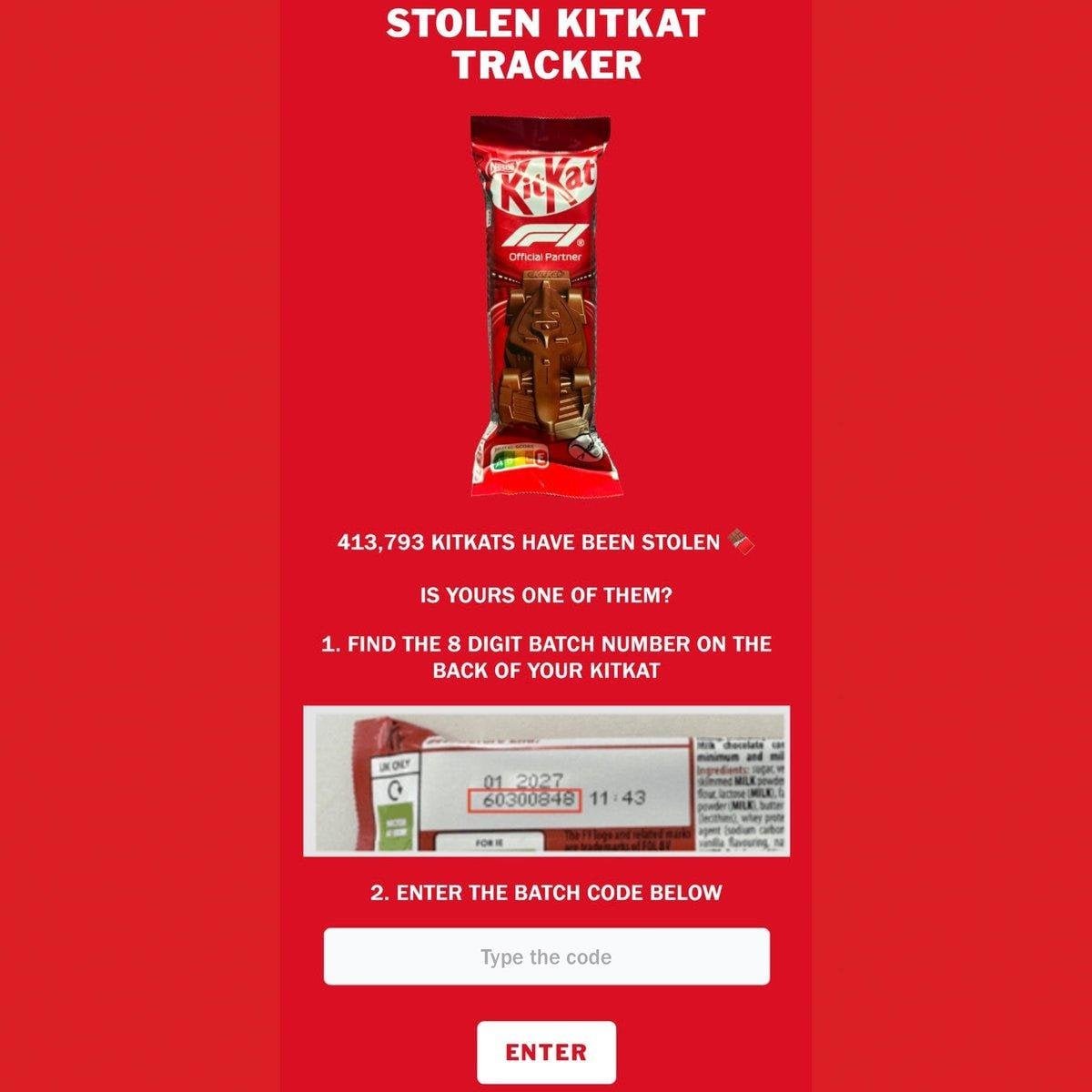
The stolen KitKat shipment introduced a rare creative opportunity: ordinary buyers could play a role in a news event. The brand’s tracker asked users to enter batch codes to check if their bars were among more than 400,000 missing items. WPP reported 2.2 million tracker interactions and an estimated earned reach above 800 million. These are agency estimates and actions, not incremental product sales. The case is useful for 2027 because it connects physical packaging, a simple digital action and voluntary word of mouth. The strongest participatory concepts make the customer’s own product relevant to the storyline.
The retail proof finance departments can recognize
Argos used influencer recommendations as part of a three-year effort to improve perceptions of quality, relevance and trust. Its 2026 IPA-recognized case reports modeled ROI of £4.98 for campaigns involving influencers, alongside gains in brand trust and purchase intent. The work demonstrates how creator activity can graduate from campaign reports to longer-term business evaluation. The correct reading is an econometric programme result spanning 2023–25, not a single 2026 post. It also illustrates a stronger agency relationship: one in which creative choices, audience research and modeled sales effects can be discussed in the same room.
The audience moves across formats; the creator relationship persists
Distribution has become more like a railway network than a single destination. A person discovers through a short clip, seeks proof in a longer video, joins a fan community and purchases elsewhere. Marketers need to follow the journey.
Show data
| Share of U.S. fans engaging across multiple platforms | |
|---|---|
| Gen Z | 71% |
| Millennials | 67% |
| Gen X | 53% |
| Boomers | 30% |
| Matures | 14% |
Share of U.S. fans engaging across multiple platforms, Deloitte Digital Media Trends 2026.
Show data
| CreatorIQ customers using platform | |
|---|---|
| 99% | |
| TikTok | 93% |
| YouTube | 80% |
| 79% |
Platform usage among CreatorIQ customers, Aug 2025–Jul 2026; not market share.
Four platforms remain the operating core
Among CreatorIQ customers, 99% used Instagram, 93% TikTok, 80% YouTube and 79% Facebook during August 2025–July 2026. In 2027 brands will maintain multi-format creative systems around this core rather than choose one universal winner. These figures describe CreatorIQ customers, not all advertisers, and should be used as an operational benchmark rather than a market-share chart.
YouTube grows in strategic importance for explanation
Nielsen finds 41% of consumers describe video as “TV” regardless of platform, while Kantar ranks YouTube first in marketers’ advertising receptivity. Longer demonstrations, creator series and connected-TV viewing will earn attention alongside clips. Product brands with complex use cases should build a short-to-long content pathway and evaluate both reach and depth of engagement.
Fan communities become a year-round media asset
Deloitte finds 55% of U.S. fans engage with their fandom across multiple platforms; the share reaches 71% for Gen Z fans. Entertainment, sport and gaming brands will invest in permanent creator relationships, community programming and merchandise experiences between launch moments. A useful metric will be repeat participation across touchpoints rather than a single campaign’s peak views.
Social discovery sends commerce to other environments
Deloitte reports 52% of U.S. fans discover new entertainment on social, while 44% say they then watch, listen to or buy elsewhere. Retail and media brands need landing pages, app experiences, retail availability and CRM that can capture intent created by creators. Attribution will remain imperfect when discovery and purchase occur in different services; distinct creative and branded search can provide supporting signals.
Gen Z product discovery remains more creator-driven
YouGov says 41% of U.S. Gen Z consumers discover products through influencers or bloggers versus 27% of U.S. consumers overall. Brands serving younger shoppers will keep creator discovery near the centre of the acquisition plan while building stronger product proof. Older audiences require a different balance of search, reviews, stores and expert recommendations. The same content should not be assumed to travel equally well across ages.
Beauty, specialist products and regional creator programmes
The category winners will be those who can show a result that a buyer recognizes. Beauty can show visible changes. Tools can show an exact task. Pet care can show routines. These demonstrations create creative material and data for commerce at the same time.
Show data
| Views (millions) | |
|---|---|
| Mamonde | 86.7M |
| LG H&H | 23M |
| Oriental Trading | 11.1M |
| Livisto | 8.8M |
Agency-reported campaign views, different briefs, periods and paid shares; not comparable ROI.
Creator-led product demonstration moves closer to revenue
House of Marketers reports that Stickerbox generated $300,000+ revenue in 90 days with 6× blended ROAS using creators and paid ads. More DTC launches will prioritize a clear on-camera “aha” moment before they scale media. The figure is agency-reported, and the blended ROAS reflects a whole campaign system rather than an isolated creator contribution. It illustrates the commercial appeal of a product that can be understood instantly in video.
Brand-preference research becomes routine in retail campaigns
House of Marketers reports 11.1 million views and a 75% uplift in brand preference for Oriental Trading, along with 71% consideration uplift. Brands selling in competitive categories will supplement video delivery with audience research that measures preference and intent. The reported percentages depend on the agency’s research design; marketers should review sample sizes, exposed/control definitions and absolute baseline scores before treating uplift as transferable.
Localization strengthens specialist product credibility
House of Marketers’ Livisto programme generated a reported 8.8 million views from 33 videos by 32 creators across Italy, Germany, Poland and Spain. More regional programmes will appoint locally credible creators rather than translate a single global script. Health-related product claims and consumer routines vary by market, so creative adaptation and compliance need local review. Paid boosting was part of the Livisto programme and should be included in any efficiency calculation.
Search demand becomes a secondary creator outcome
House of Marketers reports 86.7 million views and 26,475 saves for Mamonde, alongside branded search interest rising from a low base across four markets. Brands will track the transition from video discovery to brand-name searches and product-page visits. Saves and searches are findings of intent, though public case reports rarely isolate creator-driven incrementality. Consistent product naming in creator content improves the chance of capturing that interest.
Beauty portfolios use creator findings across multiple sub-brands
House of Marketers reports 23 million-plus views and 2.1 million-plus engagements for LG H&H’s creator programme across several K-beauty brands. In 2027 conglomerates will build shared talent pools and testing infrastructure while preserving distinct positioning for each product line. The operational win is common measurement and reusable learning; individual creator stories must still match the promise of the specific brand.
Stickerbox showed the product doing its magic
Stickerbox turns a spoken prompt into a printed physical sticker. Its creator content filmed a clear cause-and-effect moment: a child says a phrase and a sticker comes out. House of Marketers reports $100,000-plus revenue in ten days and $300,000-plus within 90 days at 6× blended ROAS after creator-led videos were tested and scaled through paid distribution. The numbers cover an integrated creator and paid-media programme, not an isolated endorsement. The case points to a 2027 advantage for products that can be demonstrated almost instantly, particularly when the same visual proof can be reused in commerce ads.
The brands best placed to turn influence into an advantage
The 2027 winners will rarely be chosen by a leaderboard of followers. Their common feature will be a repeatable ability to turn human expertise into useful creative, distribute it responsibly and prove the contribution to demand.
Show data
| Share of brands | |
|---|---|
| 5× ROI: priority on suitability/safety | 73% |
| Break-even: same risk priority | 57% |
CreatorIQ 2026; different self-reported ROI cohorts. Relationship is correlational.
Provenance and disclosure become procurement requirements
Gartner found 78% of surveyed U.S. consumers consider explicit labels of AI-generated content very important or most important for trust; the UK ASA updated its influencer disclosure guide in October 2026. Brands will increasingly document creator identity, AI use, sponsorship labels, testimonials and content rights. The operational burden will be highest for regulated products and cross-border campaigns. Clear disclosure and reliable recordkeeping can protect both the creator and the brand.
High-return brands professionalize risk management
CreatorIQ says 73% of brands reporting 5× ROI rate suitability, brand safety and risk management as very or extremely important, versus 57% of break-even brands. Marketers will strengthen creator due diligence, conflicts screening and escalation plans. The figures are correlational and self-reported; they still suggest that performance discipline and reputational discipline can coexist within a mature programme.
Co-creation gains ground over script control
Kantar reports 62% of marketers believe brands should guide creators rather than control them; 47% see creators as creative and storytelling partners. In 2027 successful contracts will set product truths, disclosure rules and success measures while leaving room for creator-native delivery. DeWalt’s practitioner programme and LEGO’s fan-remixable creative show how strong brand parameters can coexist with independent storytelling.
Owned operating systems become an agency advantage
CreatorIQ names data/workflow integration the top creator programme obstacle at 27%, followed by cross-team coordination and measurement at 26% each. Brands will select partners partly on the maturity of their creator registry, asset rights tracking, measurement and production processes. Agencies that connect influencer, paid media, search and commerce can reduce duplication and turn campaign learning into an asset the client retains.
The leading brands will own a credibility-to-commerce flywheel
BCG’s top creator marketers are only 15% of its sample, and Kantar finds just 27% of creator content strongly linked to the brand. Our 2027 watchlist therefore favors distinct operating models: DeWalt for practitioner proof; Argos for measured, long-term retail impact; Fenty Beauty for live demonstration; LEGO for recognizable cultural storytelling; and emerging demonstration-led brands such as Stickerbox and Mamonde. These are research-based editorial judgments, not predictions of revenue, share price or an independently scored ranking.
Which brands have the ingredients to win?
A brand’s prospects depend on much more than its influence strategy: price, distribution, product quality, category growth and macroeconomic conditions still shape performance. The following judgments isolate the creator-marketing advantage visible in published research and campaign results. They are strategic assessments, not revenue forecasts or recommendations to invest in a company.
| Lower commerce linkage | Higher commerce linkage | |
|---|---|---|
| Higher credible proof | Expertise first: DeWalt, LEGO | Proof + commerce: Fenty Beauty, Stickerbox, Argos |
| Lower credible proof | Reach without proof: Undifferentiated posts | Transaction led: Affiliate-only offers |
Illustrative editorial placement; these are not measured brand scores or ranked performance data.
Figure 16 / Editorial trust-and-commerce map. Positioning is qualitative; no brand is assigned a measured score.
DeWalt
The practitioner-led manufacturer
Argos
The measurable retail challenger
The 2026 IPA case places creator activity inside modeled commercial returns and brand consideration, giving finance and marketing common performance findings over time.
Fenty Beauty
The live demonstration business
Shade matching and product use naturally invite creator-led explanations. Its October 2026 TikTok Shop LIVE reached a large audience; the next test is profit and repeat buyers.
LEGO
The culturally distinctive franchise
The product can stay visible even after fan-made edits. Its 2026 football work shows how an identifiable brand object can support participation and preorders.
e.l.f. Beauty
The community-built scale player
51%
The company reported 51% year-on-year quarterly net sales growth in November 2026. Its community approach is strategically relevant, but the sales growth cannot be attributed solely to creators.
Stickerbox / Mamonde
The demonstration-led challengers
House of Marketers reports an immediately visual product proof for Stickerbox and a search-generating skincare format for Mamonde. These are agency reports with different campaign economics.
The five silos that need one owner
A creator programme is made of relationships, claims, content rights, distribution and measurement. Responsibility is often split across separate departments. The fastest way to improve performance is to make the hand-offs explicit and give one leader responsibility for the outcome.
- Human Credible experts & employees
- Proof Practical demonstrations & product truth
- Media Rights, formats & distribution
- Commerce Shoppable links & availability
- Learning Lift, sales & retention
The House of Marketers editorial model • 2027 operating architecture
A four-quarter implementation plan
| Period | Commitment | Decision metric |
|---|---|---|
| Q1 / | Map creators, claims, assets, rights and paid usage. Identify the top ten product questions that qualified customers actually ask. | Rights coverage; risk incidents; qualified creator shortlist |
| Q2 / | Run a test across employee experts, external creators and two content formats. Standardize product-level proof and disclosure. | Qualified views; aided brand recognition; product-page visits |
| Q3 / | Connect creator assets to retailer listings, live demonstrations, paid ads and inventory. Test incremental lift with a comparator. | Lift study; attributable gross profit; repeat purchase |
| Q4 / | Recast the strongest long-term creators, price extended rights, and report brand plus commercial effects in one review. | Creator lifetime value; branded search; marketing-mix contribution |
What we would ask a chief marketing officer
Which creator programmes earn repeat funding after the first campaign? Which assets can travel into paid media and retail without renegotiation? Which human voices offer product knowledge a brand account cannot supply? Which parts of the reported return were caused by incremental demand, and which reflect business that would have arrived anyway? Finally, who can trace any published claim back to a person, contract, product test or reliable source? These questions determine whether influence can become an operating advantage.
The statistical rules of this report
The fifty numbered items are House of Marketers editorial forecasts written from publicly available research as of 5 November 2026. They are scenario-based, directional judgments and have not been individually surveyed or probabilistically calibrated. Where a source itself states a future number, the PDF explicitly labels the publisher’s projection.
Spend figures require their own denominators. IAB’s creator-advertising estimates include a wider set of advertising expenditures than EMARKETER’s payments-to-creators definition. WARC’s global ad expenditure is for the advertising economy as a whole. It is inappropriate to sum these figures or describe their ratios as a market share without reconciling their coverage.
Views, impressions, reach and engagement are different units. A brand can count the same person in several view events; estimated earned reach is not verified unique reach. House of Marketers, CreatorIQ and individual brand/agency cases report outcomes under their own frameworks. We do not independently validate them and do not assert incremental return where no experimental or modeled causal design is disclosed.
The IPA’s short-term comparisons draw on 59 UK influencer campaigns, while its long-term results use 18 campaigns. They are not the same fixed panel. Survey percentages from Kantar, Gartner, Adobe, Sprout, Nielsen, BCG, Deloitte, CreatorIQ, EMARKETER and YouGov refer to different populations, markets and dates. Charts preserve those differences in their captions. The confidence of a broad survey does not automatically transfer to a brand-specific forecast.
Campaign images are included as attributed editorial illustrations. Their underlying images and brand creative remain the property of the respective owners and publishers; inclusion here does not establish a commercial reuse license. House of Marketers should clear image usage and distribution rights before public commercial release. Original charts and models in this publication are editorial visualizations of the cited statistics.
Editorial approach: we selected primary research from credible industry associations, consulting firms, measurement companies, public brand results and agency case studies. We examined conflicting findings, including the cost of AI-generated mistrust, measurement fragmentation, and limits on attribution. No source was asked to endorse the predictions. This publication is a research-based marketing outlook, not financial or legal advice.