



Influencer marketing is becoming a connected growth capability
Three developments define the 2027 outlook: creator budgets are expanding, content is being deployed across more of the marketing mix, and buyers are turning to AI-assisted tools for product research. These shifts reward brands that combine specialist creator knowledge, disciplined media operations and measurable commercial results.
In Kolsquare’s seven-market European study, 89% of brands and agencies planned to increase influencer marketing spend over the following 12 months, while 10% of brands described influencer activity as fully integrated into the marketing mix. CreatorIQ’s global survey places average annual creator investment at $4.8 million among its participating organizations, a 33% annual increase. The commercial priority for 2027 is building an operating model capable of using that spending across creative production, paid media, retail, community and sales.
Our own campaign evidence reveals the same direction. House of Marketers’ retrospective covers 13 K-beauty brands, $5 million-plus in managed influencer spend and an estimated 200 million video views. The most transferable lessons concern product education, creator expertise and repeatable distribution. Stickerbox used more than 25 creative assets alongside paid amplification and reported $300,000-plus in 90-day revenue. Rimmel London deployed creator work across digital advertising, out-of-home and television. Each example shows a different way to extend the value of a creator relationship.
The eight trends in this report are organized around executive decisions. For each, we connect observed research, a commercial mechanism, published campaign evidence and the capabilities worth building during 2027. The research base combines original 2026 surveys, analyst forecasts, House of Marketers’ published campaign accounts and relevant cross-industry marketing studies.
The management agenda for 2027
- Integrate creator operations. Establish one asset register, clear rights, shared performance definitions and a cross-functional owner.
- Develop a creator content supply chain. Brief assets for paid media, commerce, search, sales and repeated use from the start.
- Build verifiable product authority. Help qualified creators demonstrate usage, compare alternatives and answer real buying questions.
- Measure economic contribution. Combine creative testing, acquisition economics, brand-lift evidence and experimental incrementality.
Influencer marketing investment and organizational integration
The gap between investment growth and operating maturity creates a near-term productivity opportunity for enterprise brands.
Show data
| Share of respondents | |
|---|---|
| Plan to increase influencer budgets | 89% |
| Expanded creator roster in past year | 85% |
| Use AI or automation in their programs | 84% |
| Describe influencer as fully integrated | 10% |
Kolsquare / B2B International, 2026; 1,123 decision-makers. Different survey measures.
Kolsquare finds that 85% of respondents increased the number of creators in their roster over the previous year. The share of organizations working with at least 100 creators has risen from roughly 18% in 2024 to 37% in 2026. Across the same study, 84% use AI or automation, and 65% use a dedicated platform. The next operating challenge is coordinating multiple creators, approvals, rights and budgets through one decision system.
CreatorIQ reports that workflow integration is the most frequently cited obstacle to creator marketing success, selected by 27% of brand respondents. Coordination across teams and functions and campaign measurement follow at 26% each. As creator content enters paid media, website merchandising and sales enablement, these coordination costs affect campaign speed and the effective cost per usable asset.
The financial mechanism is straightforward. A production fee generates more value when the brand can reuse approved material across multiple commercial settings. Centralized contracting improves the usable-life of each asset, shared metadata speeds testing, and consistent reporting makes it easier to shift budget toward the highest-return formats. Brands can capture these gains through clear ownership and common standards, even when execution remains distributed across agencies and regions.
2027 operating model
| Capability | Management standard | Decision enabled |
|---|---|---|
| Creator portfolio | Audience relevance, expertise, deliverables, commercial rights and renewal history | Which relationships merit more investment? |
| Content library | Asset ID, claim approval, product tag, usage territory and expiry date | Which approved assets can scale? |
| Performance layer | Consistent creator, campaign, market and placement taxonomy | Where are acquisition costs improving? |
| Governance | One operating owner with shared brand, legal, commerce and measurement rules | How quickly can the program respond? |
Recommended action. Audit the 25 most recent creator partnerships and calculate how many approved assets have been reused in a second channel. Record time-to-approval, rights expiry and cost per asset that reaches market. These three measures reveal immediate productivity opportunities.
The creator content supply chain
Creator partnerships are increasingly producing durable creative assets that serve awareness, product evaluation and conversion.
- Brief Buyer question; Product proof; Usage rights
- Produce Creator execution; Claims review; Versions
- Deploy Organic + paid; Retail + web; Sales enablement
- Learn Creative metrics; Lift studies; Asset reuse
CreatorIQ reports that 56% of brands use creator content beyond social-media channels; 92% of surveyed paid media leaders and executives use creator content in paid advertising. The content asset is therefore becoming a shared input across creative, media and commerce teams. This changes briefing requirements: every brief should identify the product claim, audience problem, use environments and licensing period at the outset.
Content economics improve when production and distribution are managed together. Consider a hypothetical program commissioning 40 creator assets for $120,000. If the brand approves 30 assets for broader reuse, its production cost per reusable asset is $4,000. If systematic testing identifies six strong performers and those six support $400,000 in gross profit attributable to the broader campaign mix, leadership has a concrete starting point for evaluating creative productivity alongside distribution cost. All figures in this calculation are illustrative; a real program would separately measure media cost and incremental outcome.
House of Marketers / Rimmel London
300%
Sales uplift reported against typical launches; seven consecutive sell-outs of the mascara range. 2027 application. Secure multi-channel rights when signing creators. Build adaptable crops and formats for paid social, displays, retail and out-of-home use.
The Rimmel London Thrill Seeker mascara campaign places this model in a familiar retail context. House of Marketers reports deploying creator-led assets across paid media, digital billboards, television, out-of-home placements and organic social. The agency also reports a 300% sales uplift against typical launches and seven consecutive product sell-outs. These are campaign-period business outcomes reported by the agency, with the full channel mix contributing to the result.
Recommended action. Create a 90-day asset plan before recruitment. Set the anticipated number of organic posts, paid-media cuts, landing-page variations and commerce placements. Price creator relationships using both delivery and commercial reuse value.
AI search and creator-led product discovery
AI-assisted shopping is adding a new evaluation interface between consumers and brands, increasing the importance of product evidence that buyers can verify.
NielsenIQ’s Consumer Outlook: Guide to 2027 draws on more than 21,000 respondents in 31 countries. Some 27% say they already use AI shopping assistants or other AI-powered tools to help decide what to buy, and 55% report influence from AI recommendations for packaged-goods purchases. Forrester forecasts that AI agents will participate in 75% of B2B purchase decisions during 2027. These measures point to a broader commercial task: publish credible product information across the sources customers consult.
- Discover Consumer question; Category need; Search prompt
- Evaluate Product evidence; Independent views; Comparisons
- Validate Expert demo; Customer reviews; Human advice
- Convert Qualified visit; Trial or basket; Purchase
The practical opportunity for creators is a larger role in product explanation. A skincare creator can demonstrate texture, layering and wear across skin types; a technology reviewer can document setup time and failure points; a business expert can explain implementation costs. These details answer the questions that arise during product consideration. Clear titles, accessible transcripts, named products and consistent factual claims make useful content easier to find and evaluate.
TopRank Marketing and Ascend2 surveyed 424 US B2B marketers for their 2027 report. Of the marketers integrating influencer work with AI search optimization, 48% reported that their brand or content had been cited in AI answers, compared with 26% among other respondents. This comparison identifies a promising relationship between coordinated creator and search programs. A controlled citation or conversion study would help identify the contribution of specific content types.
House of Marketers’ K-beauty work provides a practical blueprint for consumer discovery. Creators were briefed around questions such as sunscreen layering order, finish and texture, suitability for different skin tones, and comparisons with established alternatives. A library organized around these purchase questions improves the usefulness of creator activity after initial publication.
Recommended action. Select 20 high-intent customer questions. Commission expert demonstrations addressing each question, add accurate transcripts and product references, and monitor visibility across search, AI answers and commerce pages. Pair discovery tracking with buyer research, qualified traffic and sales measures.
Expert creators, product education and buyer trust
Specialist knowledge and firsthand product demonstrations are becoming valuable creative capabilities, particularly in categories where customers need explanation before purchase.
House of Marketers’ 2026 K-beauty retrospective covered 13 brands across Western markets, with more than $5 million in managed spend, approximately 200 million estimated video views and 1.6 million engagements. The repeated operational pattern was educational content tied to practical consumer needs: ingredient understanding, routine integration, formulation comparisons and product demonstrations. These assets help reduce uncertainty during the purchase decision.
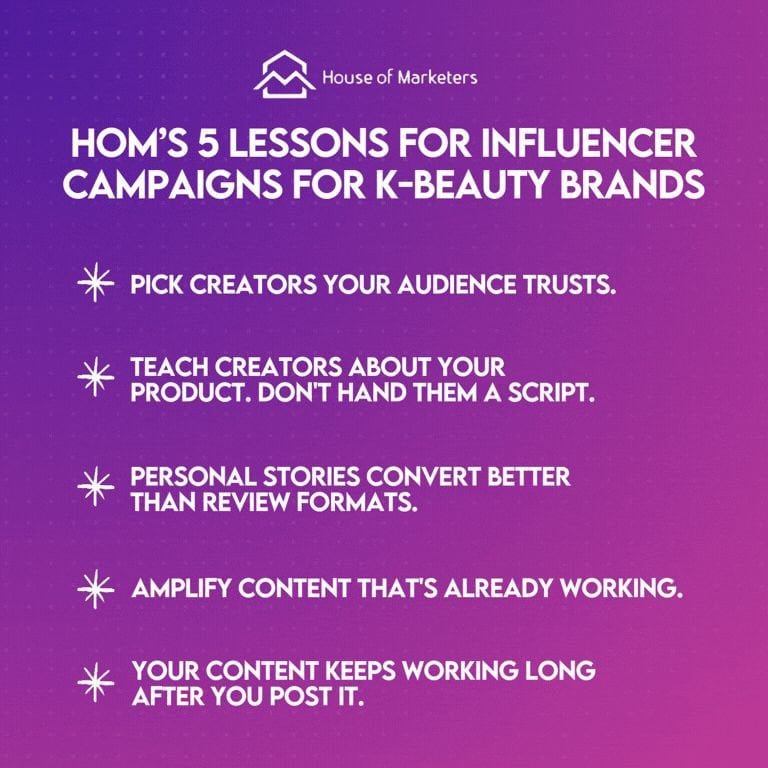
First-party research / K-beauty
13 brands
More than $5M in managed spend; approximately 200M estimated views and 1.6M engagements. 2027 application. Use recurring category questions to guide creator selection and content formats; maintain a research-backed brief library.
Beauty of Joseon illustrates how expertise can support a broader market-entry program. House of Marketers describes a recurring, authority-led approach involving beauty educators and dermatology-informed creators in the US and UK. Its published case records 500% year-on-year sales growth, tenfold growth in social mentions and a 23-point ad-recall lift. The program coincided with wider retail distribution, making the case most useful as an illustration of coordinated education, visibility and commercial expansion.
Biodance provides a complementary creative lesson: the product itself delivers a distinctive visual demonstration. In the agency’s published account, creator briefs emphasized the collagen mask’s visible format and application experience. The campaign reports 5 million hashtag views and 10,000 new followers. Its larger K-beauty research describes 75 participating creators and an 8% engagement rate. These formats translate product characteristics into observable evidence for consumers.
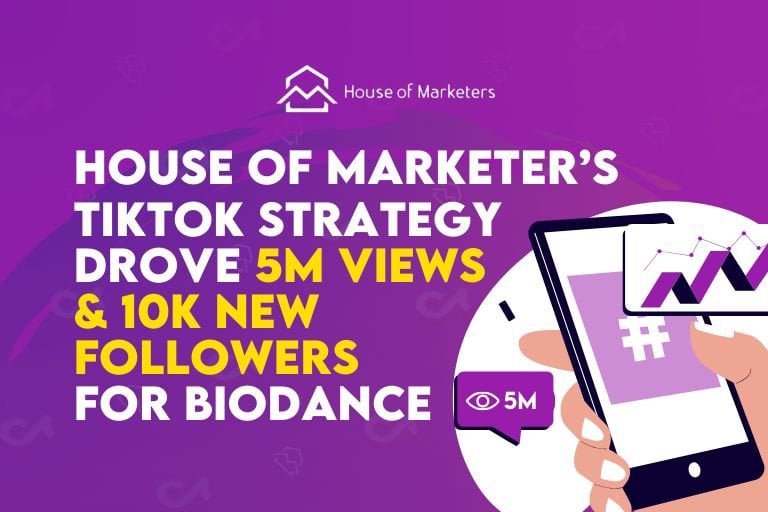
House of Marketers / Biodance
5M
Reported hashtag views, together with 10,000 new TikTok followers. 2027 application. Choose a demonstration with immediate visual comprehension; measure saves, product questions, product-page behavior and brand search.
Recommended action. Score creators on category expertise, clarity of explanation, audience overlap and practical demonstration quality. Require briefs to answer a named buyer objection. Document the final claim and approved evidence in a reusable asset library.
Creator commerce and customer acquisition
Brands are connecting creator discovery with commerce data and paid-media testing to manage acquisition costs and turn strong creative into repeatable demand.
The next step in creator commerce is execution speed. Platforms create multiple purchase paths, including social storefronts, retail links, affiliate codes and branded websites. Commercial results depend on the fit between message, product value and buying context. Brands therefore benefit from a shared testing process that identifies effective narratives, allocates media to them and updates creative in response to conversion and inventory data.
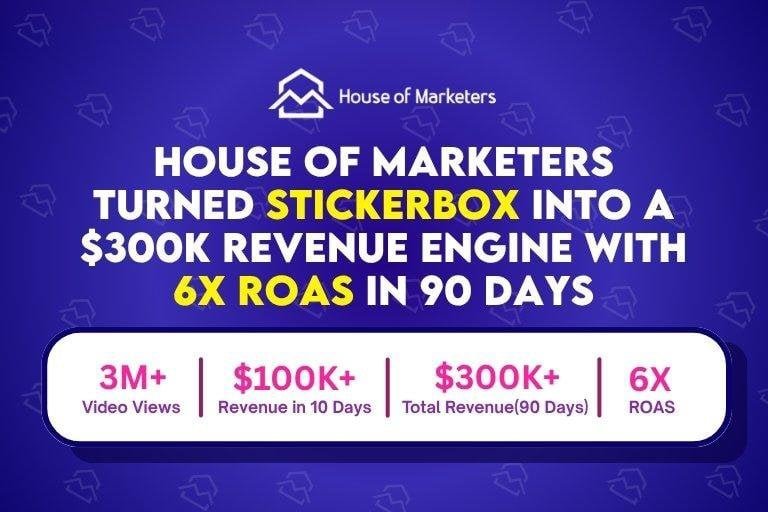
House of Marketers / Stickerbox
$300K+
Revenue reported in 90 days; 6x blended return on ad spend; four stock-outs during launch. 2027 application. Pair a clear product demonstration with 25-plus creative tests, paid amplification and inventory-aware pacing.
Stickerbox entered the US market with a new voice-activated product that creates physical stickers from spoken ideas. House of Marketers tested over 25 creator-led assets on TikTok and Meta, reporting more than 3 million video views, over $100,000 in revenue within ten days and over $300,000 within 90 days. The campaign also reported a sixfold blended ROAS. The central lesson is the conversion role of demonstration: parents could see what the product did, how children interacted with it and why the experience justified a purchase.
For HelloFresh, the operating problem is different: sustained customer acquisition across markets. The agency reports an ongoing program involving approximately 200–300 creators per month, around 5 million monthly video views and more than 500 tracked monthly sales through promo-code activity. House of Marketers also reports an average customer acquisition cost around 30% lower than other social platforms across participating markets. These outcomes illustrate the need for a stable acquisition engine built from continuous recruitment, routine content and offer tracking.
These two programs suggest different budget approaches. A launch-stage product needs rapid creative learning and sufficient inventory to service demand. A subscription brand needs creator replenishment, repeatable tracking and attention to customer quality over time. Treating them as distinct business models makes testing more useful.
Recommended action. Build a weekly commercial review that combines creative winners, media spend, purchases, CAC, gross margin, stock availability and first-order quality. Scale investments when the economics remain attractive as spend rises.
B2B influencer marketing and employee expertise
Business buyers increasingly combine automated research with validation from analysts, customers, practitioners and provider experts.
Forrester expects AI agents to take part in three-quarters of B2B buying decisions in 2027. The firm also predicts that buyers will increase human interactions to validate AI-generated suggestions. This creates a distinct role for expert-led influencer programs: help buyers verify implementation feasibility, supplier credibility, product claims and expected value.
The 2027 TopRank/Ascend2 survey provides evidence on operating practices. Programs rated very effective are more likely to use always-on engagement: 72% of that group reported an always-on approach, compared with 27% among the remaining respondents. Trustworthiness and audience credibility lead creator-selection criteria at 46%, ahead of audience relevance at 40%. These are reported practices among marketers who already run or plan B2B influencer programs, offering a useful framework for testing program maturity.
McKinsey’s 2026 State of Marketing Europe includes an interview with Schneider Electric’s industrial automation marketing leadership. The company describes bringing customers, industry specialists, partners and its own technical experts into its brand-building work. For complex technical purchases, these voices can explain how a product performs inside real business processes, where implementation work sits and what outcomes buyers should reasonably expect.
A B2B expert-content system
| Buying question | Best evidence format | Commercial use |
|---|---|---|
| Will this work in our environment? | Customer implementation story with named constraints | Sales validation and technical due diligence |
| How much effort will adoption require? | Practitioner walk-through with timing and prerequisites | Qualification and buying-committee alignment |
| How does the alternative compare? | Independent expert comparison with methodology | Shortlist formation and objection resolution |
| Who will stand behind the result? | Expert session and customer reference | Executive confidence and deal progression |
Recommended action. Identify five recurring deal objections from sales calls. Pair each objection with a credible internal or independent expert, a documented customer example and an accessible format. Track account-level engagement, influenced opportunities, assisted win rates and sales-cycle movement.
Creator pricing, commercial rights and long-term value
Creator agreements increasingly cover a portfolio of media assets, distribution rights and long-term audience relationships.
The value of creator partnerships varies by the commercial role being purchased. Reach-based distribution, specialist product expertise, cultural association, reusable creative and customer access each create a different economic outcome. In 2027, brands can make procurement more precise by separating these components in contracts and measuring the contribution of each.
A product educator with a modest audience may command a premium when their explanations reduce buyer uncertainty and perform well in paid media. A high-reach creator may deliver the greatest value during a cultural launch. A trusted long-term ambassador may improve message consistency and earned attention over time. The appropriate compensation structure follows the role: project fees for a specific creative assignment, licensing fees for reuse, retainers for sustained relationships, and performance incentives where tracking supports them.
AI introduces additional licensing questions. Contracts should state how a brand may edit creator assets, generate language versions, use a creator’s voice or likeness, and extend materials into paid placements. Rights boundaries also protect the relationship value created by the creator. Standardized clauses can make approval faster while maintaining room for negotiated terms that reflect exclusivity and reputation.
Exhibit 4. Example economics for one creator partnership
| Commercial component | Illustrative amount | Management question |
|---|---|---|
| Creation fee | $8,000 | What original material and expertise are delivered? |
| Paid usage rights | $3,000 | Which channels, territories and months are included? |
| Editing and versioning | $1,500 | Which derived formats can be produced? |
| Paid distribution | $12,000 | Which audience tests receive investment? |
| Total program cost | $24,500 | Which incremental outcomes justify scale? |
Illustrative procurement example. Figures demonstrate contract structure and are separate from published industry benchmarks.
One useful metric is effective cost per approved, reusable asset: creation and licensing costs divided by the number of assets cleared for intended channels. A second is incremental gross profit per partnership: test-based gross profit contribution after media and creator costs. The combination rewards both production efficiency and buyer response.
Recommended action. Introduce standard rights modules for organic use, paid use, website and retail placements, localization, and AI-assisted edits. Review the fee structure against expected asset life and campaign economics before renewing major agreements.
Incrementality and influencer marketing measurement
The strongest creator programs will connect attention and engagement to changes in buyer behavior, then quantify their economic contribution with appropriate testing.
Measurement quality determines how confidently leaders can expand investment. McKinsey’s State of Marketing Europe 2026 surveyed 500 senior marketing executives and found that 71% report using multipurpose campaigns that target upper-, mid- and lower-funnel objectives together. Its measurement analysis found that 3% of respondents could explain more than half of their marketing spend through MROI measurement. This is a broader marketing measurement challenge with direct consequences for creator budget allocation.
The IAB’s 2026 assessment of creator measurement describes fragmented KPIs and a need for stronger cross-media measurement infrastructure. The opportunity for brands is to assign a test method to each objective. Awareness activity can use brand lift and incremental search demand. Product education can use qualified sessions and consideration research. Conversion programs can use geo holdouts, matched-market tests or randomized exposure studies when campaign design permits.
Exhibit 5. A decision-focused creator measurement scorecard
| Objective | Operational measure | Commercial evidence |
|---|---|---|
| Reach relevant buyers | Qualified reach; audience overlap; frequency | Brand or consideration lift among target buyers |
| Improve product understanding | Completion; saves; product questions; page depth | Preference change or qualified search lift |
| Create reusable media assets | Rights coverage; assets approved; time-to-live | Cost per performing asset and paid creative uplift |
| Drive acquisition | Attributed orders; CAC; new-customer mix | Geo / |
| Support retention | Repeat use; creator community participation | Cohort retention; repeat purchase; customer value |
The distinction between attribution and incrementality matters commercially. Attribution records a purchase associated with a creator, code or click. Incrementality estimates the additional result produced by the campaign relative to an appropriate comparison. Leaders can use both: attribution for rapid optimization and experiment-led findings for budget decisions.
Take a hypothetical four-market campaign. Two comparable markets receive incremental creator media investment and two maintain baseline activity. After accounting for historical demand patterns and distribution differences, the brand estimates an additional $180,000 in gross profit against $120,000 in added program costs. This produces an illustrative 1.5x incremental gross-profit-to-cost ratio. A real study would document sampling, pre-trends, treatment timing and uncertainty.
Creative learning is also an asset. Each test should record the creator format, proposition, hook, proof point, intended buyer, placement and observed result. A quarter of systematic testing can establish which product explanations consistently improve purchase consideration, making the next campaign cheaper to plan.
Recommended action. Reserve a fixed test budget for measurement, design quarterly lift experiments and publish one cross-functional scorecard. Use the resulting evidence to allocate the next quarter’s spend by category, creative approach and commercial outcome.
2027 scenarios and leading indicators
The most useful forecasts describe the conditions that could produce different outcomes and identify evidence leaders can monitor.
| Scenario | 2027 market development | Leading indicator |
|---|---|---|
| Integrated growth | Creator content is embedded across paid media, retail and owned channels; standard contracts support widespread reuse | Share of licensed content activated across multiple channels |
| Authority premium | Category specialists and long-term experts command higher prices where content improves buyer evaluation | Conversion, trust and reuse quality by creator type |
| Measurement-led consolidation | Brands direct larger budgets toward proven creative and creator partnerships as lift testing expands | Share of creator budget supported by experimental evidence |
Our base assessment favors an integrated-growth scenario. The budget outlook is strong, content reuse is already widespread and both CreatorIQ and Kolsquare document clear infrastructure needs. AI-assisted product research and tightening measurement practices strengthen the case for authoritative creator content. Differences between categories will remain substantial: beauty and consumer electronics reward visible demonstration, while enterprise software depends on trusted expertise and customer references.
Four leading indicators deserve quarterly review: creator content reuse outside social, contract cost per approved asset, customer consideration lift from expert-led content, and incremental gross profit from creator-supported campaigns. Together, they describe whether the industry is gaining productive capacity alongside spend.
A 90-day operating agenda for marketing leaders
An effective 2027 plan starts with a limited number of measurable decisions and uses the first quarter to improve execution.
| Period | Actions | Deliverable |
|---|---|---|
| Days 1–30 | Audit creator relationships, rights, platforms, attribution and repeat-use opportunities. Identify five buyer questions with strong commercial relevance. | Asset and rights register; initial KPI baselines |
| Days 31–60 | Brief expert-led demonstrations; test formats across organic, paid and product pages; implement unified campaign identifiers. | Reusable creative library; weekly performance review |
| Days 61–90 | Conduct a lift or matched-market test; review creator economics and audience quality; reallocate toward strong assets. | CFO-ready portfolio report and Q2 investment plan |
For a beauty brand, this may mean moving from a seasonal creator list to an ongoing category-education program with approved demonstration assets and retail conversion tracking. For a subscription business, it may mean running weekly acquisition experiments around creator profiles and offers. For a B2B technology provider, it may mean creating a bank of practitioner explanations and customer evidence used by sales teams and referenced across discovery channels.
The management principle is consistent: define the buyer decision first, choose the voice capable of improving it, distribute the explanation where it can be useful, and measure the resulting change. A successful 2027 creator program should make each subsequent investment decision easier to defend.
Methodology, evidence types and source links
This report is an October 2026 strategic synthesis prepared on behalf of House of Marketers. It combines published 2026 surveys, analyst forecasts, documented marketing practices and selected client outcomes reported by House of Marketers. Forecasts are identified as 2027 expectations. Survey percentages describe the surveyed population and original question wording. Company-reported cases are described within their published measurement windows.
House of Marketers’ K-beauty figures represent selected client engagements over an approximately 12-month period and include estimated views and reported engagement. Client outcome figures for Beauty of Joseon, Biodance, Stickerbox, HelloFresh and Rimmel London are drawn from published agency accounts. McKinsey’s State of Marketing Europe 2026 is an editorial benchmark supplied for this assignment; its 500-respondent sample describes senior marketing leaders across five European countries. Analytical frameworks, scenario judgments and illustrative financial calculations were developed for this report.
Primary industry research and market forecasts
- Kolsquare / B2B International
Kolsquare / B2B International: The Future of Influencer Marketing 2026–2027 - CreatorIQ
CreatorIQ: State of Creator Marketing 2026–2027 - NielsenIQ
NielsenIQ: Consumer Outlook, Guide to 2027 - Forrester
Forrester: 2027 B2B Go-to-Market Predictions - TopRank / Ascend2
TopRank / Ascend2: 2027 B2B Influencer & Creator Marketing Report - IAB
IAB: The As-Is Measurement Landscape in the Creator Economy - McKinsey
McKinsey: State of Marketing Europe 2026 - McKinsey
McKinsey: The State of Grocery Retail Europe 2026
House of Marketers original campaign and research material
- House of Marketers
K-beauty influencer marketing: Lessons from $5M+ spend - House of Marketers
Beauty of Joseon: Education-led creator marketing - House of Marketers
Biodance: TikTok skincare creator program - House of Marketers
Stickerbox: Product demonstration and acquisition - House of Marketers
HelloFresh: Always-on creator acquisition - House of Marketers
Rimmel London: Omnichannel creator campaign
Editorial standard: each exhibit identifies its source, observation period and the decision it informs. Brand-specific outcomes are attributed to the reporting organization. Strategy recommendations are House of Marketers analysis.