

For years, a new beauty brand entering the US followed a similar path. First, convince a big retailer like Sephora or Ulta to stock the product. Then pay for shelf space and spend heavily on ads to get shoppers to buy it. L’Oréal, the world’s largest beauty company, has scaled brand after brand this way.
So when L’Oréal brought Korean skincare brand Dr.G to America, you might expect the same script. Instead, Dr.G arrived on Amazon in November 2025. On October 1, 2026, it launched on TikTok Shop US, the first time L’Oréal has launched a brand on the platform.
We are observing a change. Brands are leading with social commerce and letting creators and online sales show where American demand sits. Stores can come later, once the numbers make the case. If L’Oréal tests demand before it pays for shelf space, smaller brands have even more reason to.
Kantar’s Retail Sound Bites podcast recently ran an episode on why brands now launch on TikTok first, then scale to retail. Digiday reports that TikTok Shop now appears in brand RFPs next to Amazon and Walmart, though established brands are moving more cautiously than disruptors. In the UK, high street names such as Sainsbury’s and M&S are testing TikTok Shop.
This brings us to a question we get asked very often by brands entering a new market: “When do we go retail?” Our answer is always the same: if you are not sure, test the market with influencer marketing and see what the data shows you.
If you are the founder reading this, one market entry strategy is to spend on a shelf and hope. The other is to earn attention first and walk into the retail meeting with something real to show.
Why Is Retail-First a Risky Market Entry Strategy for a New Product?
Retail-first asks you to pay the most for information at the moment you have the least of it. You commit inventory, trade spend and shelf fees before you know whether shoppers in that market want the product.
The odds are not kind. NielsenIQ found that only about one in three new FMCG launches reached even 1% of households across Europe’s five largest markets in 2025. There is a less obvious cost too. A study in Marketing Science found that retailers charge higher slotting fees when they know more than the manufacturer about a new product’s chances.
In other words, part of what a new brand pays for shelf space covers the gap between what the retailer knows and what the brand can prove. A creator test narrows that gap. Circana’s research on the year’s top launches points the same way. Its 2025 New Product Pacesetters in food and beverage sell about 22% more online than their category average, as e-commerce drives trials before in-store scaling.
The good news is that you can test a market like the US without a distributor or a shelf slot. You can do it with creators. Here is what happened to brands that did.
Ready to launch your next influencer campaign?
Get a free proposal from House of Marketers
How K-Beauty Used Creators to Test the US Before Retail
Korean beauty brands did not win America by buying shelf space first. They built demand on TikTok and Amazon, then let retailers come to them.
As House of Marketers Founder Inigo Rivero defines it:
“Most brands launching in a new market are hoping for the best. A creator test replaces that hope with proof. When you have real numbers on what shoppers buy and why, every decision after that, from product to price to retail partner, is made with far more certainty.”

The category data shows the result. NielsenIQ reports that US K-beauty sales reached $2.8 billion in early 2026, up roughly 48% year on year. In 2025, the US became the top export market for Korean cosmetics for the first time, at $2.19 billion.
Medicube is the clearest example of the sequence: online first, stores second. In August 2025, 22 Medicube products went into all of Ulta’s 1,400-plus stores. The shelf then had to earn its keep. According to parent company APR, Medicube sales at Ulta rose about 30% in three months, and Ulta reordered in September. In April 2026, the brand entered more than 1,500 Target stores, with around 3,000 Walmart stores planned for June.
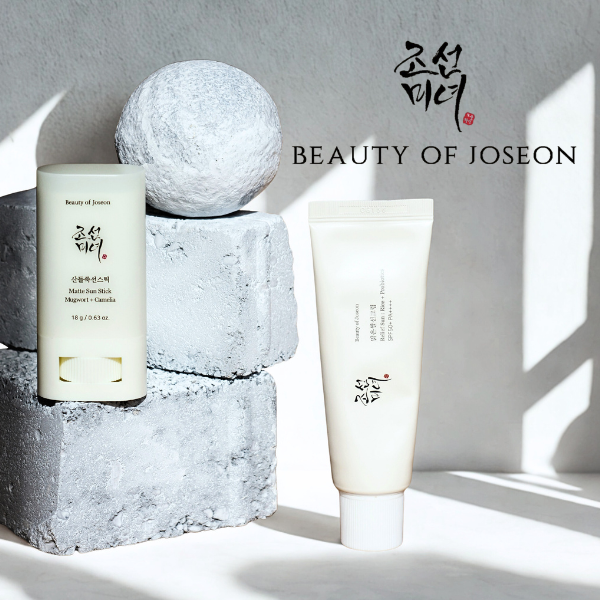
Similarly, Beauty of Joseon launched at Sephora around August 2025. TikTok Shop’s head of beauty says many Korean brands start on TikTok Shop, build awareness and then move into retail, as Beauty Independent reports.
How Do Creators Help Test a New Market?
Demand in a new market increasingly forms online first. For example, NielsenIQ reports that 70% of US K-beauty sales happen online.
A small creator test combines three things:
- Seeding: sending free products to creators who fit your audience, so they try it and post honestly.
- UGC (user-generated content): videos in a creator’s natural style, made for your brand. They work as content and as test ads.
- Paid ads: paying to show the best videos to more people, to see if demand holds beyond the creator’s followers.
Within weeks you learn whether shoppers want the product, which claims make them stop and buy, and who buys first. Saves, shares and sales show the interest. The comments show the doubts, like a free focus group.
This also makes real sales, not just views. Social commerce lets shoppers buy inside the app where they found the product. TikTok Shop is TikTok’s version. It is one option for a test. Tracked links, codes or your own store work too. But the numbers show how much buying now happens this way: K-beauty sales on TikTok Shop grew 132% year over year in 2025, per TikTok Shop’s head of beauty.
We recommend testing with creators because we have watched it work. K-beauty is where our results are clearest, but the method is not specific to one category. At House of Marketers we have run creator campaigns for six K-beauty brands in Western markets: Beauty of Joseon, COSRX, Mediheal, Biodance, d’Alba and LG H&H brands.
- COSRX: 2x sales and a 15% TikTok Shop uplift across the US, UK and Europe, from an always-on, multi-tier creator program (creators of different audience sizes posting steadily) built on seeding and education-first content.
- Mediheal: 50 creator videos, 12M+ views, 7.4% engagement and a reported 1.5x sales ROI.
- d’Alba: 25M+ monthly views, 9% engagement and reported +150% sales.
The pattern is the same each time: steady creator activity, creators of different sizes working together, and education before the sale. More on our K-beauty influencer marketing page.
House of Marketers’ Strategy for Running a Creator Test Before Retail
Your brand does not need fixing in a new market. It needs translating. Find out what shoppers in that market care about, and brief creators to speak to it. In the US, for example, skincare buyers want to know what is in a product and how it works. NielsenIQ ties US K-beauty growth to ingredient-focused skincare routines.
The strongest marketing strategies for new market entries treat creator spend as research budget, not only awareness budget. Here is how we structure a test:
- Pick one hero product and one question. For example: will US skincare shoppers buy this serum at this price?
- Test two markets or segments side by side. A comparison turns raw numbers into a decision. Our d’Alba campaign started in the US and Spain before expanding to more markets.
- Brief formats, not scripts. For d’Alba, creators mixed testimonials, humour and application tips, and dermatologist creators performed especially well.
- Give every creator a trackable purchase route. Use links, discount codes or a TikTok Shop listing. For Mediheal’s Black Friday push, every creator shared a trackable deal link.
- Put paid budget behind winners only. Boost content that already earns organic interest, such as TikTok Spark Ads or Meta Partnership Ads.
- Decide, then take the data to the buyer. Scale, adjust or stop, and open your retail pitch with sell-through numbers.
Want to Test Your Next Market with Creators?
Entering a new market is a learning decision before it is a retail decision. That gap is exactly what we help brands work through at House of Marketers. We run influencer marketing, UGC and paid ads to help brands in beauty and beyond test a new market.
Contact for Free Campaign Proposal
Frequently Asked Questions
What Is a Creator Test in a Market Entry Strategy?
A creator test is a short campaign where creators in a new market post about one product, with a link or code that shows who buys. It shows whether shoppers want the product before you commit to retail. At House of Marketers, we run these tests on TikTok and Instagram, often in two markets at once, as we did for Livisto.
What If a Creator Test Shows Weak Demand?
That is a useful result. It saves you shelf fees and inventory in a market that is not ready yet. Check whether the problem is the market, the price or the message, then adjust and retest, or move the budget to the market that responded.