



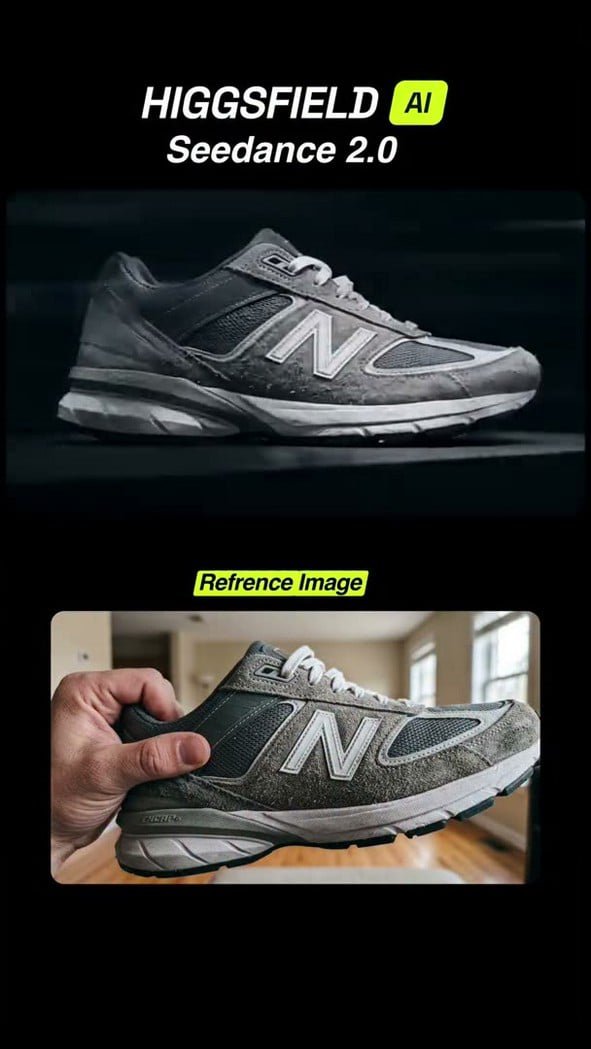
This Higgsfield demonstration started with a sneaker photo. Creator @neuraltech.ai showed the reference beside an AI-generated ad, giving viewers a concrete idea of what they could try.
For an acquisition team, the next question is whether a curious viewer can repeat the process. The campaigns below make that question hard to ignore.
The AI demo has to survive the first click
AI products can generate an impressive video long before they have a reliable customer acquisition story. A creator shows a remarkable result. People click. Then a permission request, unfamiliar interface or disappointing first attempt changes the mood. The creative and the product experience are part of the same commercial problem.
This House of Marketers edition examines ten creator campaigns and programmes for AI products, using documented launches and reporting available by 11 November 2026. Some are short launch bursts; others are longer-running partnerships or case studies whose precise flight dates remain unpublished. We label those differences. The selection is based on the strategic lesson and available evidence, rather than a supposed ranking of incomparable returns.
Our emphasis is on the decisions an acquisition team can use: who should demonstrate the product, how to make the first use clear, what deserves paid testing and which results justify another round of spend. A large viewing total can be useful. So can a small programme that explains a difficult product well. The important part is knowing which question the evidence answers.
Use the cases with an AI marketing strategy that connects creator content to a defined product action. The path from seeing a demo to getting value should be easy enough to describe in a sentence. If it takes a meeting to explain where a new user goes next, the brief needs more work.
Inside the campaigns
- Higgsfield gave creators specific AI tasks
- Oreate made AI familiar across markets
- Gemini joined the Sidemen challenge
- Fyxer used a trusted professional voice
- Replit coordinated creators for the launch
- Lovable made the first build visible
- Creao helped ambassadors teach the product
- Todoist gave Ramble an everyday use
- Stickerbox made AI creations physical
- Dr Hypes connected AI designs with finished shoes
Higgsfield gave creators specific AI tasks
Eight creators posting about one model release could easily produce eight near-identical announcements. Higgsfield’s work with Creators Dream is more useful as a briefing example because the release became several different creative tasks. The product remained recognisable while each demonstration gave its audience a particular reason to care.
Creators Dream’s Seedance 2.0 launch record documents eight Reels on 2–5 April 2026, within a November 2025–October 2026 programme of 151 videos from 22 creators. Separately, four creator insight snapshots total 1.25M+ views. These are different reporting scopes; neither number establishes conversions.
The creative distinction is visible in @neuraltech.ai’s Reel: a product reference becomes material for an AI-generated advertisement. The audience sees an input they could recognise and the sort of output they might want to make. That invites a practical question about trying the workflow. It is a stronger starting point for an acquisition brief than asking every partner to announce that a new model is available.
Every launch caption disclosed that Seedance 2.0 was unavailable in the US and Japan. Product availability needs to travel with the recommendation. Otherwise the campaign can create enthusiasm among people who cannot complete the action, leaving the landing page to explain the bad news.
Our recommendation is to assign creators by the task their audience wants to complete: product advertising, narrative scenes, educational explainers or animation. Keep one common release window, but approve a different demonstration for each task. Supply the correct availability note, usable reference material and a clear route to the relevant product experience. That gives creators room to work without making basic product facts negotiable.
Report the resulting activity by task as well as creator. Follow viewers through the first successful generation, then examine whether they return to make something else. A burst of launch views can tell you which demonstration attracted interest. Repeated use is what would justify expanding that brief into a longer SaaS acquisition programme.
Oreate made AI familiar across markets
Oreate’s Latin American campaign asked creators to make videos inside the AI platform, so the output itself could demonstrate the product. In our Oreate AI case, the flight ran from 25 June to 16 July 2026 across Brazil, Argentina, Mexico, Colombia and Peru. Thirty-five creators produced 69 posts, primarily for TikTok and Instagram, with a small YouTube test.
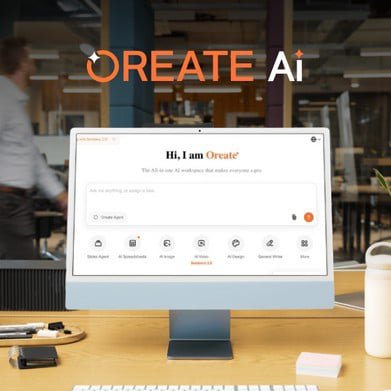
The creative included transformations, choose-your-path stories, split-screen explanations and recurring numbered formats. Football references connected some work to the World Cup conversation. House of Marketers reports 5.1 million views and 38,000-plus engagements, including more than 2,500 saves and 1,000 shares. The public case does not disclose paid/organic allocation, sign-ups or subscription revenue.
The distinction worth noticing is between translating a message and making the demonstration belong. A familiar series gives the audience a format it already knows how to watch. A locally relevant subject gives the output a reason to matter. The AI capability can then enter the content through the thing it creates. That is a more useful starting brief than instructing every market to repeat the same explanation in another language.
For a multi-market launch, agree what must remain consistent before localising the idea: the product capability, the claim the footage can support and the action available afterwards. Let creators propose the situation and pacing that make sense for their audience. Review the input and output together so a striking edit does not imply a capability the product cannot reliably deliver. Use your creator brief to make those boundaries explicit.
Then compare what happens after the video by market and format. Keep landing-page and trial conditions consistent enough to interpret differences. Track the first completed creation alongside the sign-up, and separate free usage from paid conversion. A saved transformation clip can tell you that someone wants to return to the idea; it cannot tell you whether they completed an account setup. The next creative test should be informed by that gap.
Gemini joined the Sidemen challenge
Google Gemini’s September 2026 Sidemen partnership opened with a return to the group’s 24-hour forest-survival format. The announced five-video programme, produced with Arcade, placed Gemini inside challenges and problem-solving moments. The opening episode, published on 20 September, had 9.46 million public views on 11 November 2026. Its description disclosed the sponsorship and promoted a student offer. That view count belongs to the entire entertainment episode, not verified exposure to each integration or student-plan sign-ups.

The appeal for an AI marketer is the product’s opportunity to contribute to a familiar format. A challenge creates a reason to seek help. The audience can see what the creators are attempting, whether the suggestion is usable and how they respond. That is a more concrete creative starting point than asking a personality to recite how transformative an assistant could be.
The important casting decision is therefore partly a format decision. When reviewing creators, look at the recurring situations in their content: planning, making, comparing, solving or experimenting. Choose a situation in which your product has a legitimate job. If the integration requires everybody to stop the entertainment for a separate presentation, reconsider the task before rewriting the sponsor line for the sixth time.
Give the product a bounded role in the production. Agree which tasks it can support, test the experience and leave room for the creator to respond naturally. In an entertainment challenge, also make clear that a filmed scenario is not a blanket endorsement of AI advice for real-world safety decisions. The useful demonstration is the interaction, including the creator’s judgement about what to do next.
A student-focused offer needs a credible route from entertainment to relevant use. The next asset could show a suitable everyday task, explain access and eligibility, and make the first attempt straightforward. Measure offer-page visits, eligible registrations and subsequent use separately. An audience can enjoy an episode without needing the advertised product; the marketing plan should be able to recognise that.
For your next partnership, put the creator’s recurring format and the product’s specific job on the same page of the brief. Then design the follow-up for the viewer whose interest becomes practical. Entertainment earns an opening. The onboarding experience still has to do its share of the work.
Fyxer used a trusted professional voice
An inbox assistant asks for something unusually personal: access to the place where your work arrives. That makes trust part of the acquisition problem. Fyxer’s creator activity is useful because it shows how a specialist voice can introduce an AI product through a familiar professional headache, without needing a huge entertainment moment.
On 25 February 2025, real estate creator Ray Copeland included an explicitly disclosed Fyxer sponsorship in his AgentBeat newsletter. The placement introduced email organisation, replies in the user’s tone and meeting notes to property specialists, with a seven-day trial. It sat inside an edition about using YouTube to generate real estate business. No sponsor clicks, trials or sales were published; the property deals discussed in the edition were Copeland’s own YouTube results, unrelated to Fyxer’s performance.
- Professional context Property specialists with a busy inbox.
- A relevant task Email replies and meeting administration.
- A practical trial Does it improve the working routine?
House of Marketers analysis of the AgentBeat placement. This is an explanatory model, not original campaign artwork.
The audience fit is the interesting part. A property professional can understand the cost of an unanswered enquiry or another evening spent clearing email. The creator does not have to establish why communication matters before introducing the product. That gives a relatively compact sponsorship a specific context, although the public evidence cannot tell us how many readers acted.
Founder Richard Hollingsworth described a separate route to advocacy in a 2025 interview: identifying customers with LinkedIn audiences, resolving their product issues and inviting satisfied users to share their experience. These were distinct activities. Together, they suggest a useful planning question: who already understands the problem well enough to explain what has changed?
For a comparable programme, we would begin with a narrow professional segment and an actual working routine. Ask a creator to explain how they review a busy inbox, what they allow the assistant to prepare and what they still check themselves. Give them enough time to develop an informed view. Permission requests and approval controls belong in the demonstration because those details affect whether the audience is comfortable trying the tool.
Build a landing experience for that profession, with the same task shown in the content. Track the journey from referral to connected account, useful action and continued use. Test a small number of credible specialists before buying broad creator reach. The discipline here is resisting the temptation to sell every feature in one sponsorship. One believable improvement to a recognisable working day is a much clearer reason to try an assistant.
Replit coordinated creators for the launch
Launch planning often leaves influencer marketing with an awkward job: make the announcement feel spontaneous, but please have every deliverable approved yesterday. Replit’s campaign with Beacons is a useful example of treating creator coordination as part of the launch itself. The operational result is unusually clear, even though the public case leaves its precise campaign dates unpublished.
According to the Beacons case study, Replit recruited 26 creators across Instagram, TikTok and YouTube for an embargoed product announcement tied to a major podcast appearance. The creators served audiences interested in entrepreneurship, building products and AI tools. Beacons reports that all 26 posted on time, with 600,000 impressions in the first 24 hours and no leaks. The same case gives an $8 CPM, without enough detail to reconstruct the full campaign cost or a customer acquisition result.
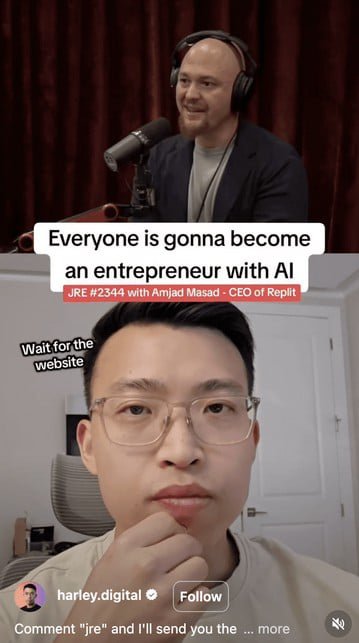
The published creative includes @harley.digital responding to a clip of Replit CEO Amjad Masad on the Joe Rogan Experience. That episode was published on 2 July 2025. It supplies dated context for the creative; the agency does not independently state the campaign flight dates. The useful mechanism is the connection between a broad conversation about building with AI and a creator translating that conversation into something their audience can investigate.
For an AI product, this format can help an announcement travel beyond the original interview. Different creators can choose the implication that matters to their followers: testing a business idea, making an internal tool or understanding what a non-developer can realistically build. That is our interpretation of the opportunity, rather than a claim that every creator in this campaign followed those exact angles.
To apply the approach, build the schedule around the moment viewers can actually try the announced capability. Prepare product access, disclosures and approved facts in advance. Agree a precise publishing window and a named escalation contact. Give each creator a distinct task so the audience gets several useful explanations instead of the same announcement in different voices.
Keep operational delivery and commercial performance visible in separate parts of the review. On-time publishing matters when attention is concentrated around a release. Impressions show the scale of distribution. The next decision needs product evidence: which referred users started a build, completed it and returned? A coordinated launch earns the opportunity to acquire users. It still needs a product experience that rewards the click.
Lovable made the first build visible
“You can build anything” is a very large promise to put in front of someone who has never built software. Lovable’s creator work becomes more interesting when the promise turns into a visible attempt. A creator can make the first steps feel accessible while giving the audience something concrete to inspect.
On 25 April 2025, developer educator David Ondrej published a sponsored Lovable 2.0 video. The description thanked Lovable for sponsoring it and directed viewers to a creator-specific product URL. The video had 71,396 public views when checked on 11 November 2026. That is the viewing total for this individual tutorial; public reporting does not identify its signups, paid customers or revenue.
A later interview-based account of Lovable’s creator programme, published in June 2026, describes a useful qualification process. Programme builder Mindaugas Petrutis gave prospective partners product access, sometimes allowing two weeks to experiment. Whether they found a meaningful use helped determine the fit. This broader account does not establish that Ondrej went through the same process, but it explains why product experience can be a sensible condition for commissioning a demonstration.
That condition changes the conversation about creator selection. A promising audience is only part of the decision. The person also needs a credible reason to build something, enough competence to explain what happened and enough editorial judgment to distinguish a useful result from an impressive first draft. Otherwise the brand risks buying an enthusiastic introduction to a product the creator barely understands.
For a similar brief, we would ask partners to propose a small project before agreeing the final deliverables. The project should have a named user and an observable purpose: a booking flow, a simple planning tool or a working prototype for a specific idea. Commission the explanation of how it was built and tested, including revisions. Agree what the audience will receive, whether that is a template, a project walkthrough or a starting prompt.
Then make the first product session resemble the content. If the video demonstrates a small working tool, the referral experience should help a viewer begin that task. Track completed projects and subsequent use by creator, alongside trial and subscription data. That gives the marketing team a way to distinguish curiosity about AI from a useful new habit. The creator’s strongest contribution may be making a first attempt feel manageable enough to begin.
Creao helped ambassadors teach the product
A creator can announce an AI agent in one post. Teaching people to use one takes more contact. Creao's ambassador programme combined product education, recurring content and community activity to support that longer relationship.
Creao's April 2026 announcement invited practitioners, educators and community builders to build agents and teach users across Chinese-, English- and Korean-speaking communities. The Pioneer Program offered a base fee, 20% affiliate commission, product credits and team access. Those were terms, not evidence of earnings.
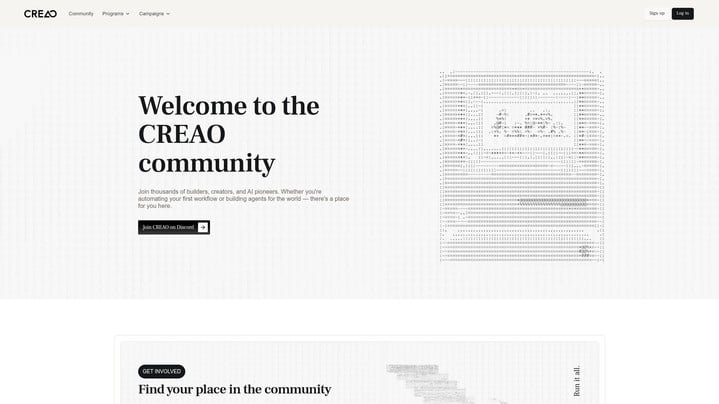
JE Labs dates its ambassador programme case to Q1–Q3 2026. It reports 20-plus trained ambassadors, approximately 3 million organic impressions and 3,000-plus new-user sign-ups from ambassador content. The agency also reports more than 300 localised content pieces produced in three months and three San Francisco events involving over 200 AI builders and founders. Attribution methods, paid conversion and retention are undisclosed; sign-ups should stay labelled as sign-ups.
Training and recurring work give creators time to discover useful applications and explain awkward steps. For an agent product, viewers need to understand the task, setup and required checks. An ambassador title cannot answer the support question before the next tutorial goes live; a knowledgeable person can.
Ask prospective partners to complete a real workflow before agreeing the calendar. Pay for that learning time, give each person a product contact and record the explanations that help users get unstuck. Reuse those explanations in onboarding. A monthly posting quota cannot tell you whether the audience learned anything useful.
Measure first-task completion, repeat use and paid conversion by creator cohort. At IRL events, observe where people struggle and request permission to capture questions. An ambassador count means little if referred users are left staring at an empty workspace.
Todoist gave Ramble an everyday use
Your head is full of things to remember, and opening another productivity app feels like another task. Todoist's Ramble launch started with that recognisable irritation. Creators could show someone speaking naturally and seeing the resulting tasks organised inside Todoist. The feature had a job the audience could understand before anyone explained the AI.
For the 21 January 2026 launch, Cast Influence coordinated creator activity and PR around everyday moments when speaking is easier than typing.

The reported creator output was 21 posts across five platforms, generating 168,000-plus views and 2,000-plus engagements. A walkthrough on Todoist's own YouTube channel supplied more than 95,000 of those views. Keep that owned-channel contribution visible: this is a creator-content programme total, not reach exclusively from creators' personal followings. The case reports no sign-up lift, paid conversion or retention outcome.
This is a useful launch structure because the audience can see the change. A vague promise to reduce mental load becomes a sequence that fits on screen: an unfinished thought, a spoken instruction and a usable task. For an AI feature, that is a more informative demonstration than a list of model capabilities. It also creates a clear review question for the marketing team: does the edit preserve enough of the process for someone to understand what happened?
Build your creator brief around an ordinary interruption your product can handle. Ask for a believable starting situation and a result the viewer can inspect. Check that captions, audio and screen footage agree. If a task needs correction, decide whether showing that correction gives the audience a more accurate expectation than cutting directly to a perfect outcome.
Plan the landing experience around the same task. Let a new user attempt it quickly, then measure completion and subsequent use. Keep views, creator interactions and press distribution in separate reporting lines. A coordinated launch can produce a lot of activity; the next investment decision still needs to know whether people found the feature useful enough to return.
Stickerbox made AI creations physical
Stickerbox gives an AI creation a physical ending: say an idea and print the sticker. For parents considering a screen-free creative device, that short sequence explains the product more clearly than an abstract account of generative technology. Our Stickerbox case study, published in April 2026, describes a programme combining creator demonstrations with paid social. The precise campaign flight dates are unpublished.
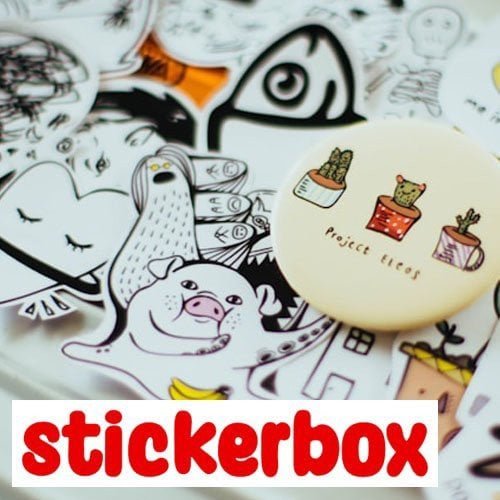
The team tested more than 25 creative assets across TikTok, Instagram and Facebook, then supported stronger executions with paid distribution and retargeting. House of Marketers reports more than $300,000 in revenue within 90 days and 6x blended ROAS. These are combined programme results. They do not isolate organic creator sales or establish incrementality, and the public case does not supply the full attribution window or cost base.
The useful creative principle is the visible sequence. The audience can connect a spoken request to an output and then see what someone does with it. For an unfamiliar AI product, that continuity reduces the amount the viewer has to imagine. It also gives the editor a clear structure. The surprise is in the result; the explanation is in the steps leading to it.
Your own variations should answer different purchase questions. One can make the basic interaction obvious. Another can show a use that fits a particular household or occasion. A follow-up can address a recurring concern from the comments. Keep the conditions honest and avoid presenting one selected output as a guarantee of every attempt. Product clarity is a creative advantage when buyers are still trying to understand what they would receive.
Connect the content plan to the media decision. Agree paid amplification rights, track the asset versions and compare post-click behaviour as well as attention. The strongest hook can still send the wrong people to the product page. Before increasing spend, check whether the page continues the demonstration and whether fulfilment can support the demand. A campaign that persuades people to buy makes a promise the rest of the business has to keep.
Dr Hypes connected AI designs with finished shoes
An AI-designed shoe still has to arrive as a shoe. A parent needs to understand how the design is made, what the finished pair looks like and whether ordering feels straightforward. That gave our Dr. Hypes campaign a more useful creative assignment than announcing another product with AI in its name.
The case, first published in December 2025, describes a US programme combining creator-style UGC with TikTok, Meta and Google advertising. Exact campaign dates are unpublished. Content showed the custom sneaker builder, unboxings and family reactions. The campaign account also describes design demonstrations and the journey from creating a pair to receiving it. The AI feature was part of what customers were being asked to buy.
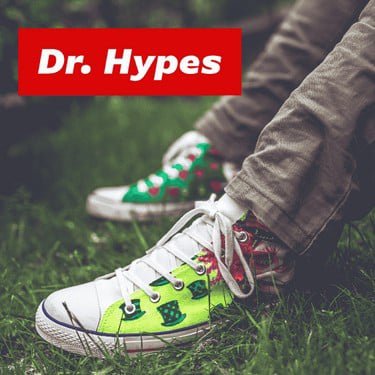
House of Marketers reports 2 million-plus impressions, 27,000-plus clicks, a CPA reduction exceeding 67% and an 800%-plus increase in sales. These are agency-reported results from the combined programme, not an organic influencer-only return. The public case does not give the sales baseline, comparison window, spend or incrementality test. The direction is commercially interesting; the missing denominators stop it becoming a forecast for your next launch.
The creative lesson is the connection between a digital promise and physical proof. A design demo can answer whether the experience looks enjoyable. An unboxing answers a different question: what turns up? Showing both gives a buyer more to evaluate than a polished render alone. For any AI product that creates something customers will use outside the app, make that handoff visible.
Test the buyer's unresolved question. Show how a design choice changes the result, or show the finished item in use. Keep the offer and landing experience consistent: changing the creator, message, price and audience together gives you little instruction for the next shoot.
Connect your UGC production plan to post-click behavior. Track design starts, completed designs and purchases separately. Check where people abandon the journey before commissioning another batch of reactions. The point of the demo is to make a purchase easier to judge. The product page has to finish that explanation.
Scale the route to value rather than the loudest post
These cases suggest a useful discipline for AI acquisition teams: decide what the creator is helping a new user do, then follow that action beyond the content. A tutorial, an entertaining transformation and a founder endorsement can all generate interest. Their value to the business depends on the audience they attract and the experience that follows.
- The creator shows A task the audience already cares about.
- The viewer tries A clear starting point with ordinary access.
- The team measures Task completion, return use and value.
Ask where people stop, then change that part of the journey. A recommended planning sequence from House of Marketers. House of Marketers planning guidance. This is a recommended workflow, not a measured campaign result.
Write the first-use path before creator outreach. Specify what the viewer sees, where the link takes them, what access they need and what counts as a successful attempt. Give the creator the same route during onboarding. If they need a private workaround or a product expert beside them, the audience may need more help than the proposed edit suggests.
Design creative tests around a decision you can make. Compare different explanations of the same capability under similar media conditions. Review the quality of activated users alongside the cost of acquiring them. Keep definitions and attribution windows consistent across variations. Our influencer measurement guide is useful for structuring the report, but a referral code alone still cannot prove that every conversion was incremental.
Make room for the follow-up. A creator who answers a setup question or demonstrates a second useful task may help move people beyond their first experiment. Arrange that work and the necessary usage rights at the start, rather than trying to recover momentum after the launch post disappears. Track the relevant return behaviour and use what you learn to improve both the brief and the onboarding experience.
Check the handoff on the device the audience actually uses. A creator may demonstrate a desktop workflow while viewers arrive on mobile, with a different sign-up screen and no sample project. Test that route before launch. Record where referred users stop, and give the product team that evidence alongside the creative results. Sometimes the next acquisition improvement is an onboarding fix.
Bring those choices into your influencer marketing strategy. The goal is an audience that understands the promise, can try it successfully and has a reason to come back. The most impressive output in the feed is only the beginning of that story.