


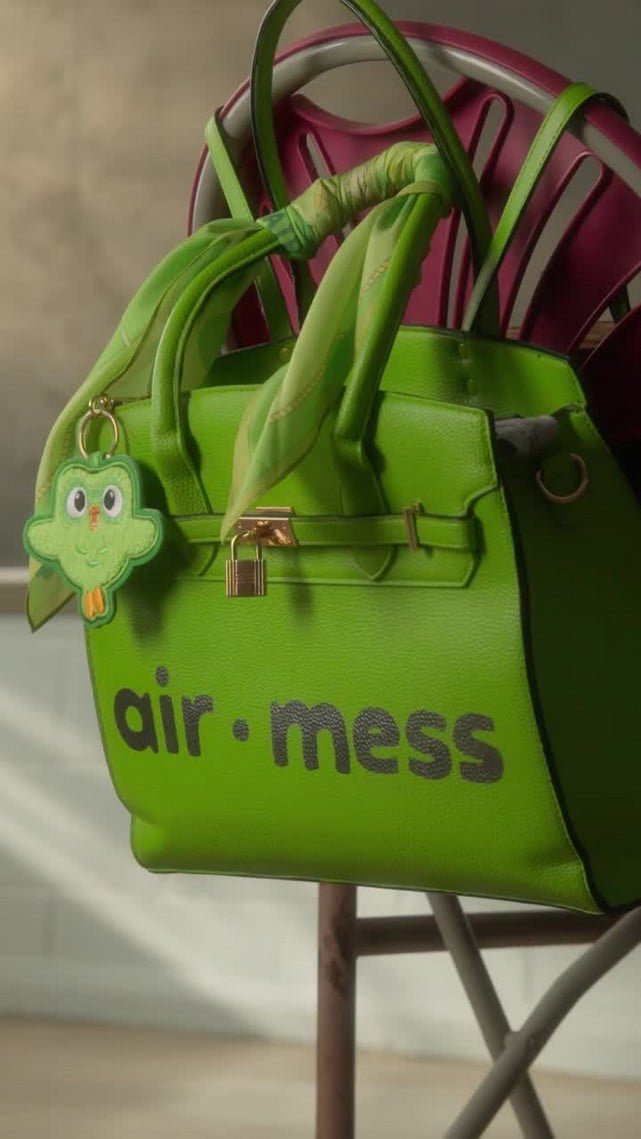
Duolingo brought a handbag labelled “air mess” to Fashion Week. A language app had found a pronunciation lesson people wanted to wear. Its Phonetic Collection turned a familiar fashion-world embarrassment into creator content, a pop-up experience and a reward for committed learners.
That is a much better starting point than asking a creator to list your app’s features. The product has a reason to be in the conversation before anyone reaches the download link.
The best tech briefs give the product a specific job
Technology brands have an awkward creative problem. The product can do more than ever, while the audience has very little patience for hearing about it. A creator reading your release notes with better lighting will not fix that.
The campaigns below offer more useful answers. Some put software inside a challenge people already want to watch. Others show a device doing a recognisable job, or give an existing community something to participate in. For marketers, the decision is which of those approaches helps the intended customer take the next step.
This House of Marketers selection covers ten campaigns with documented activity in 2026, reviewed through 11 November. The order follows their creative and strategic lessons. Public results range from platform views to campaign production counts; they do not support a comparable return-on-investment league table. Where commercial outcomes remain private, we assess the execution without assigning it an invented sales result.
Read it as a practical companion to your next influencer marketing strategy. Each example explains the idea, what the available evidence says and what deserves a place in your own brief. The useful question is simple: what does this creator make easier for a potential customer to understand or do?
Inside the campaigns
- Duolingo turned pronunciation into fashion content
- Opera GX made software part of the setup
- Oreate led with what the AI could create
- Gemini joined the MrBeast challenge
- Lenovo gave creators a project worth following
- DJI showed the work behind the launch film
- Samsung cast creators around specific uses
- Adobe made the first product experience public
- Notion gave creator ambition a product role
- eufy made the household problem recognisable
Duolingo turned pronunciation into fashion content
Duolingo’s September 2026 Phonetic Collection translated tricky fashion names into wearable pronunciation cues. Designer Megan O’Cain created the New York collection. Learners could bid their streak length for pieces at the pop-up, giving an existing product behavior a very public reward.
The Paris chapter brought in fashion creator Lyas alongside the owl’s ‘Duo Wintour’ persona. Brut.Factory connected creator content with a mobile LED display around the shows, while Jean Paul Gaultier appeared to settle the pronunciation of his own name. The campaign moved through September and October’s fashion calendar with an idea that made sense in each setting.
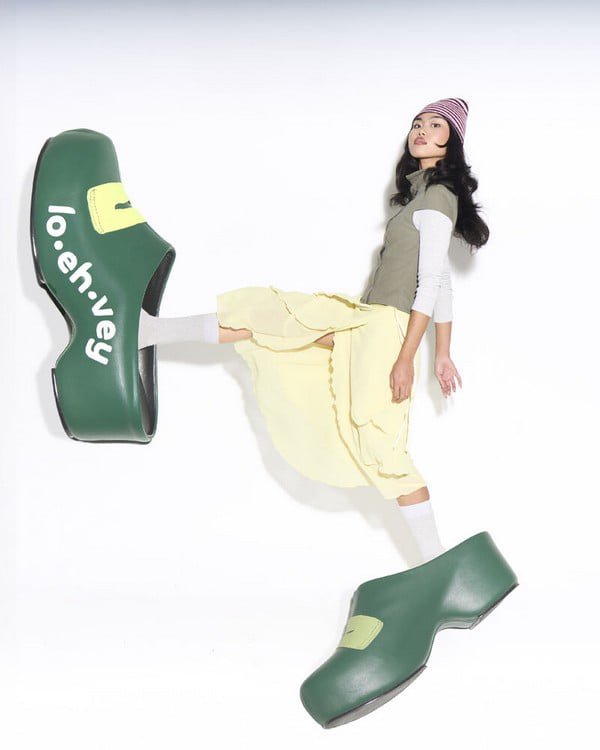
In its campaign recap, Brut reported more than 13 million views on the brand’s social channels, alongside community adaptations of the content. That is a brand-channel viewing total for the activation, not a creator-only audience figure or a measure of new subscriptions. The public result supports an attention claim; the commercial effect remains undisclosed.
The strategic move is more useful than ‘be funny on TikTok’. Duolingo found an audience that cared deeply about a subject but could still feel awkward saying its vocabulary out loud. Fashion creators already operate inside that tension: knowing the references matters, and being caught bluffing is embarrassing. A pronunciation lesson gave them something useful to perform within their own subject.
For an app marketer, that changes creator selection. Start with the moment your product helps someone participate more confidently. A finance tool could work with a creator explaining their first freelance invoice. A design app could help a small-business creator improve a real shop window. The connection needs to survive a simple question: why would this audience want the product involved?
Then design the return trip. Duolingo’s streak mechanic made existing app use relevant to the experience. Your version might reward a completed project or invite people to try the exact task shown in the content. Track that action separately from views. A cultural cameo earns attention. The product connection gives the attention somewhere useful to go.
Opera GX made software part of the setup
Opera GX sent creators hardware to promote software. In The Final Piece, launched in March 2026, creators chose upgrades for their gaming setups and introduced the free browser as the finishing touch. By NetInfluencer’s 20 July report, the campaign had generated more than 22 million TikTok views and another 6 million on Instagram. About 60% of videos received Spark Ads support; the public totals do not isolate organic views.
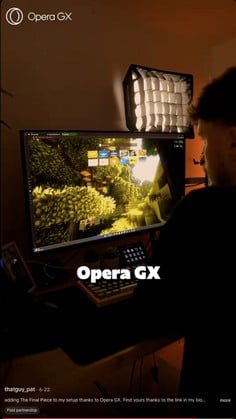
Opera’s influencer specialist described testing posts organically before paid amplification. The interview gives no install total, acquisition cost or user lift. The viewing figures cannot establish whether the hardware investment paid back.
Show data
| Views | |
|---|---|
| TikTok | 22M |
| 6M |
Reported July 2026 results. Paid support is included in the programme.
For a software marketer, the useful creative question is where the product belongs in someone’s life. A browser has plenty of functions, but a creator has a desk they want to finish. Starting with that desire gives the sponsor an entrance into a familiar content format. The risk is equally obvious: viewers could remember an excellent graphics card and forget the browser entirely. Expensive product placement for somebody else would be quite an achievement.
That is why the connection needs to survive without the logo. Before approving a concept, ask the creator to explain how the software completes the activity on screen. Customisation could connect to a particular desk aesthetic; another product might help manage the work happening there. If the explanation needs a sudden detour into a feature list, revisit the concept. A late brand reveal still needs a reason to happen.
Use retention around the product introduction to investigate whether the story holds together. Review comments for software recognition alongside tracked visits and installs. Compare paid content under similar campaign conditions. For a free product, reporting must continue after download: did acquired users activate and keep using it? Build that path before the first package leaves the warehouse.
Oreate led with what the AI could create
Another AI tool. Another promise to change how you create. Oreate had to give people in Latin America a reason to stop scrolling before they had much reason to recognise its name. For our Oreate AI campaign, creators made entire videos inside the platform. The content itself showed what the product could do.
The campaign ran from 25 June to 16 July 2026 across Brazil, Argentina, Mexico, Colombia and Peru. Thirty-five creators published 69 posts across TikTok and Instagram, with a small YouTube test. Formats included choose-your-path stories, split-screen explainers, AI transformations and familiar numbered series. World Cup references gave the creative a timely connection to local football audiences, particularly in Mexico and Colombia.
House of Marketers reported 5.1 million views, 38,000+ engagements, including 2,500+ saves and 1,000+ shares. Those figures describe the campaign as a whole; the public case does not separate paid and organic viewing or report sign-ups and subscription revenue. The case also describes branded search in three markets, without volumes or a quantified lift study.
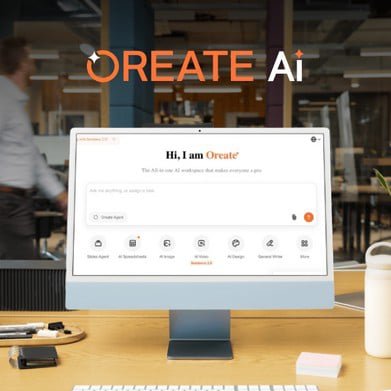
Results for the dated June–July 2026 Oreate campaign. Views are not unique reach; sign-ups and subscription revenue are undisclosed.
The useful creative decision was putting the result where the audience could judge it immediately. An AI character transformation gives a viewer something specific to react to. A split-screen can keep the method beside the finished output. Both make the tool easier to understand than a creator listing capabilities over a screen recording. The local context also gives that demonstration somewhere to belong: an existing football conversation, a recurring series or a format the audience already enjoys.
For an AI product launch, brief a task worth watching someone complete. Ask the creator to show enough of the input and process for viewers to understand how the result happened. Agree which claims the footage supports and where an explanation is needed. Then give interested viewers a route to try that same task. Track the first completed creation alongside sign-ups, with a consistent attribution window. A spectacular output can earn the click; the first successful attempt tells you whether the promise survived contact with the product.
Stickerbox connected demos to paid acquisition
An unfamiliar product needs a demonstration people can understand before they decide whether they want it. Stickerbox turns spoken ideas into printable stickers: a concrete result for parents evaluating a screen-free creative device. In our Stickerbox case, published in April 2026, that explanation became the basis for a programme combining creators and paid social.
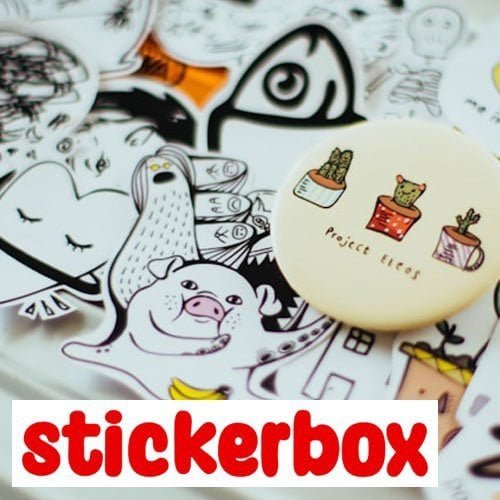
The team tested more than 25 creative assets across TikTok, Instagram and Facebook, then put paid distribution and retargeting behind the stronger executions. House of Marketers reports over $300,000 in revenue within 90 days and 6x blended return on ad spend. These are combined programme results. The case does not disclose the attribution window, full cost base or incremental sales, so the revenue cannot be assigned to organic creator posts alone. The precise campaign dates are also unpublished.
Combined creator and paid-social programme results from the Stickerbox case, published April 2026. Actual campaign dates and incremental sales are unpublished.
The planning lesson is to connect creative learning with the media decision. Give each variation a reason to exist: a different use case, objection or explanation of how the device works. Compare what happens after the click as well as what holds attention. Before scaling, check whether the product page delivers the same promise and whether stock can support demand. A winning demo creates an operational commitment, too.
Gemini joined the MrBeast challenge
An AI assistant has a demonstration problem. It can do so many things that a creator brief easily becomes a shopping list of features. Google found a more watchable assignment: help MrBeast’s crew tackle an extreme-environment challenge.
Google announced its multi-year Beast Industries partnership on September 2, 2026. The first creator episode followed on September 5. Teams raced through jungle, desert and Arctic environments, with Gemini positioned as a tool for planning and solving problems along the way. The partnership also included an appearance in Google’s ‘Look What You Can Do’ brand campaign.

The creator episode had 145.2 million public YouTube views when checked on November 11. Its description explicitly credits Gemini’s role and links to the app through a campaign-tagged download URL. Those views belong to the complete entertainment video, which also includes another sponsor. They cannot tell us how many people watched the Gemini integration, installed the app or became regular users.
What makes the execution interesting is the fit between the product and the creator’s established format. MrBeast’s audience arrives expecting a difficult task, escalating problems and a visible finish line. An assistant can enter that sequence when a team needs help. The product gets a role in the action, while the audience retains the reason it clicked.
This is a useful distinction when briefing software creators. ‘Show five features’ leaves the audience to invent a reason to care. ‘Complete this task with a constraint’ gives each feature a reason to appear. The constraint could be a deadline, an unfamiliar workflow or an imperfect starting point. A bookkeeping creator closing a messy month can make software legible without needing a desert or a television budget.
The practical brief should name the task, the moment the product helps and the action a viewer can repeat afterwards. Leave room for the creator’s usual pacing and reactions. If the demonstration only works after replacing everything their audience likes about their videos, the casting needs another look.
For measurement, preserve the gap between entertainment consumption and product adoption. Campaign links can identify response; completed first tasks and subsequent usage tell a richer story. The next optimization should come from that behavior. A spectacular view count deserves attention, but the useful question for an AI brand is whether viewers found a reason to use the assistant again tomorrow.
Lenovo gave creators a project worth following
A sponsored laptop can sit on a desk for an entire video without showing the audience much. Lenovo gave its hardware a more demanding assignment. In the 2026 World Stage chapter of Creator Odyssey, Gawx and Vexx helped lead artists making football-inspired work with Yoga Aura Edition laptops for a Mexico City showcase. The project supplied a destination and a reason to follow the work getting there.
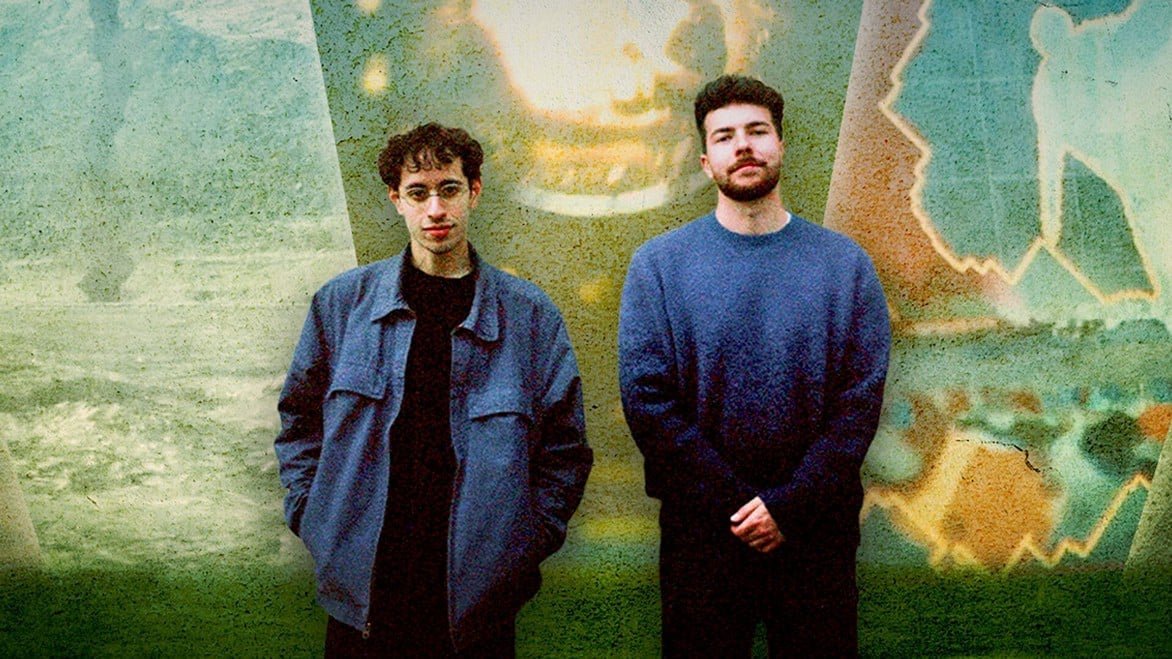
In its July results, Lenovo reported 25.6 million-plus views, more than 400,000 watch hours and 367,000-plus engagements for that chapter. It generated eight YouTube videos and more than 90 social posts. These are World Stage figures, not the cumulative total for the multi-year Creator Odyssey programme. The report does not disclose laptop sales or a paid distribution breakdown.
The production choice matters as much as the casting. A finished artwork demonstrates an output. The decisions before it show how the creator works and where the equipment belongs. That process can generate several useful edits: an early experiment, a difficult revision, the final result and a response to an audience question. Each has a different reason to exist. Cutting the same reveal into six aspect ratios is a distribution plan; it does not provide six new demonstrations.
For a smaller hardware budget, commission one project with a credible constraint. The constraint might be location, turnaround time or the type of files the creator needs to handle. Agree what viewers must see to judge the product, then preserve enough room for an actual creative decision. Your content production plan should include the process, not just the hero asset.
Measure the main film and its follow-ups separately. A reveal can attract broad viewing while a detailed workflow earns qualified product visits. Those are different contributions worth understanding. Ask the creator which questions recur after publication and reserve production time to answer one. The most useful second video may be sitting in the comments, waiting for someone to stop admiring the first.
DJI showed the work behind the launch film
A camera commercial can look spectacular while leaving a buyer with one awkward question: how much of that result came from the camera? DJI’s Osmo Pocket 4 launch offers a useful way into that problem. Filmmakers Reilín Joey and Jacques Crafford created the launch campaign, then published detailed production breakdowns on their own channels during 2026. Crafford’s appeared in April; Joey’s behind-the-scenes film followed on 7 July. Their role extended from making the advertising to explaining how it was made.
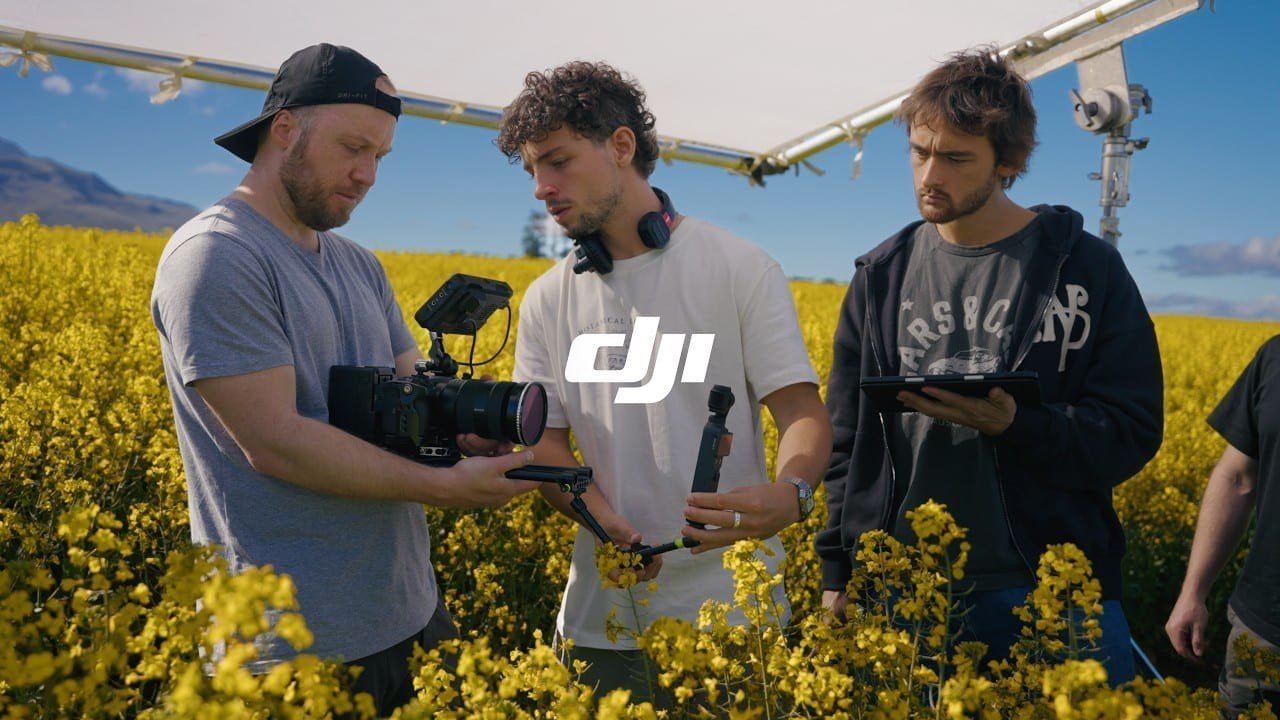
Joey’s description credits a shoot across 12 locations on two continents. His video had 278,757 views when checked on 11 November 2026; that is one creator’s breakdown, not the global launch campaign’s reach. His description also places the project’s beginnings in late 2025. The reason for including it here is its documented 2026 release and creator-channel activity. No campaign-wide sales or conversion result is public in the sources reviewed.
The explanation included the supporting production equipment. Crafford’s account described filming product shots with a Sony FX3, including a rig that held the Pocket 4 in front of the lens. Joey’s later breakdown discussed settings, editing and things he disliked about the device. This was not a claim that every polished image in the commercial came directly out of the camera being sold.
For the brief, consider two different viewer needs. Someone scrolling past the launch may want to see what the product makes possible. Someone considering the purchase may want to know what else they need to reproduce the result. A production walkthrough can answer the second question without forcing the launch film to carry every caveat. It also gives a knowledgeable creator something substantial to discuss after the premiere.
Commission that explanation while planning the main content. Capture the setup, preserve examples that show the product’s contribution, and agree how additional equipment or post-production will be identified. Give creators space to explain a limitation in their own terms. The useful test is whether a prospective buyer can judge fit more accurately afterward. Measure engagement with those explanations and resulting product questions separately from the main ad’s distribution. Beautiful footage earns attention; understanding how it was achieved can help someone decide whether the device belongs in their own kit.
Samsung cast creators around specific uses
A camera specialist, a gamer and a filmmaker can all feature the same phone without making the same advertisement. Samsung built that distinction into TeamGalaxy Connect, held in San Francisco from 25 to 27 February 2026. Approximately 140 creators from 35 countries participated in a programme organised around camera, gaming and sound.
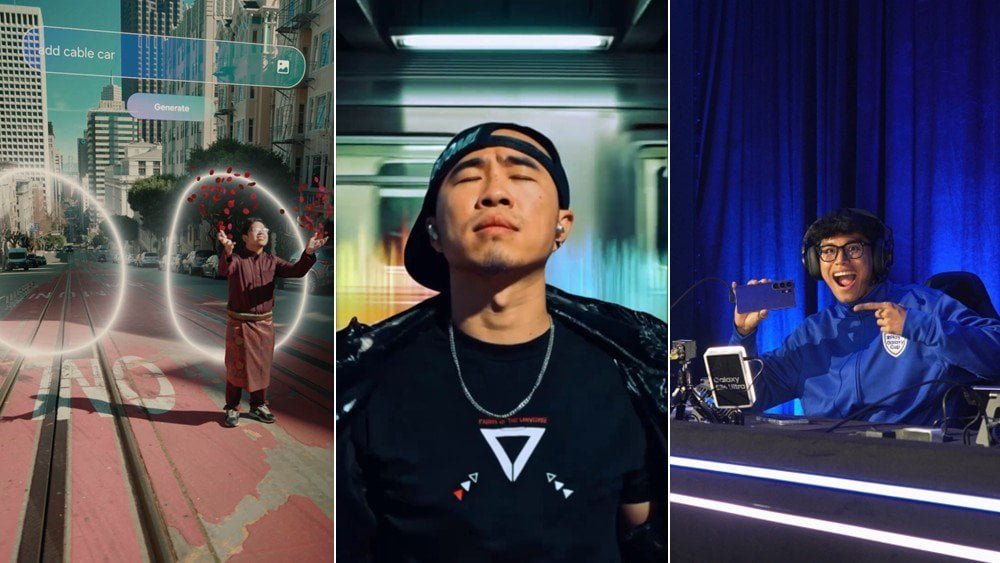
Mohamad Sofian showed visual effects involving the Galaxy S26 Ultra’s camera and AI capabilities. Monique Yvonne discussed a film shot with the device. Gaming creators took part in the PlayGalaxy Cup. Samsung reports 16.77 million views for the official Cup livestream; that figure describes the broadcast, not the total reach of every creator at the event.
The lesson is in how the roster was organised. “Tech creator” is too broad to tell you who should explain a particular benefit. An audience interested in visual effects arrives with different expectations from one watching a gaming competition. A useful casting decision matches the feature to the creator’s existing material and the questions that material attracts. Follower count cannot perform that matching for you.
Build your shortlist around a proposed scene. Ask what the creator would actually show, how much product access it requires and what a viewer should learn from it. One partner might need sample footage and time to edit. Another needs a game, an opponent and a format that already works on their channel. Put those requirements into the budget before treating every deliverable as an interchangeable Reel.
The same logic should shape the landing destination. Send camera-led interest to relevant examples and specifications; send gaming-led interest to information that answers gaming questions. Use the principles in our creator selection advice to inspect audience fit alongside content fit. Then review product-page behaviour and qualified questions by creative theme. The livestream view count tells you something about attention. It cannot decide which feature deserves the next acquisition budget.
Adobe made the first product experience public
Adobe took an AI demonstration out of a browser tab and put it in Times Square. Its May 2026 Firefly activation combined creator work with a public experience: visitors could transform a selfie at one of 20 self-serve stations and see the output on large screens. Twenty-three invited influencers produced more than 70 assets around Webby Creator Weekend.
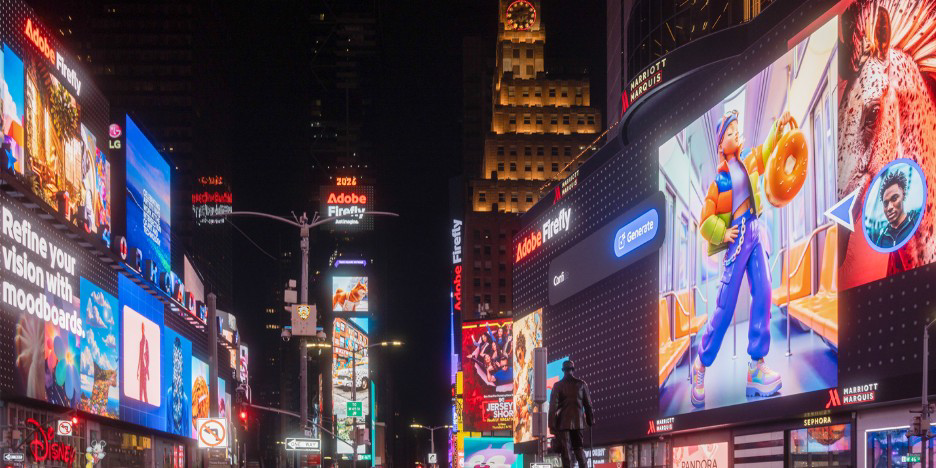
The related Webby programme brought creators including Brandon Baum, Valerie Zhang and Pablo Rochat into discussions about creative AI, while Adobe ambassadors helped attendees use Firefly. The public accounts describe participation and content production. They do not establish subscription lift or incremental revenue.
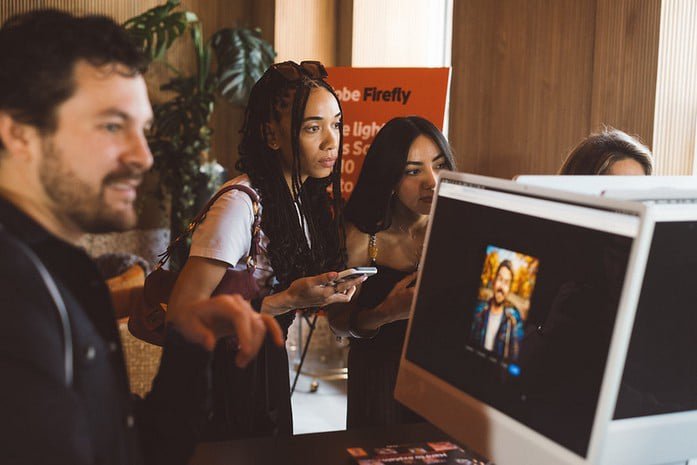
There are two useful jobs here. Creator work gives people a reason to want the result. Hands-on support helps them get a result themselves. Plenty of software campaigns fund the first and leave the second to a generic sign-up page. That gap is expensive when the feature takes explanation or when a beginner cannot reproduce what the expert just did.
An event does not need a Times Square budget to address it. Give a small group of suitable creators a specific task, access to someone who understands the product and permission to surface the difficult steps. Invite prospective users to try a manageable version. Build the follow-up around what they struggled with, rather than a montage declaring the evening a success. Capture questions with permission and use them to improve onboarding content.
Our earlier Cetaphil event activation offers a useful example of creators documenting hands-on learning. For a tech product, agree the next action before booking the room. It could be completing the same workflow at home or opening a starting file made by the creator. Track that action and subsequent use. A beautiful event recap is a lovely asset. It is also very capable of hiding a dead end.
Notion gave creator ambition a product role
For its January 2026 Builder Series, Notion asked creators what they were excited to build that year. Influencer marketing lead Danielle Ito’s launch account names Jon’s Originals and Juan Dussan among the first partners and shares the brief. The creator’s project drove the story, with a specific requirement to feature Notion Agent. Public campaign reach and conversion figures are unavailable.
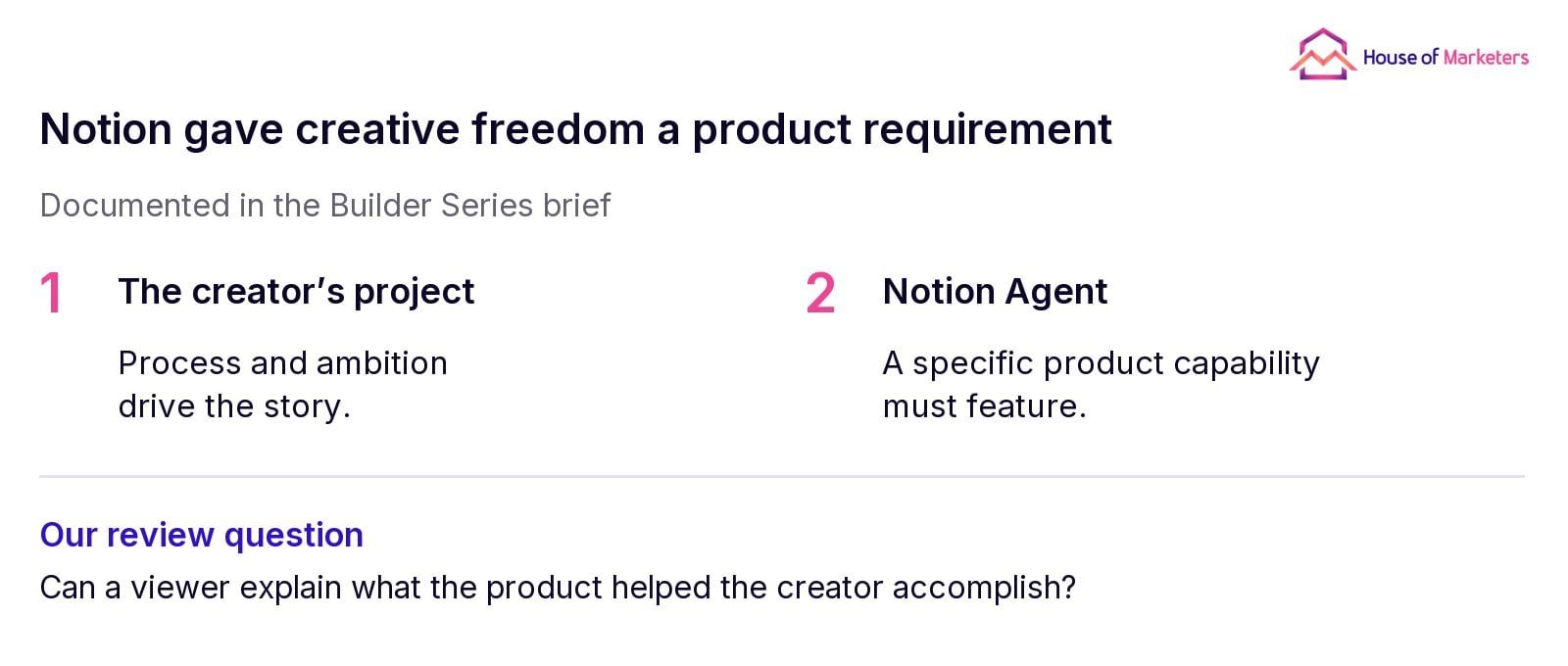
That combination deserves attention from anyone managing creator approvals. The brief gives the partnership room to sound like the creator while specifying what the product must contribute. It avoids asking a flexible workspace tool to demonstrate everything in one video. A concrete project supplies a reason to organise information or complete work; the audience can understand that need before learning the feature name.
A weak version of the same idea would be a moving story about ambition with a sponsor mention attached. The rough-cut review therefore needs a more demanding question than whether the logo appeared. Could someone watching explain what the software helped this person accomplish? If the answer is vague, the integration needs another visible step, not necessarily another sentence of brand praise.
Use an influencer brief to separate product requirements from creative decisions. Define the task, the capability that must be represented accurately and the next action viewers can take. Let the creator explain the task through their own process. Share representative material early enough for them to use the tool properly; a last-minute login is a very optimistic substitute for onboarding.
Before scaling this approach, test whether viewers can follow the first action without the creator standing beside them. Link to the appropriate template, example or workflow. Review first-task completion alongside the content metrics, and ask product teams what happens after that first session. A creator can make software feel relevant. Whether a new user can make it useful is the next commercial question, and it deserves someone’s name on the plan.
eufy made the household problem recognisable
A robot vacuum has plenty of specifications. A house full of guests gives those specifications something to do. For eufy’s March–April 2026 campaign in the UAE, Saudi Arabia and Qatar, lifestyle creators put the products into household routines, including a cleanup after suhoor and preparation for roughly 20 visitors. Boomerang’s case study describes 11 creators producing 16 assets, with five creators also posting to TikTok.
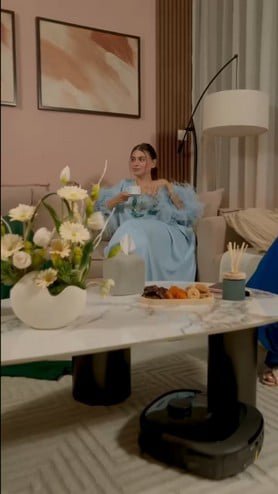
The agency reports 8.68 million views and 187,500 interactions. These are campaign totals, with no public sales result or paid/organic allocation.
March–April 2026 totals from Boomerang. The paid/organic split and sales outcomes are undisclosed.
The creative detail is the useful part to borrow. Abdullah and Yasmeen used a comic cleanup exchange; Sarah Al Ghamdi showed a full-home reset. These are familiar situations with a reason for the product to appear. A local creator can recognise the tone and timing of that situation in ways a translated master script may miss. Localisation begins with what the audience finds familiar, not with changing the subtitles.
For a regional launch, ask creators to propose the moment that makes the benefit relevant in their home. Review the product claims carefully, especially when comedy compresses how long a task takes. Keep the demonstration interpretable: what is being cleaned, under which conditions and what the device actually does. Then use questions about noise, upkeep or floor types to commission follow-up material.
If paid distribution is part of your plan, settle usage rights and the test design before filming. Our TikTok advertising guidance can help connect the creator asset to a defined conversion path. Compare messages under controlled campaign conditions rather than assuming the biggest organic post will produce the lowest acquisition cost. A funny household scene earns a chance to explain the product. The next piece of content should help a buyer decide whether it belongs in their household.
Make the next action as good as the opening hook
Across these campaigns, the product earns attention through a job people can understand. Sometimes that job belongs to a creator: make something, improve a setup, solve a problem. Sometimes the audience gets to participate. The practical choice is where your prospective customer currently gets stuck and what the creator can credibly do about it.
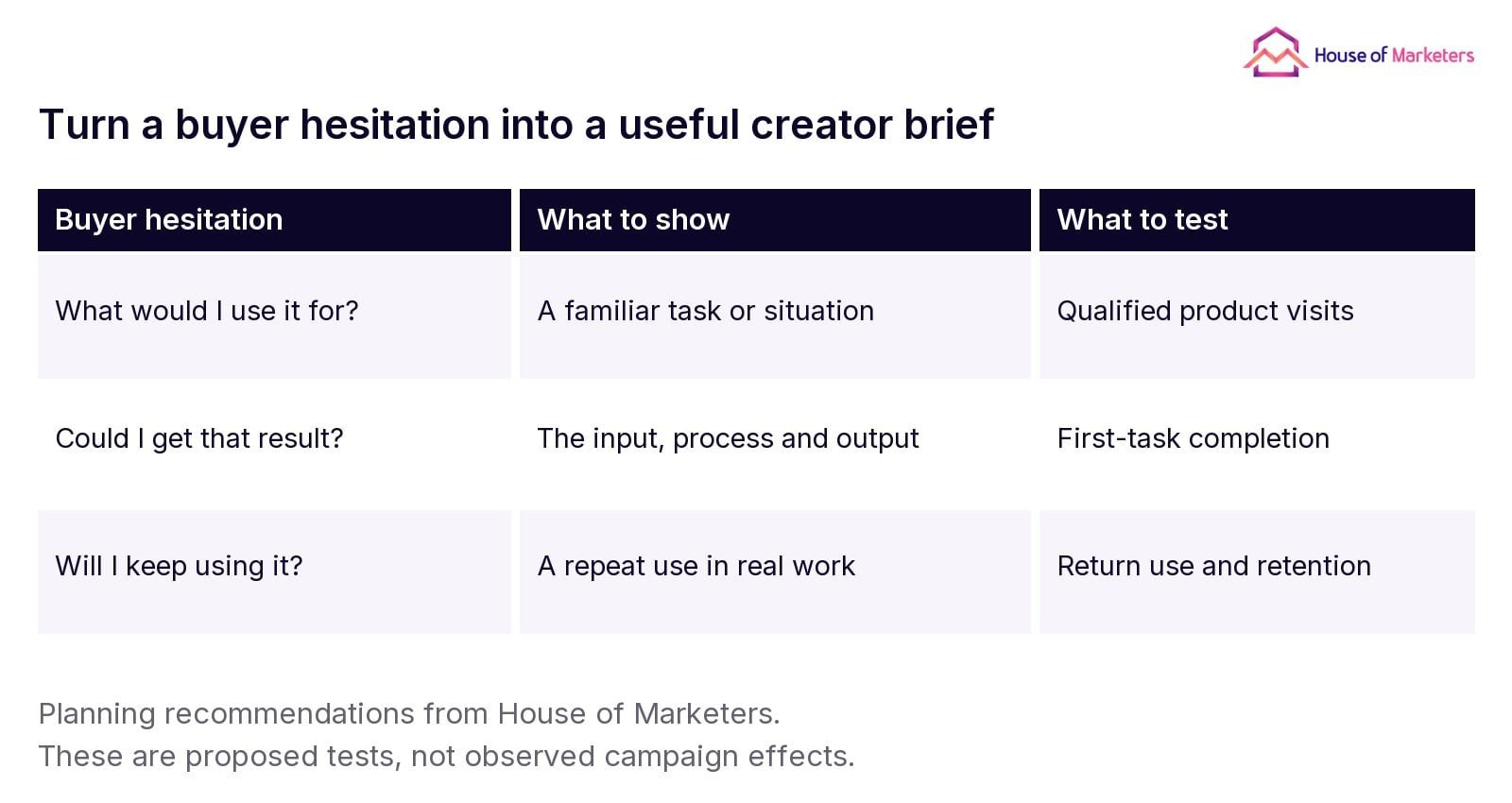
Start with one buyer hesitation. “I cannot see what this would do for me” needs a familiar situation. “I doubt I could get that result” needs a visible process. “I have tried it and got nowhere” needs a better first task. Those statements should produce different briefs. A request for more awareness is too imprecise to tell a creator what to film.
Next, decide what the audience will see. Ask for the moment that makes the claim believable, not just a line that states it. For software, show enough setup to make the output reproducible. For hardware, preserve the conditions under which the demonstration works. If the creator needs training, test materials or a longer trial period, fund it. The audience will notice the difference between familiarity and a well-rehearsed introduction.
Plan distribution and measurement together. Organic audience response can reveal useful questions, but it does not predict paid acquisition costs on its own. A paid test needs defined spend, a conversion event, comparable audiences and enough time to interpret the result. Our influencer marketing measurement guide helps separate content performance from commercial contribution. Keep attributed conversions distinct from incremental customers when presenting the business case.
Finally, give the new user somewhere useful to go. Continue the creator’s task on the landing page, make the relevant example easy to find and assign the follow-up content before launch. A campaign that creates curiosity has only completed part of the job. The opportunity is to turn that curiosity into a successful product experience someone wants to repeat. That is the brief worth taking into your next tech influencer marketing programme.